Hyundai is finally pulling back the curtain on the Ioniq 3. This isn’t just another battery in the lineup. It is a compact, sharp-looking hatchback designed to disrupt the sub-£30,000 electric car segment.
Think Renault 5 EV. Think Cupra Raval. Think Volkswagen ID. Polo.
The Ioniq 3 shares its electrical bones with the Kia EV2. They are siblings, built on the same architecture but with different personalities. The Kia is practical. The Hyundai is… distinctive.
Pricing is still under wraps, but with the Kia EV2 already eligible for the £1,500 Government Electric Car Grant, we should expect the Ioniq 3 to get the same treatment. That could push the entry-level Advance model to under £25,000 in the UK. Sales start this September.
Design: Polarizing by Design
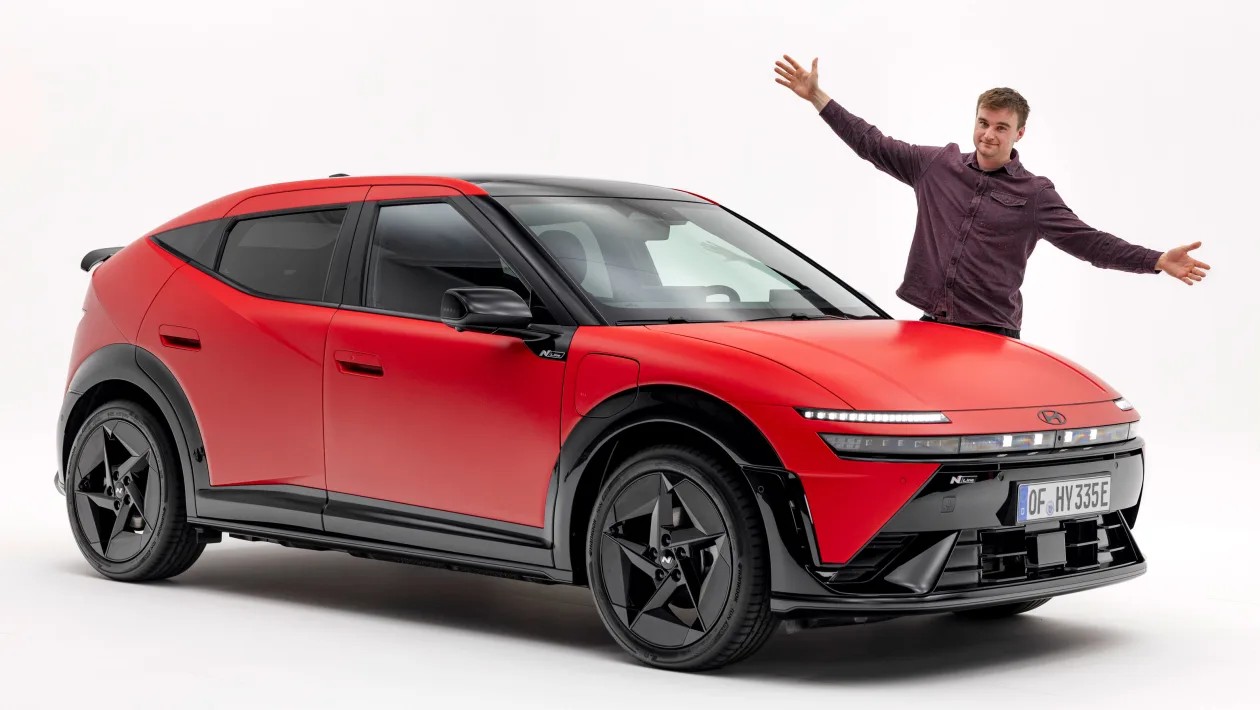
The production Ioniq 3 closely mirrors the Concept Three shown at the 2025 Munich Auto Show. It sits below the Ioniq 5 and 6 in the brand’s hierarchy but above the Inster supermini in terms of branding prestige, even if it’s not the smallest electric Hyundai physically.
At 4.1 meters long, it is a true city hatchback.
Hyundai calls it an ‘aero hatch’. The design language is “Art of Steel.” Expect sharp creases running up toward a rear spoiler. Color-contrasting wheel arches give it a squat, planted stance. It’s not as wild as the concept car, but it’s close.
The rear end features a narrow light bar and upright form. It reminds us of the Alfa Romeo SZ. Purposefully bold. One designer admitted, “the best thing for us is people not initially loving it, we want a polarizing design.”
What’s missing from the concept?
The fake exhaust that played sound on the prototype is gone. But don’t rule it out for the future. Hyundai hinted at returning such features on performance variants, like the upcoming Ioniq 3 N.
Interior Tech: Buttons Are Back
Step inside the N-Line trim and you’ll see red accents everywhere. Red stitching. Red interior clips. An N-badged steering wheel that looks nothing like the one in the Ioniq 5 N. It has more buttons. It feels sportier.
The top-spec models offer ventilated seats, Bose audio, and ambient LED lighting. They even support 3D-printed interior attachments via Dacia-style clips.
But the real story is the switchgear. Hyundai questioned the need for screens. Then they installed them. But they kept the toggles.
Climate control. Drive modes. Seat heaters. Wing mirror adjustments.
These are physical buttons. Tactile. Satisfying to press.
The infotainment system is new: Pleos Connect. It runs on Android Automotive OS. It looks like a smartphone interface. Key info sits on the driver’s display; navigation takes over the 12.9 or 14.6-inch center screen. It’s similar to Tesla’s minimalist layout.
The lower-spec Advance models get grey interiors and smaller 16-inch wheels. Less aggressive. More “welcoming character,” according to Hyundai.
Range and Power: Efficiency Wins
Under the metal sits a shrunken E-GMP architecture. It’s a 400V system. You have two battery choices:
- Standard Range: 42.2kWh.
- Long Range: 61kWh.
The efficiency story here is strong. The Ioniq 3 has a drag coefficient of just 0.26. The Kia EV2 sits at 0.29. This aerodynamic advantage translates directly to range.
The Standard Range model delivers over 208 miles. That beats the EV2’s 194 miles.
The Long Range model exceeds 304 miles. The EV2 tops out at 281.
Charging times are decent but not class-leading. The Standard Range model takes 29 minutes from 10-80% DC fast charging. The Long Range takes 30. AC charging supports 11kW standard, with 22kW as an option.
Powertrain Performance
Power outputs are modest. The Standard Range uses a 144bhp motor. It hits 0-62mph in nine seconds.
The Long Range uses a 134bhp motor. Zero to sixty takes 9.6 seconds.
These numbers are slightly slower than the Kia EV2 equivalents. The N-Line chassis is tuned for comfort, not track days. It’s firm but not harsh. It’s wallowy-free. It’s not a hot hatch yet. For real thrills, wait for the N model.
Practicality: The Boot Advantage
Looks can be deceiving. The Ioniq 3 looks sleeker than its Kia cousin. But it’s also more useful in one key area: luggage.
With the load-bay floor removed, the boot offers 440 liters. That is more than the EV2.
Rear headroom is tighter than in the Kia. It’s not spacious back there. But the floor is flat. The seats sit slightly sunken. You won’t be claustrophobic.
The front cabin has a trick up its sleeve. A large storage area under the center console. Remove one cupholder and it becomes a flask-sized vault. Nifty.
Sales start in September. If the £25,000 estimate holds, the Ioniq 3 will be hard to ignore. Not because it’s perfect. But because it’s different.
And in a sea of beige EVs, different is a start.