


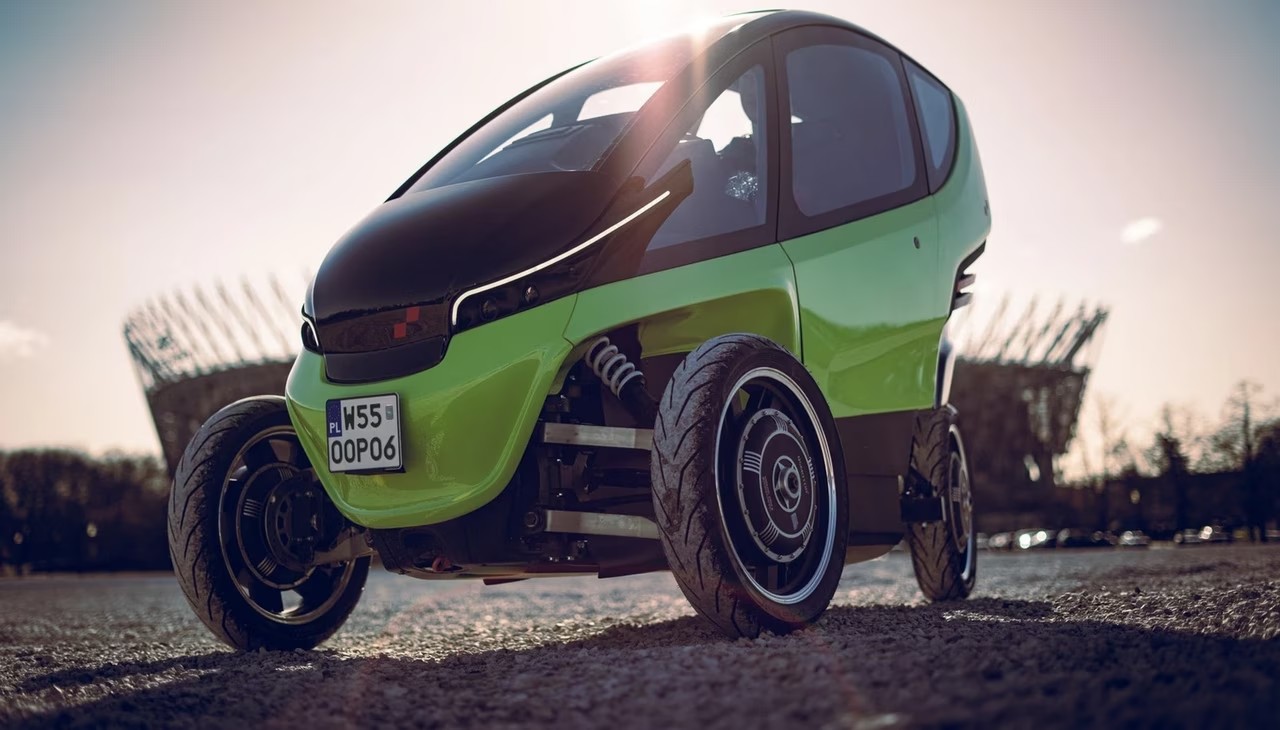
The electric minicar market is full of experiments such as Citroën AMI, Renault Twizy, Toyota i-ROAD and Seat Minimó. These machines offer a curious hybrid effect, combining the enclosed comfort of a car with the urban agility of a scooter. Polish startup Triggo takes this concept a step further by introducing a variable geometry vehicle.
Basically, the Triggo looks like a wider Twizy, but with a front axle that can extend and retract as needed. The driver can adjust the width from 148 centimeters to just 86 centimeters by pressing a button on the steering wheel.
This telescoping feature solves city-specific challenges. This allows the vehicle to park perpendicular to other vehicles, fit into standard motorcycle parking spaces, and even squeeze through gaps in stationary traffic during heavy traffic jams.
Adaptive vehicle width and rear wheel steering
The mechanism behind this change is surprisingly mechanical. The front suspension uses double wishbones with ball joints in the wheels, and the vertical pivots is connected to the chassis. A hydraulic cylinder controls the movement, pulling or pushing to change the track width. Importantly, this adjustment can also be performed while the vehicle is traveling at low speeds.
The front and rear axles are connected by means of a parallelogram system, allowing Triggo to lean into corners. This tilting function stabilizes passengers in curves and mimics the dynamics of a motorcycle or Piaggio MP3.
The rear wheels are steerable, which increases agility even more. This all-wheel steering configuration significantly improves maneuverability with a turning radius of only 3.5 meters. In dense urban environments, this offers significant advantages over conventional cars.
Performance and availability
Speed limits vary by configuration. In widened “driving” mode, Triggo can reach a speed of up to 90 km/h. When squeezed into a narrow 86cm width, top speed drops to 25km/h, favoring maneuverability over speed.
The cabin can accommodate two passengers, one in the front and one in the back.
There is no information about the battery range yet. The manufacturer has not revealed the exact data of autonomy. We’ve asked for clarification on range, availability in France and pricing, but details have yet to be confirmed.
Production is expected to start next year. It remains to be seen whether this experiment with variable width will go beyond prototype status.


