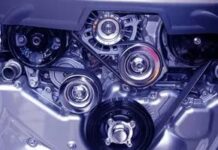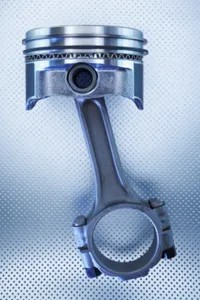
When mechanics talk about a “four-cylinder” or a “six-cylinder,” they are referring to the number of combustion chambers in the engine. But the real magic happens inside those cylinders. A cylinder is essentially the tube where a piston travels up and down. This piston is the workhorse of internal combustion engines, driven by the explosive force of fuel and air.
Here is how it works. Gasoline and air mix in the space above the piston. A spark plug ignites that mixture, causing a controlled explosion. The force of that explosion pushes the piston down. That linear motion turns a crankshaft, which eventually spins the transmission and the wheels. It is a simple cycle, but the components have to endure immense stress. Pistons face more heat and pressure than almost any other part. They have to be durable. Car manufacturers are constantly tweaking piston size and composition to make engines better.
More pistons mean more displacement. More displacement means the engine burns more fuel and generates more power. But the number of pistons isn’t the only variable. The shape of the piston itself plays a huge role in how the engine runs. Specifically, the shape dictates how the air/fuel mixture behaves and how heat is managed.
The Geometry of the Piston Body
Pistons come in different shapes, each with a specific purpose. Some are elliptical, meaning they are oval-shaped when cold. As the engine heats up and the metal expands, they become perfectly circular. This ensures a tighter seal against the cylinder wall when combustion occurs, improving efficiency.
Other designs are tapered or conical. This shape allows the piston to move more freely, even as thermal expansion occurs. Then there are barrel-shaped pistons. These have a rounded profile that reduces noise and harshness during operation. They glide smoother than their flat counterparts.
Why Piston Bowl Geometry Matters
The top of the piston, known as the crown, is where the action happens. It enters the combustion chamber and takes the direct hit of the explosion. Older pistons often had flat tops. Modern ones frequently feature bowls or indentations on the crown. This is called piston bowl geometry.
These bowls are critical for diesel engines. Diesels do not use spark plugs to ignite the fuel. Instead, they rely on compression. The piston crown itself often helps form the combustion chamber. By shaping the top of the piston, engineers can control how the fuel and air mix before ignition.
Even gasoline engines are adopting this technology. As direct injection becomes more common, gasoline engines are starting to use bowled pistons. The bowl creates a vortex. As the piston rises during the compression stroke, the air and fuel swirl inside the cavity. This swirling motion creates a more uniform mixture.
A better mixture leads to more complete combustion. That means more power. It also means better fuel economy. Some bowls are optimized for power, while others are tuned for efficiency. The trend is clear. As direct injection spreads, uniquely shaped pistons will become the standard.
Materials and Modern Design
Pistons have changed significantly over the years. They are shorter and lighter now. The skirt, which is the cylindrical body of the piston, is smaller. The material has also evolved. Many newer pistons are made from aluminum alloys with higher silicon content. Silicon improves heat resistance and reduces thermal expansion. This allows the piston to maintain its shape under extreme conditions.
The combination of material science and geometric precision is what makes modern engines so efficient. The piston bowl is not just a design quirk. It is a fundamental tool for controlling combustion. By managing the air/fuel swirl, engineers can extract more energy from every drop of fuel.
This is why you see different piston shapes across different engine types. A diesel needs a bowl to aid compression ignition. A high-performance gasoline engine might use a bowl to maximize power. An economy car might use a different bowl shape to save fuel. The shape dictates the flow. The flow dictates the burn. The burn dictates the power.
It is a delicate balance. Change the bowl shape, and you change the engine’s character. That is why manufacturers invest so much in piston design. It is not just about moving up and down. It is about moving the right way.