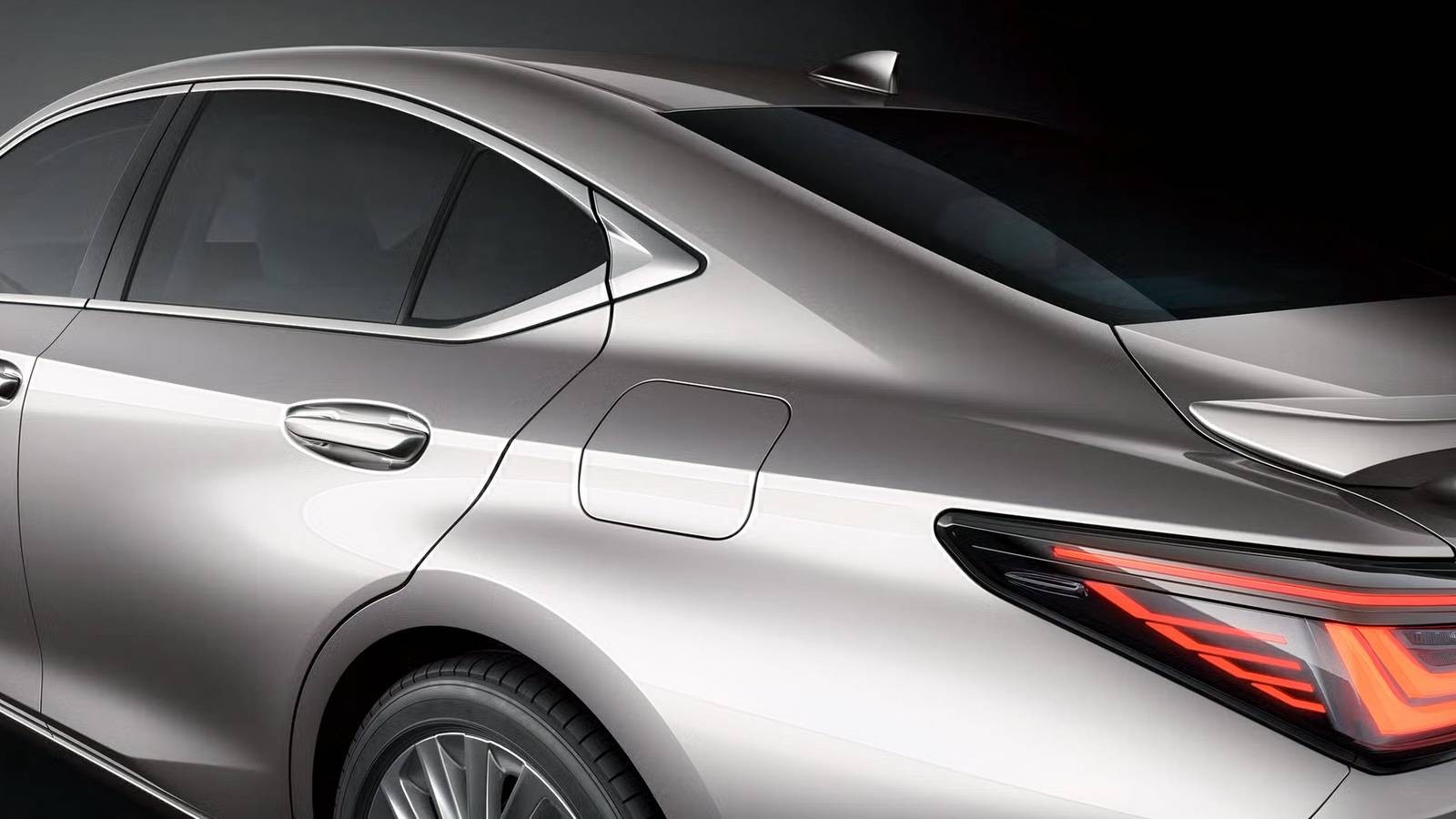
Mechanics make money on complexity. You want a reliable daily driver? Buy the car that puts them out of a job.
The industry has engineered reliability out of modern sedans. To meet emissions standards, manufacturers stuffed tiny turbocharged four-cylinders under hoods and paired them with eight-speed or ten-speed automatic transmissions. These engines run hot and high-pressure. They wear out seals and blow head gaskets. The transmissions? A labyrinth of solenoids and sensors. One speck of debris kills the system. Total replacement is the only fix. It is an expensive way to travel.
Most hybrids are marketed as green tech, not repair manuals, yet their longevity depends entirely on mechanical simplicity, not battery size.
The Lexus ES 300 hybrid does things differently. It ignores the turbo trend. It ignores the multi-gear obsession. For over a decade, Lexus sold this car as a conservative, analog experience wrapped in digital luxury. From 2013 until its recent replacement by the ES 350h in 2026, this platform has sat quietly on the road. It doesn’t thrill. It just works.
Why the eCVT transmission is different
See “CVT” on a spec sheet? Most gearheads panic. They remember belt-driven continuously variable transmissions shattering inside cheap economy cars. They associate the acronym with whine and eventual failure.
The ES 300 uses an eCVT. Electronic continuously variable transmission. The name is shared. The mechanism is alien.
There is no rubber belt. There are no metal pulleys. There are no friction plates to grind together. The heart of this drivetrain is a planetary gearset. Three components are locked together mechanically: the gas engine, a drive motor, and a generator. They never un-mesh. You cannot shift gears because there are no gears to shift in the traditional sense.
The computer controls the electric motors’ speed. It acts like the throttle for the gas engine. You get a simulated range of ratios, but physically? The teeth stay meshed. Solid steel on solid steel. You cannot blow it up. You can barely break it. It is arguably the most robust transmission architecture in mass-market automotive history.
Under-stressed engineering beats peak horsepower
Reliability comes from boredom. Boring mechanics don’t fail.
The 2.5-liter inline-four engine in this car runs on the Atkinson cycle. The intake valve stays open longer during compression. It sucks back some pressure into the manifold. Less compression means less heat. Less heat means less stress on the pistons. The electric motor handles the grunt work. When you step on it, the electric torque pulls the heavy luxury sedan from a stop. The gas engine spins up slowly, gently, entering its optimal efficiency range without slamming the clutch.
It feels underpowered. Edmunds clocks zero to 60 miles per hour in just over eight seconds. That is sluggish by sports sedan standards. But it is precise. And it is quiet. The engine never has to scream to move the mass. It never redlines to pass. It idles off while you stop at lights. It restarts with the electric motor spinning the crankshaft directly.
Look in the engine bay. What do you miss?
- No alternator.
- No starter motor.
- No serpentine belt.
- No hydraulic power steering pump.
These accessories fail. Starters seize. Belts crack and leak fluid. The ES 300 has none of them. Electric motors handle steering and charging. Fewer moving parts equals fewer failure points. It is engineering minimalism in an era of excess.
Real-world maintenance: what actually breaks
Nothing lasts forever. If a dealer tells you the hybrid battery will run for 400,00 miles free of cost, they are selling you a fantasy.
However, the failures are predictable. They are not catastrophic. They do not leave you stranded on the highway waiting for a flatbed to tow your transmission to a remanufacturing shop.
The most critical item? A cheap air filter under the rear seat. This foam filter keeps dust out of the cooling fan for the high-voltage battery. Clog it with pet hair or city dust, and the battery runs hot. Overheat the cells, and you shorten their life. Clean or replace it annually. It costs five dollars. It saves you thousands.
When the main battery finally degrades, usually past the 150000 mile mark, the aftermarket saves you. Refurbished cell packs are cheap compared to dealership quotes.
Sometimes, the dashboard explodes with warning lights. The car behaves erratically. Panic sets in. Check the 12 volt auxiliary battery. It is in the trunk. It is small and underappreciated. When it dies, it starves the control computers. The system gets confused and throws false error codes. Swap the small battery. Clear the codes. The “hybrid malfunction” vanishes. It happens to every technician eventually. It is never the expensive parts. It is the little things.
Should you buy a used Lexus ES hybrid?
If you hate mechanics, the answer is yes.
If you love driving fast, the answer is no.
This car sacrifices adrenaline for endurance. It offers a smooth ride, heavy insulation, and leather seats. It drives you to work, to meetings, and home. It sits in traffic while its brake pads gather rust because the regenerative system handles the slowing down. The friction brakes only bite hard. This preserves them. Mechanics often see 100000-mile ES 300s with factory brakes still good.
The search query “why do modern cars break down faster” usually ends here. This sedan proves you don’t need complexity to build a luxury car. You need restraint. You need to build machines that survive rather than machines that impress.
The new eighth-generation model is already here. It has new tech. New looks. But for now, the 2013 to 2 Who cares? Just look for it at the bottom of the lot, the one without the check engine light. The one that still runs like it was brand new.
It might be boring. But boring pays the bills. And in this market? That is the only spec that matters.