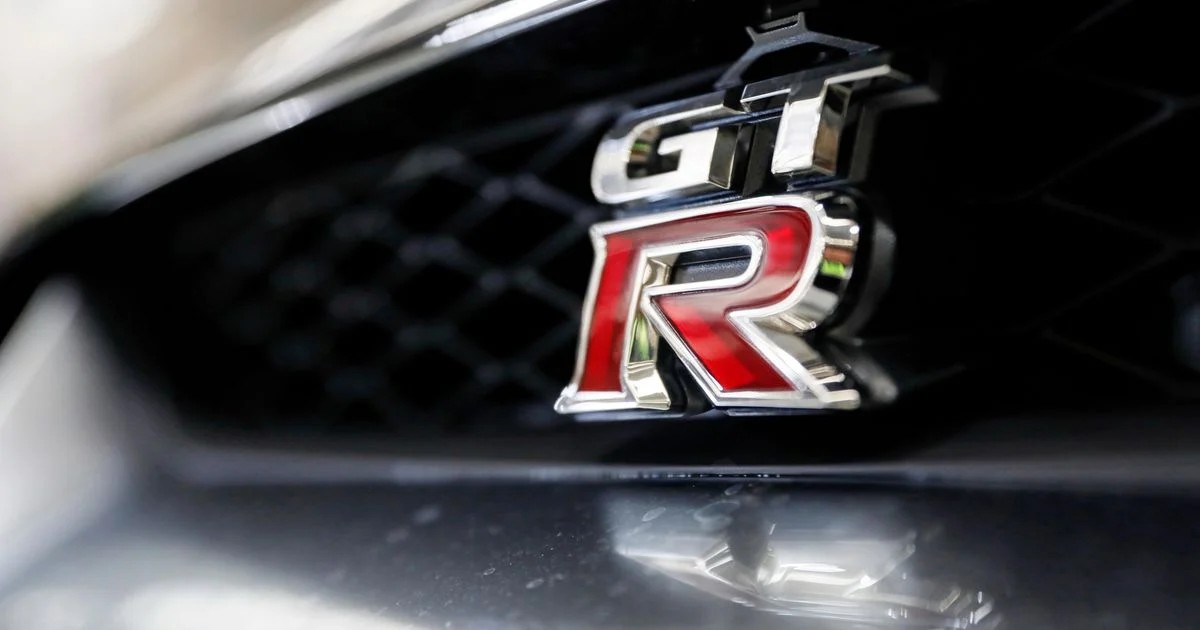
Nissan has officially clarified the direction of its most iconic performance flagship: the next-generation GT-R will not be a fully electric vehicle (EV). Instead, the company is looking toward a hybrid powertrain to balance extreme performance with increasingly strict global emissions standards.
The Battery Dilemma
According to Richard Candler, Nissan’s global head of product strategy, current battery technology is the primary obstacle to a fully electric GT-R. While the industry is moving rapidly toward electrification, Candler argues that existing lithium-ion chemistries cannot yet meet the specific demands of a “GT-R-type product.”
“We’re not going to go with batteries in the next generation – no way,” Candler stated, noting that electric sports cars have yet to see massive mainstream popularity.
This decision highlights a growing tension in the automotive industry: the conflict between the pursuit of pure electric performance and the physical limitations of current battery weight and energy density. For a car defined by agility and high-output power, the heavy weight of current battery packs could compromise the very DNA that enthusiasts expect from the GT-R nameplate.
A Hybrid Future: Preserving the Soul
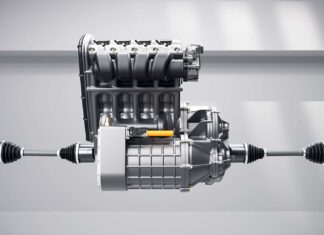
While the car will not be an EV, it will not be a traditional internal combustion engine (ICE) vehicle either. To comply with evolving regulations like Euro 7, Nissan intends to incorporate electrification through a hybrid system.
Key details regarding the upcoming powertrain include:
– Evolution, not just replacement: Ponz Pandikuthira, Nissan North America’s senior vice president, suggested that while the engine architecture may change, the spirit of the legendary VR38 engine remains a benchmark.
– Technical overhaul: Future iterations may feature significantly redesigned cylinder heads, pistons, and combustion processes to maximize efficiency without sacrificing the “soul” of the engine.
– New Foundation: The next generation (codenamed R36 ) is expected to sit on an entirely new chassis to accommodate this hybrid architecture.
Context: The Shifting Landscape of Performance Cars
Nissan’s decision marks a divergence from some of its European competitors. While brands like BMW and Mercedes-AMG are aggressively integrating high-performance EVs into their lineups, Nissan is opting for a “middle ground” approach.
This strategy aligns with a broader trend among Japanese manufacturers—including Honda and Toyota—who are reviving legendary nameplates (such as the Prelude, Celica, and MR2) by focusing on specialized, driver-centric experiences rather than a total pivot to electric power.
What to Expect Next
The next GT-R is not arriving immediately. Nissan executives have urged patience, noting that the R35 generation set an incredibly high bar that the R36 must surpass.
Key Timeline & Expectations:
– Expected Debut: No earlier than 2028.
– Design Inspiration: The R36 may draw aesthetic cues from the Nissan Hyper Force concept shown at the 2023 Tokyo Motor Show.
– Global Ambition: Nissan intends for the new model to be a “global car,” meaning it must satisfy diverse regulatory environments across different continents.
Conclusion
By choosing a hybrid path over full electrification, Nissan is attempting to navigate the difficult bridge between legendary combustion performance and the mandatory reality of a low-emission future. The success of the R36 will depend on whether Nissan can deliver “GT-R” excitement within the constraints of modern environmental laws.