The affordable sport sedan is dying.
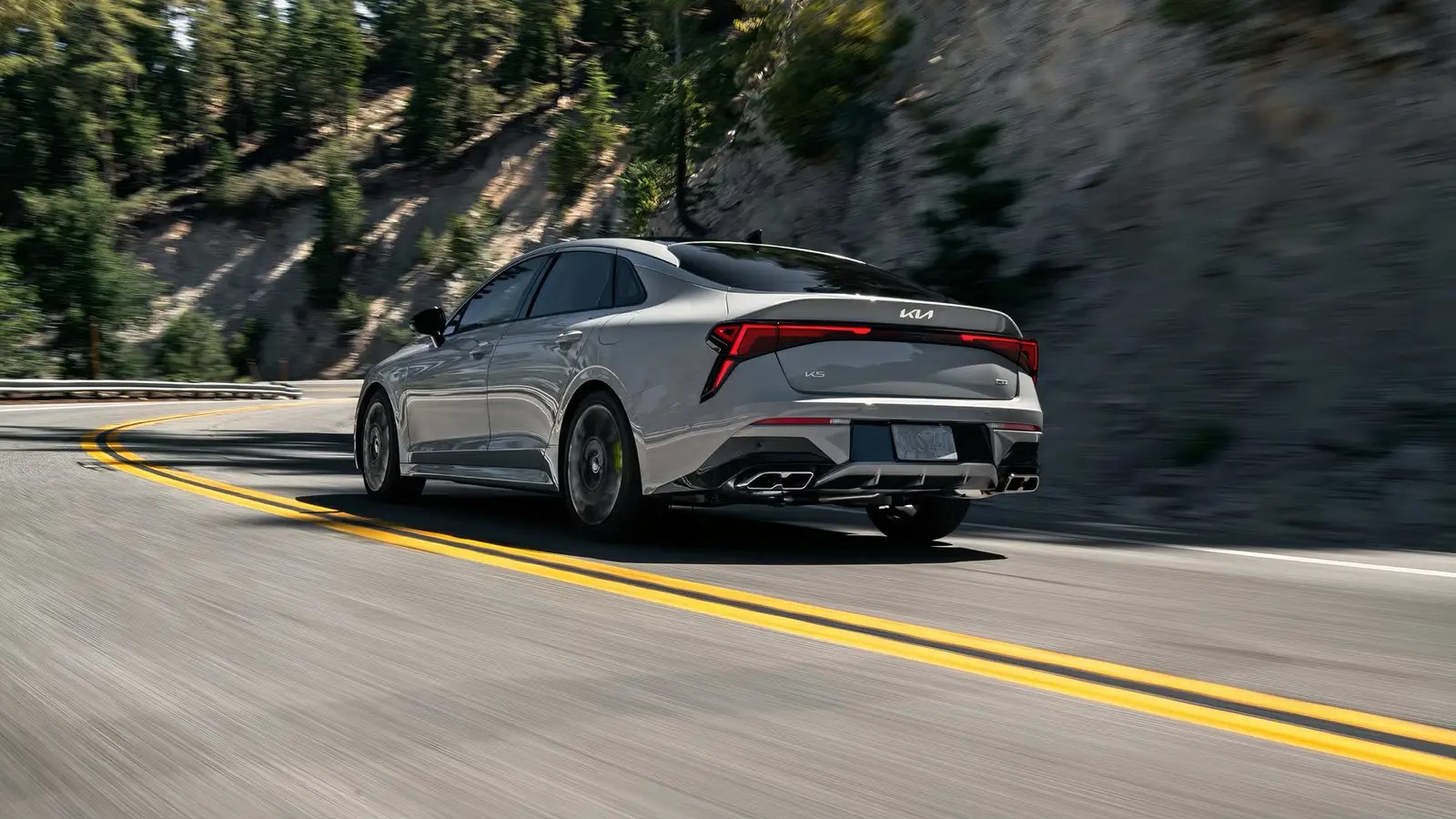
Markets don’t ask permission. They just replace sedans with SUVs and hike prices north of forty grand. Kia seems to have missed the memo, or maybe it just didn’t care. You won’t picture Kia when you think sport, but the K5 GT is a quiet rebel. It balances daily usability with actual performance heroics for a price that makes no sense.
Let’s talk about it. We’ll look at the specs, the rivals from Toyota and Hyundai, the driving feel, and why this car is a rare ghost in 2026
The Sweet Spot
Define “affordable sport sedan” and you’ll fight.
Prices climb. Performance hides in top trims or luxury badges. The Kia K5 GT ignores that logic. It gives you 290 horses from a turbocharged Smartstream 2.5 engine. A dual-clutch transmission handles the power. The price? Under $35,00
That beats the original Camry TRD by nearly a thousand dollars
The GT isn’t a track monster. The Sonata N Line handles tighter corners. But this car thrives on torque. It accelerates hard. Passing on the highway feels effortless because the torque comes low.
Paper Horsepower vs. Real Pull
One engine. One transmission. No confusing options list.
290 horsepower at 5800 RPM. 311 pound-feet starting at just 1650 RPM
The number that matters isn’t the horsepower. It’s the torque. Arriving low means the GT feels fast around town. You don’t wait for the RPMs to climb. The surge is instant. Junctions and highway overtakes feel satisfying, not mechanical
Turbo lag exists, sure. Demand full throttle from a crawl and there’s a half-second pause. Then boost builds. The pull through the mid-range is strong, fading only near the redline
Kia claims a 5.4-second 0–60 time
The Camry TRD? Toyota’s V6 needs more revs to find its voice. It hits 60 in roughly 5.7 seconds. It’s smoother. It’s naturally aspirated. But it waits for you to push hard. The Sonata N Line uses the same Smartstream engine as the Kia and hits 0–60 in about 5.3 seconds
For tinkerers, the Smartstream is built for abuse. Direct and port injection help. The thermal management system keeps things cool. Owners on older models already piggybacked ECUs, swapped intakes, and added exhausts. It won’t beat a Porsche. But owners have pushed it further than factory intended
Shifts And Slip Clutches
Kelley Blue Book rates the K5 lineup highly. 4.1 out of five overall
Performance scores a 3.9. Reliability hits 4.2. Style gets 4.6. The dual-clutch transmission is the sporty differentiator
Unlike a torque converter auto, the GT’s DCT uses two oil-coooled clutches. Odd gears on one side. Even gears on the other
The next gear is always ready. Pre-selected
Under acceleration, the gearbox swaps ratios in milliseconds. No hydraulic wait time. Boost pressure stays intact. This makes rolling acceleration feel snappier than rivals with similar power
Trade-offs?
Low-speed crawling feels rough. Creep into traffic and it hesitates. Inch into a parking spot and it jerks. The fluid torque converter usually masks that. Not here
Highways change everything
Eight gears keep RPMs down for economy and noise reduction. A heavy right foot triggers instant multi-gear downshifts. Sport mode holds gears longer, tightens steering. Useful for city passing, even better for highway runs
Long-term data is still coming in since 2021. But reliability surprises some people. Earlier Hyundai-Kia dry clutches had bad reputations. The 2026 GT uses wet clutches. They handle the torque well
There were recalls for models up to 202 due to software hesitation. But widespread mechanical failures? None so far
Chassis And Limits
Front MacPherson struts. Rear multi-link independent suspension
Standard setup for this class. But Kia tweaked springs, dampers, steering ratio. It handles camber changes decently. Potholes get managed well. It feels distinct from base K5 models
It is still front-wheel drive.
Physics won’t be argued with. 311 pound feet sent to two wheels creates mild torque steer during hard launches. Push the nose hard in a corner and it pushes wide before the rear gets loose
Brakes are solid. 136-inch vents in front. 128-inch solids in back. Car and Driver clocked 0–60 at 5.2 seconds. That’s faster than Kia’s claim. 60 mph to a stop in 163 feet
J.D. Power gave it 92 for driving experience
Fast in a straight line. Composed on a road. Not a canyon carver
Rivalry
Three players left standing. Kia GT. Hyundai Sonata N Line. Toyota Camry TRD
The GT wins on price. $33,50
Sonata N Line starts at $36,50. It shares the engine. The DCT is smoother inside the Hyundai. Suspension tuning leans toward comfort. It feels slightly more premium. Performance is identical. Choice comes down to badge and budget
Camry TRD is a ghost in 206. Discontinued. But its original $34,5 price tag is relevant
Toyota’s V6 delivers linear power. No lag. Chassis bracing and firmer tuning make it sharper in corners. Steering feels more connected
The GT offers massive torque. The Camry offers balance. The Sonata offers refinement. All three score an 83 on J.D. Power’s overall sheet
Want cheap speed? Buy the Kia. Want handling? Respect the Camry. Want the same guts with quieter cabin acoustics? Look at Hyundai
Cost To Keep
Competitive to buy. How is it to keep?
Edmunds estimates a “True Cost to Own” of $45,400 over five years
Fuel alone will run about $900 total. That’s $50 more than the average car over that period
Maintenance runs $7600. Insurance adds $584
A base K5 costs $3837 over five years. The GT depreciates faster. It loses $14,10 over five years versus $11,7 for the standard model
Older 24-liter engines had oil dilution issues. The new Smartstream engine avoids most of that. Short trips remain the only real threat to longevity
The Verdict
Performance sedans are expensive now. The K5 GT refuses to be
26 cubic feet of cargo. Front and rear legroom is plentiful. Seats fold 6:0
It’s practical. It’s fun
If handling purity is your god, go buy a Camry TRD. If you hate noise and harshness, take the N Line. Neither costs less. Neither offers the same raw torque for the dollar
The K5 GT knows it’s not a sharp knife. It doesn’t try to be.
It’s a bludgeon. Cheaper, louder, and unexpectedly competent in a market that keeps moving toward comfort. Or SUVs 🚗
It might just be the best bargain on four wheels. For now.