



Toyota strongly believes in the idea that a car’s life does not end at the scrap yard.
Enter the Toyota Circular Factory. It’s an initiative that aims to extract every last bit of value from vehicles as they reach the end of their useful lives. The goal is clear: to maximize recycling and recovery of materials and at the same time reduce the carbon footprint of manufacturing new parts. This is not just greenwashing; It is a structural change towards a circular economy.
Think of it as closing the loop. Instead of mining more iron ore or refining new oil for plastic, Toyota wants to extract these resources directly from the bones of old cars.
Breaking down the circular strategy
The factory follows a three-part strategy. It’s not just about destroying cars and hoping for the best. It’s all about accuracy.
Efficient dismantling is the first step. Toyota has developed advanced methods for dismantling vehicles. The goal is optimal material recovery. You don’t just throw the chassis into the crusher. You take it apart piece by piece to ensure maximum returns.
Component reuse comes next. If the part still works, it gets refurbished. These components are either returned to the production line or sold as original used parts. It extends the life of hardware that is perfectly fine, but maybe just needs cleaning or minor repairs.
Material recycling takes care of the rest. Metals, plastics and yes, even batteries are turned into raw materials for new vehicles. This reduces dependence on virgin natural resources. It reduces waste. This makes the entire production cycle more sustainable.
The approach mirrors efforts elsewhere in the industry. It’s not entirely unique. Renault has launched its own Renaulution strategy in France, which also focuses on life cycle management and the circular economy. But Toyota’s specific application of these principles through the Toyota Circular Factory demonstrates a committed, integrated approach to car recycling.
Why is this important? Because cars are complicated. They contain rare earth metals, high-grade steels and special polymers. Recovering these is cheaper and cleaner than mining. It is also a hedge against supply chain volatility.
The factory represents a transition from linear consumption to circular utility. Vehicles become repositories of materials rather than sources of waste. It is a necessary development for an industry under pressure to decarbonize.
What happens to cars that do not meet these criteria? The system requires a strict sorting process. Only usable components enter the reuse or recycling streams. The rest will likely meet a different fate, although the focus here is on high-value recovery.
This is just the beginning. The infrastructure required to support the recovery of this material is enormous. But if Toyota can scale it, the impact on the entire automotive supply chain will be significant. The next time you see an old Toyota headed for the junkyard, remember: it might not be over yet. It could be the start of something completely different.
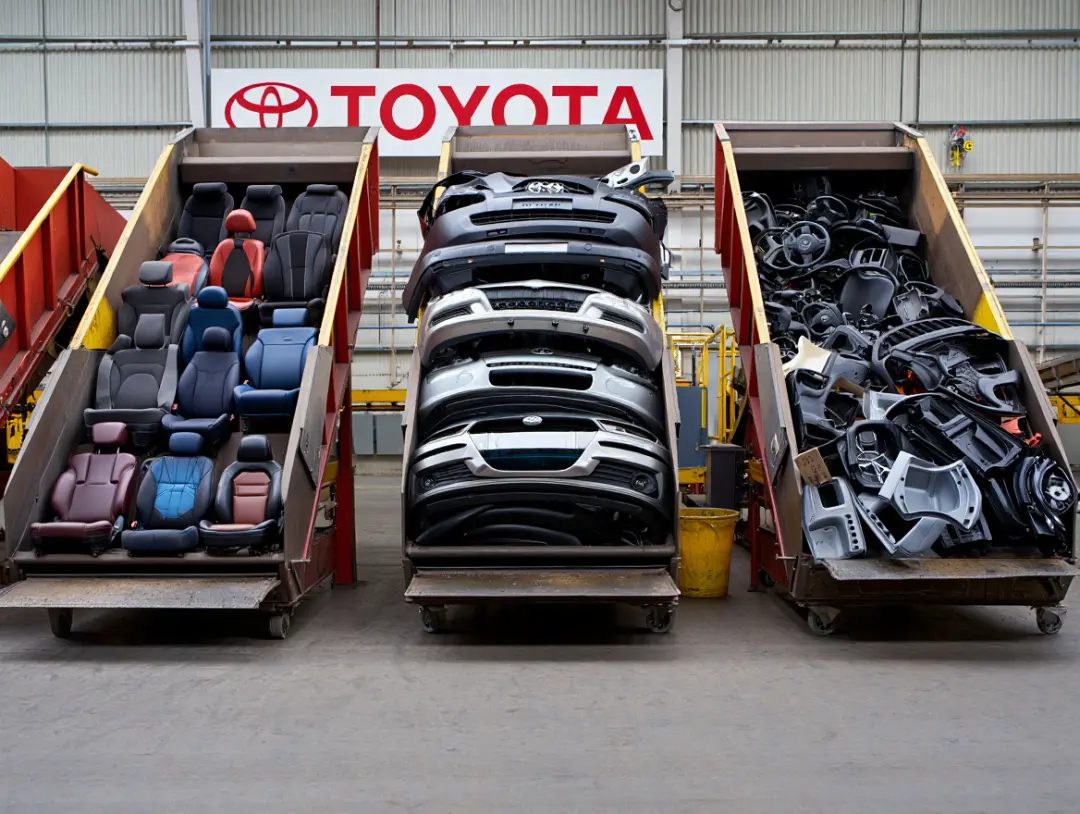

Turn waste into resources
Toyota just doesn’t follow the rules. It’s rewriting them. The company invests resources in advanced battery recycling methods. This is not about compliance. It’s about mining. Old batteries contain valuable materials. Toyota technology gets them out. It brings them back into the supply chain. Effective. A closed circuit.
This proactive attitude more than satisfies regulators. Toyota has thus positioned itself as a pioneer in the transition to the green car industry. The proof is in the infrastructure. Check out the Toyota Circular Factory. It is not a concept. It’s a operational reality. The facility is designed to process up to 10,000 vehicles per year. That’s a huge number of old cars. Each individual becomes a source of raw material. No trash.
The Circular Factory illustrates the manufacturer’s commitment to integrate sustainable development into the core of its industrial strategy.
By considering the plant as a center for the circular economy, Toyota ensures that the next generation of electric cars starts with the materials of the previous generation. It’s a cycle that reduces the carbon footprint of production. And it sets the standard for the rest of the industry.


