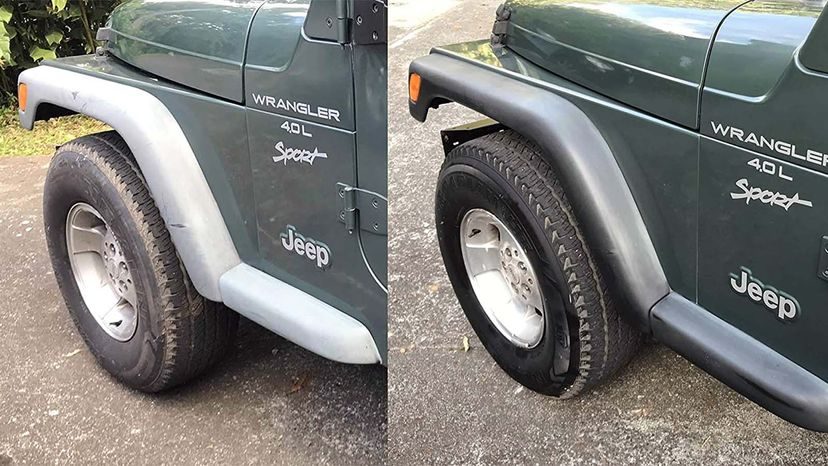
If you look at any modern crossover or wagon, you’ll likely notice it. The wheel wells and side skirts are lined with black textured plastic. It’s a design staple that largely replaces the shiny chrome bumpers of the past. Some people like rugged aesthetic. Some people find it boring. Whatever your opinion, this material has a functional purpose. Acts as a protection for body panels, absorbs small impacts and breaks up large areas of paint.
But there’s a problem. Time and weather are the relentless enemies of this plastic.
Within a few years, the deep matte black will begin to oxidize. UV radiation burns the material and turns it dull, chalky gray. It’s not just an eyesore. According to Consumer Reports, neglecting this trim can lead to structural problems. As the plastic dries, it loses its flexibility and eventually becomes brittle. If this happens, cracks will appear. Chips spread. When your car looks bad, it loses the protection it was supposed to provide.
Good news? It can reverse the aging process.
You don’t need a mechanic or a body shop to fix faded trim. There are products that are specially designed to restore the original black surface. These aren’t magic wands that will work forever, but they are much more effective than making your car look 10 years older than it actually is.
The Chemistry of Trim Restoration
The market is full of solutions. There are liquids, gels, wipes and even sprays. They all have the common goal of darkening faded plastic and providing a protective barrier against future UV damage.
Some products work by applying a black dye. These are very effective. The color returns immediately. But they are messy. If you get dye on your paint, tires, or clothes, you’re in trouble. It stains. Deeply.
Other products are based on conditioners and UV blockers. It nourishes the plastic and restores its flexibility while darkening the surface. While they won’t give you that instant “black as night” look from dyes, they are safer and usually last longer because they treat the material instead of applying it.
Whichever path you choose, the application matters more than the brand name. You can buy the world’s most expensive trim repair compound, but if you put it on a dirty car, it won’t stick. It just sits on top of the dirt and washes away in the next downpour.
The right way to apply
Neglecting to prepare is the fastest way to waste money. The correct order to keep the trim black for longer is as follows.
– Wash thoroughly. ** The car must be washed again and dried thoroughly. Dirt, wax or silicone residues left on the trim prevent the product from adhering.
– Choose the correct location. ** Park your car out of direct sunlight. Heat can cause the product to dry quickly, causing streaks and uneven application.
Good ventilation is also important when working with aerosols and strong solvents.
– Use with care. Use the included applicator pad, clean microfiber cloth or brush. Work in small parts. Don’t try to do the whole car at once.
– ** Polish and wait. ** Wipe off excess product. Dry according to the manufacturer’s instructions. If the color is not dark enough, apply another layer.
Wear gloves. Seriously. Even if the product claims to be safe, you don’t want black dyes or harsh chemicals to come into contact with your skin. And be careful not to get it on your clothes. Once hardened, it is almost impossible to remove.
Beyond the Bumpers
Once your fender is repaired, it doesn’t stop there. See the rest of the car. Window seals, rubber door seals and tire sidewalls (except treads that require traction) all benefit in the same way. These black rubber and plastic parts fade together. Restoring them, you can create a uniform and complete look.
To make it last longer, consider sealing the piece with a UV protection spray. This provides an extra layer of protection against the sun’s most harmful rays. Think of it as sunscreen for the plastic parts of your car.
Warning about “Hacks”
Online forums may recommend peanut butter as a trim restorer. It’s not a joke. I was reminded of this almost 20 years ago when I drove a 1992 Volkswagen Jetta with the giant black plastic bumper typical of the era.
The logic is simple. Peanut butter oils moisturize dry plastic. Technically, it has regained some of its luster. The oil penetrates the surface and reduces the chalky appearance.
But this is reality. Peanut butter is a mess. It contains sugars, solids and fats that attract dirt and insects. There is a smell. It’s sticky. If you don’t clean it thoroughly, it can leave behind a residue that attracts dirt more easily than faded trim.
Stick to products made from automotive plastics. Designed to withstand heat, rain and road salt without making your car prey for insects.
The trim of the car reflects its general condition. If the color fades, the whole car looks abandoned.