


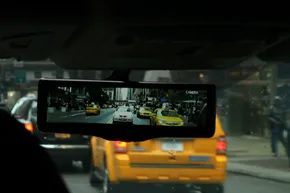
Car camera systems are getting complicated. Fast. Federal regulators are pushing for mandatory rearview cameras on all new vehicles, aiming to cut down on back-over accidents. But let’s be honest. Many current systems are a mess. They’re confusing. Distracting. Some don’t even improve visibility enough to matter.
Rear-view cameras are supposed to be a safety upgrade. In practice? There is always room for improvement.
Nissan thinks it has found the fix. They call it Smart Mirror technology. The Japanese automaker debuted the concept at the 2014 Geneva Auto Show. Now, they are rolling it out as a dealer option on select models in Japan. Global availability is expected by 2015.
The goal is simple. Ditch the plastic screen clutter for something familiar.
How the Hybrid System Works
Most rearview cameras force you to stare at a small LCD screen embedded in the dashboard or center console. You lose the peripheral context. You lose the ability to glance instinctively.
The Nissan Smart Rearview Mirror changes the game by staying where your eyes naturally go.
At first glance, it looks like a standard interior mirror. It works like one, too. When conditions are clear and your cargo area is empty, you just use the glass. No electronics. No latency.
But rain starts pouring? Or you’ve packed the trunk to the roof with camping gear? Visibility drops to zero through the glass. That’s when you hit the switch.
A simple control on the bottom of the mirror housing flips the mode.
The glass turns into a high-definition display. Behind it, a camera mounted on the rear windshield captures the scene. This live feed replaces the reflection. You get an unobstructed view of what’s behind you. You see into blind spots that glass can’t reach. The image stays on the LCD as long as the system is activated.
Why This Matters for Late Adopters
Federal safety rules are coming. Soon, every new car will have a camera. But not everyone wants a digital dashboard. Some drivers prefer analog. Simple. Reliable.
The Smart Mirror bridges that gap.
For people who resist technology, this system lowers the barrier to entry. It doesn’t force them to stare at a separate screen. It integrates the camera into a tool they already trust. When regulations finally mandate these systems, Nissan’s approach might win over the skeptics. It brings more eyes to the Nissan brand, not because it’s flashy, but because it’s familiar.
The technology isn’t perfect yet. Battery drain is a factor. System lag can be a concern. But the concept is sound.
Why choose between a mirror and a camera?
The answer is neither. And both.

Why the Nissan Smart Mirror Beats Standard Camera Systems
Nissan’s Smart Mirror isn’t the first time automakers have tried to replace glass with screens. Peripheral camera systems have existed for years. But this specific implementation does something others fail to do. It feels normal.
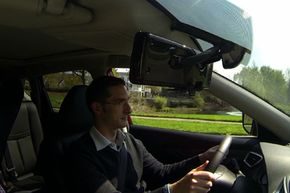
The advantage here is simplicity. You are looking at a rearview mirror. It looks like a rearview mirror. Your eyes don’t dart to a center console screen. They don’t strain toward a heads-up display hovering in the windshield. The interface is intuitive. That reduces distraction because your brain already knows how to process it.
Control is equally straightforward. There is a physical switch embedded directly into the mirror housing. You toggle it. The feed activates. No digging through nested infotainment menus. No shouting voice commands at the dash.
Engineering a New Lens for a Weird Shape
Standard wide-angle cameras didn’t cut it. Early prototypes revealed that off-the-shelf components clashed with the system’s requirements. The constraint was physical. The LCD monitor had to fit inside a traditional mirror housing. That shape is narrow and tall. It is nothing like the wide rectangles used in dashboard screens.
When engineers tested standard wide-angle lenses on this specific LCD, the result was blurry. Low resolution. Not acceptable.
So they built a custom solution. Nissan developed a narrow-angle camera. This lens provides the correct field of view for the vertical screen. They also sourced a new LCD panel. Its aspect ratio matches the camera’s output. This alignment delivers a clear, obstruction-free view.
The result? You see past tall passengers. You see past the C-pillars. The view is wide. It’s also better in bad weather. No foggy windows. No slush buildup that the rear wiper can’t clear fast enough. Nissan claims the system handles tricky lighting well too. Sunrise glare. Sunset hues. Headlights from cars behind you. The electronic view cuts through the visual noise.
Legal Compliance and Driver Awareness
The hardware itself is compliant. In its standard state, the mirror meets federal safety regulations. It is a piece of glass. When you flip the switch, it becomes a screen. But it still looks mostly like a mirror.
Nissan added a small indicator in the upper right corner of the display. It shows which view is active. This is a safety feature. It prevents confusion. If you are relying on the camera feed, you need to know you are looking at a camera feed. Not a reflection.
The goal is seamless integration. Not flashy tech for tech’s sake. Just a tool that works.
Design freedom and aero gains
The Smart Mirror didn’t just show up at the 2014 New York Auto Show to look pretty. It took home the Traffic Safety Achievement Award from the World Traffic Safety Symposium in the same month. That’s not a participation trophy. The symposium specifically looks for innovations with real potential to save lives. Nissan was being rewarded for the idea before the tech was even in a showroom.
But the safety angle is just the headline. The real story is what it does for car design.
Traditionally, you can’t just make a car wide because you want to. The C-pillar—the part of the frame behind the rear door window—has to be thin enough so you can actually see behind you. It’s a hard constraint. If the pillar is too wide, you have a blind spot. If it’s too thin, the car might not be strong enough in a crash. It’s a constant tug-of-war.
The Nissan Smart Mirror changes the rules.
If the view is on a screen inside the cabin, the C-pillar doesn’t matter as much. Designers get their freedom back. They aren’t just playing with shapes for art’s sake. They can focus on aerodynamics without sacrificing visibility. A sleeker car cuts through the air better. Better aerodynamics means better fuel efficiency. It’s a direct line from a wider pillar to a more efficient engine.
Le Mans pressure test
Theory is fine. Reality is harder.
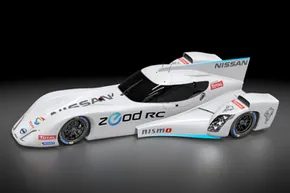
Nissan isn’t waiting for a sedan to hit the market to test this. They’re putting it in the fire. The Smart Rearview Mirror is going into the ZEOD RC, the electric race car built for the 24 Hours of Le Mans.
Why Le Mans? Because it’s the ultimate stress test. The NISMO motorsports team needs every advantage. They can tweak the bodywork to squeeze out more downforce and less drag. They can also see if the drivers actually like it. Does the digital feed help them judge braking points at 200 mph? Or is it a distraction? The race team gets to tinker with the aerodynamics while the drivers hammer the limits of the track. If it works there, it’ll work anywhere.
Will cameras disappear?
Don’t pack away your backup cameras.
The US government is mandating rearview cameras on all new cars by 2018. That’s the law. The Nissan Smart Mirror won’t replace that requirement. It’s an upgrade, not a replacement. It offers a wider, clearer, and less distorted view than a standard camera lens.
Nissan hasn’t said if they’ll license this tech to other manufacturers. And so far, no one else has shown a similar system. It’s a proprietary advantage.
If the Le Mans test goes well, and if drivers find it intuitive, it could become the standard way to meet those federal camera mandates. Not because regulators want digital mirrors, but because this system does the job with fewer distractions. It’s simple. It’s efficient. It just works.
Beyond the mirror
The implications stretch further than just seeing what’s behind you.
This technology forces a rethink of the entire cabin layout. If the rearview is digital, where does the camera go? You can hide it. You can optimize its placement without worrying about where a physical glass pane needs to be. This opens up new possibilities for vehicle architecture that we haven’t even seen yet.
The scale tips toward efficiency. Toward design freedom. Toward a future where visibility isn’t limited by steel and glass.
Will it catch on? Maybe. The tech is there. The safety awards are in hand. The race cars are prepped. The only question is whether drivers are ready to trust a screen over a piece of glass.
It’s a small change. But in the automotive world, small changes often mean big shifts.


