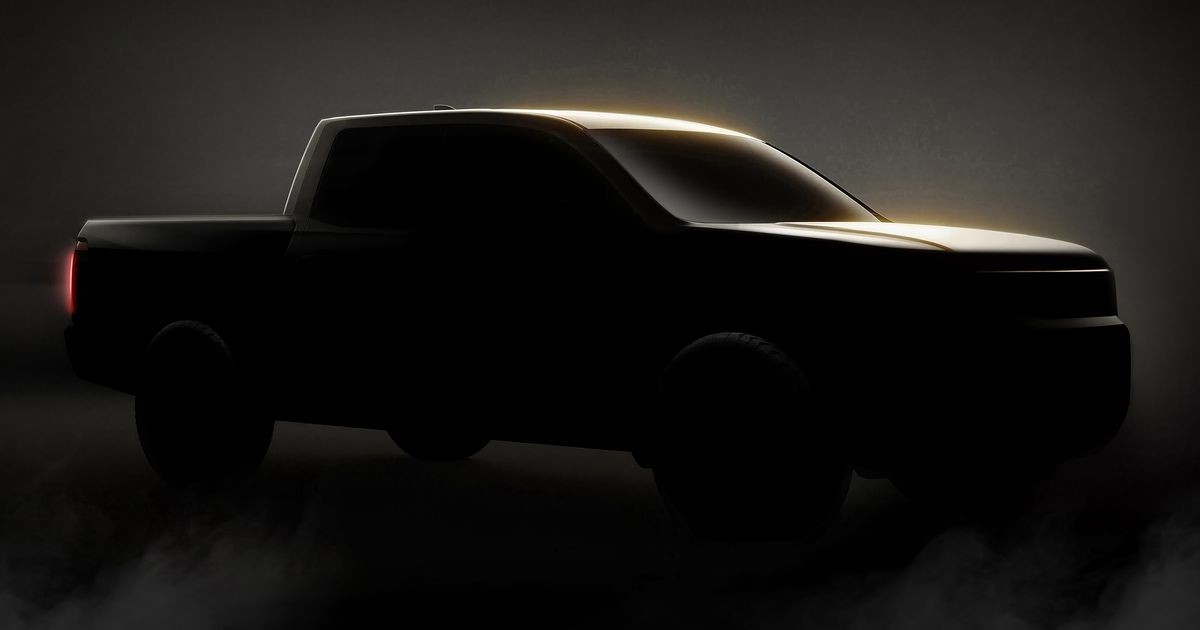
Honda is finally moving on the ute front. Or at least, they’re signaling intent with the kind of vague corporate poetry that makes us hopeful. The Japanese automaker confirmed a third-generation Honda Ridgeline is in the works, targeting a US launch within the next two years. Production kicks off in 2028 out of their Alabama plant.
The big question isn’t when it hits America. Everyone expects that. The real hook is whether it lands on our shores.
“The next Ridgeline… will advance this legacy while gaining even more rugged Design and capabilities.”
That quote came from Honda. It’s brief. It’s safe. But look closer at the context.
Why the New Ridgeline Might Finally Come to Australia
For years, local executives played hard ball. Nick Parkington, Honda Australia’s general manager of automotive, kept the door cracked but never opened it wide. The previous generation? Too old in its lifecycle. Not worth importing.
Then Jay Joseph arrived as CEO in April 2025.
He spent 27 years in North America. He knows the product. He knows the network. He didn’t rule it out for the new model. In fact, he explicitly mentioned discussing overseas models not previously sold here.
Joseph’s North American background changes the dynamic. It suggests a pipeline that was previously clogged might finally clear. The new Ridgeline is being designed by Honda’s California studio. It’s built for a market that values ruggedness, capability, and utility. That aligns with what Australian buyers actually want.
Is it a done deal? No. Parkington remains noncommittal, calling it an “exciting product” while actively exploring the global range. But the signal is there.
How Does the Ridgeline Compare to Local Utes?
Let’s talk specs, because feelings don’t move metal.
The current Honda Ridgeline is a dual-cab, five-seater. It sits at 5,339mm long, just shy of 2,000mm wide. The wheelbase is 3,181mm.
It’s bigger than you think. It lines up directly with the Ford Ranger and Toyota HiLux, Australia’s top sellers.
But the engineering philosophy is wildly different.
- Ridgeline: Car-like monocoque construction.
- Ranger/HiLux: Traditional ladder-frame chassis.
This matters. The Ridgeline drives like a car. It handles corners better. It feels less like a truck hauling a payload and more like a crossover with a bed. Whether the new generation retains this body-on-frame vs. unibody debate is unknown. Honda is working on a new V6 hybrid powertrain for larger US models. That could be the game-changer.
Will the Next Ridgeline Be Hybrid?
Probably.
Honda is pushing hard into electrification. The current model runs a 3.5-litre V6 naturally aspirated petrol. It puts out 209kW and 355Nm. Paired with a nine-speed automatic and all-wheel drive, it’s competent.
But the market is shifting.
The US price starts at $40,795 (roughly $A58,500). That’s steep. It’s about $3,000 more than the base Ford F-150.
If Honda wants to compete in Australia against the BYD Shark 6 (plug-in hybrid) and the upcoming MG U9 EV, a simple petrol V6 might not cut it.
The landscape is getting crowded.
* Chery Stockman: Diesel PHEV.
* Toyota HiLux BEV: Electric.
* BYD Shark: Already here.
Rob Thorp, Honda Australia’s director, said the plan is to expand into segments where they aren’t represented. A hybrid ute fits that description perfectly. It fills the gap between a soft-roader SUV and a rugged work truck.
Is It Too Late for Honda?
Maybe.
The Australian ute market is saturated. Loyalty is high. Breaking through with a new player requires more than just a pretty brochure image from a California design studio. It requires pricing that makes sense, availability that doesn’t require waiting five years, and a product that does what Aussies need it to do.
The current Ridgeline tries to be a crossover, a ute, and a family hauler all at once. Some love that duality. Others hate it because it lacks the raw toughness of a ladder-frame frame.
If the next gen goes rugged—more truck, less car—it might win over traditionalists. If it goes full hybrid-electric, it might win over the eco-conscious suburbanite.
Honda has the manufacturing capacity in Alabama. They have the design team in California. They have a CEO who understands the US product line intimately.
All they need to do is say yes.
Until then, we wait. The door is open. The hinge is oiled.
Whether anyone walks through it remains to be seen.