



We’ve all been there. The trunk is open. The house is empty. You have a mountain of boxes, a refrigerator, and a dog that keeps trying to climb into the cooler. Your arms are tired. Your back is stiff. You realize you are moving more than your body can comfortably handle.
Cars don’t have muscles. They have engines. They have transmissions. They have suspension components rated for specific limits. When you overload a vehicle, you aren’t just making your life harder. You are stressing mechanical parts to the breaking point. You are turning your commute into a hazard for everyone else on the highway.
Payload matters. It isn’t just about fitting your stuff inside. It’s about keeping the vehicle on the road and the tires from blowing out. It’s about safety.
Payload is any load carried by a vehicle. This includes cargo. It includes passengers. It includes the fuel in the tank if you are being strict about weight distribution, though usually, it refers to the weight added on top of the vehicle’s curb weight.
Most people ignore this number. They look at the size of the cargo area. They estimate the weight of their groceries. They guess how heavy their kids are. None of this is accurate.
Here is the problem: You cannot just guess. You need numbers. You need to know exactly how much your specific vehicle can carry before you start loading up.
Finding Your Numbers
Where do you look? The answer is in the door jamb. Or the glove box. Or the owner’s manual. There is a sticker with a yellow and white background. It lists the payload capacity.
This number is not a suggestion. It is a hard limit. It is the maximum weight the vehicle can safely carry, including passengers, cargo, and accessories.
If you exceed this limit, you are in dangerous territory.
The Math Is Simple
Here is the formula:
- Find the Gross Vehicle Weight Rating (GVWR). This is the maximum safe total weight of the vehicle, including everything.
- Find the Curb Weight. This is the weight of the vehicle with all fluids and a full tank of gas, but no passengers or cargo.
- Subtract the curb weight from the GVWR.
The result is your payload capacity.
Let’s say you have a truck. The GVWR is 6,000 pounds. The curb weight is 4,500 pounds. The payload capacity is 1,500 pounds.
You have 1,500 pounds to play with.
Now, here is where people mess up. They think the 1,500 pounds is just for boxes. It isn’t.
Passengers count.
If you have two adults in the truck, that’s roughly 400 pounds right there. One in the back seat, another 200 pounds. That’s 600 pounds gone. You have 900 pounds left for cargo.
If you add a full tank of gas, that’s another 150 pounds. Now you have 750 pounds.
If you add a bed liner, a hitch, and some aftermarket wheels, that’s another 200 pounds.
You have 550 pounds left for your groceries, your

It’s not magic. It’s arithmetic. If you want to know how much gear, people, and cargo your vehicle can handle without turning its suspension into a tragic performance art piece, you only need two numbers.
Gross vehicle weight rating (GVWR).
Curb weight.
That’s it.
Most people stare at their dashboard and wonder why the tires look tired. They’re trying to guess. Don’t guess. Do the math.
What GVWR Actually Means
GVWR is the hard ceiling. It’s the maximum allowable weight the manufacturer says the vehicle can carry when it’s fully loaded. Ready to drive.
This isn’t just the weight of the metal box you sit in. It includes:
– The vehicle itself.
– All fluids. Gas, oil, coolant, brake fluid.
– Every passenger.
– Every tool, tent, boat, or mountain bike strapped to the roof.
You’ll find this number plastered on a sticker inside your driver’s side door jamb. Check the owner’s manual. You can also find it online by looking up your specific VIN or trim level.
Miss this number? You’re driving blind. Exceed it? You’re voiding warranties, risking brake failure, and probably illegal.
Curb Weight: The Empty Weight
Curb weight is what the scale says when the car is alone.
But “alone” is tricky. It includes a full tank of gas. It includes all operating fluids. It does not include passengers. It does not include cargo.
Think of it as the weight of the vehicle in its default, ready-to-drive state. If you add anything else, you’re eating into your payload.
The Subtraction Game
Payload capacity is just GVWR minus curb weight.
GVWR – Curb Weight = Payload Capacity
Simple subtraction. No tricks.
Let’s look at a real example. Say you have a mid-size SUV.
- GVWR: 3,500 lbs (1,588 kg)
- Curb Weight: 3,000 lbs (1,361 kg)
3,500 minus 3,000 leaves you with 500 lbs (227 kg).
That’s your total payload. All of it.
Two adults? A dog? A cooler full of beer? Roof racks? All of that comes out of that 500 lbs.
Do the math before you load up.
Why Vehicle Type Matters
Does it matter if you’re driving a sedan, a truck, or an SUV?
Yes. Because payload capacity changes drastically based on platform.
A compact car might have a GVWR of 3,800 lbs and a curb weight of 3,200 lbs. That’s 600 lbs of payload. Add two people and a suitcase, and you’re at 90% capacity. Drive a third person and a backpack? You’re over.
A full-size pickup? Different story. Different numbers. Different rules of engagement.
Truck Payload
Trucks are built for this. But “built for it” doesn’t mean “infinite capacity.”
Pickup trucks have higher GVWRs. Often
Defining the Load Limit
Stop thinking of payload like it’s just “stuff in the trunk.” It’s not. What you toss into a sedan or crossover is fundamentally different than what a pickup hauls. You don’t lug long, heavy lumber for a home renovation in a small wagon. And you sure don’t need a beefy, heavy-duty rig to tote a few bags of groceries.
Trucks carry heavier cargo. Period. To understand how much they can actually hold, you have to look at how the US government classifies these machines. It’s all about the Gross Vehicle Weight Rating (GVWR). There are two ways to slice this pie: by weight class or by duty category. They overlap, but they serve different purposes.
The DOT divides trucks into eight specific weight classes based on their maximum GVWR.
Weight Class Breakdown
- Class 1: 6,000 lbs (2,722 kg)
- Class 2: 10,000 lbs (4,536 kg)
- Class 3: 14,000 lbs (6,350 kg)
- Class 4: 16,000 lbs (7,258 kg)
- Class 5: 19,500 lbs (8,845 kg)
- Class 6: 26,000 lbs (11,793 kg)
- Class 7: 33,000 lbs (14,969 kg)
- Class 8: Anything over 33,000 lbs
The Department of Transportation simplifies this further into broader buckets. Classes one and two are light-duty. Three through five? Medium-duty. Six and up is heavy-duty territory.
Knowing where your rig sits in this hierarchy helps you calculate your payload capacity without blowing an axle.
“Knowing where your truck falls within these categories will make it easier for you to determine how much payload you can afford to carry during your trips.”
Next, we look at the passenger car side of the equation.
Car Payload
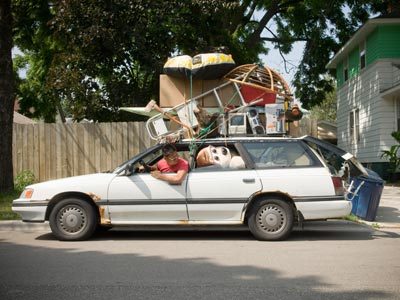
Payload isn’t just a truck problem. We tend to ignore it in sedans, assuming the limits are so high they don’t matter. A family pack for a road trip rarely triggers a warning light. The weight of the kids, the luggage, maybe a cooler in the trunk. It feels fine. It’s heavy, sure. But not dangerously heavy. Or so we tell ourselves.
This mindset is a mistake. Even in a passenger car, payload is finite. And it’s not just what you throw in the trunk. People count.
Manufacturers build these numbers into the specs. Most automakers assume a standard passenger weight. That number is usually 150 pounds (68 kg) per seat. Think of every empty seat in your vehicle as a bucket holding 150 pounds. If your rear bench is empty, you have a 450-pound (204 kg) buffer. Fill that bench with three adults, and that buffer vanishes. Now you have less room for gear. Less room for fuel. Less safety margin.
Load it wrong, and handling degrades. Braking distances extend. Suspension bottoms out. It’s physics, not opinion.
SUV Payload
So what happens when you move up to an SUV? You get more space. More ground clearance. A higher stance.
Does that mean you can carry more stuff?
Yes. But the margins are tighter than you’d think.
SUVs have higher Gross Vehicle Weight Ratings (GVWR). That’s the max weight of the vehicle itself plus everything in it. It includes the fuel, the passengers, the cargo. The difference between GVWR and the vehicle’s curb weight gives you your total payload capacity.
A mid-size SUV might have a payload capacity of around 1,000 pounds (450 kg). That sounds like a lot. It is. Until you realize that a full tank of gas weighs 100-150 pounds. Three passengers take another 450 pounds. That leaves roughly 450 pounds for cargo.
You might think you can fit a week’s worth of camping gear, two bikes, and a tent in there. You can’t. Not if you want to stay under the limit.
“Payload capacity is the difference between what the truck weighs and what it’s allowed to weigh fully loaded.”
SUVs are taller. That raises the center of gravity. Load up the roof rack with heavy gear, and you’re inviting a rollover. Load up the rear with heavy boxes, and you’ll feel the rear end sag. Steering becomes vague. The front tires lose grip.
It’s not just about fitting things in. It’s about where you put them.
Most SUVs are built on car platforms. They share suspension geometry with sedans. They don’t have the heavy-duty springs and shocks of a pickup. They’re not designed to haul tons of weight. They’re designed to carry people and moderate loads.
If you’re towing, that’s a different calculation. Tow ratings and payload are separate numbers. But they interact. The tongue weight of a trailer counts against your payload. A 20% tongue weight on a 3,000-pound trailer is 600 pounds. That’s half your payload capacity gone. Just for the hitch.
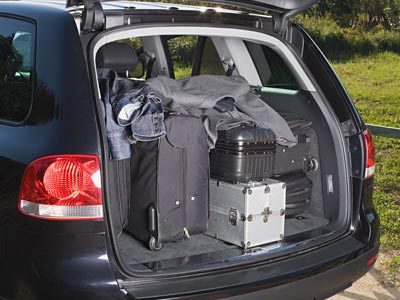
SUVs sit in that weird middle ground. You want the carrying power of a pickup but the comfort of a sedan. The reality is messier. Think of payload capacity as a sliding scale. It sits between a truck and a car. Usually, you can carry more than you could in a Toyota Camry.
Most SUVs make this easy. Fold the rear seats forward. Suddenly you have one massive, flat storage area. You can stuff in heavy-duty gear. Bikes. Kayaks. Boxes of books.
But there is a hard limit. Trucks let you pile cargo high. SUVs have roofs. You can’t just keep stacking.
Why Overloading an SUV is Risky
It’s not just about fitting stuff in. It’s about staying upright. Treating an SUV like a truck is a mistake. A dangerous one.
The center of gravity is the killer. SUVs sit higher. When you overload them, that center of gravity shifts. And it shifts upward.
Rolling over isn’t a possibility. It’s a probability. Especially if you’re taking a corner too fast. The physics don’t care about your cargo list.
Manufacturers noticed. They saw the fear. Consumer anxiety spiked. The response? Electronic stability control. Most modern SUVs have it. It helps keep you on the road. But it can’t fight physics forever.
The Legal Safety Net
Legislators got involved. The National Highway Traffic Safety Administration (NHTSA) stepped in. Since September 2004, there’s a federal rule.
Look at the door jamb. On the driver’s side. You’ll see a label. It states the maximum combined weight. This includes every person inside. Plus every piece of cargo.
This applies to vehicles with a Gross Vehicle Weight Rating (GVWR) under 10,000 pounds. That’s 4,536 kilograms.
Why the label? Because the math is tricky. People forget their own weight. They forget the weight of the roof rack. They forget the spare tire. The label is a hard stop.
Pushing the Limits
So the label says stop. But what if you absolutely need to haul more? Can you cheat the system? Can you increase payload capacity?
The answer isn’t simple. It involves suspension upgrades. Heavier springs. Reinforced shocks. But there are risks. Modifying one part affects another. Brakes? Steering? Tires?
You aren’t just moving weight. You’re changing the vehicle’s behavior. And behavior changes can be fatal.
There is a way to increase capacity. But it’s not a bolt-on fix. It’s a structural conversation with engineers.
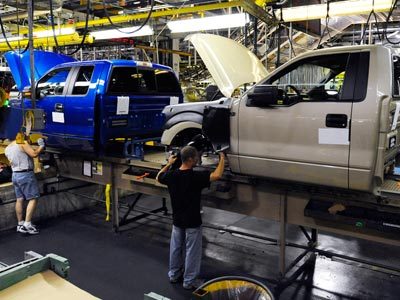
Knowing your max payload is step one. What if you need to haul more? Is there a loophole? Maybe you found a used Ford F-150 or a Tacoma with limited tow ratings, and the stock specs just don’t cut it. The short answer is usually no—you can’t just ignore physics. But there are ways to stretch those limits, provided you don’t blow a gasket or get pulled over.
Can You Really Boost Payload Capacity?
Manufacturers design vehicles with a specific Gross Vehicle Weight Rating (GVWR) in mind. They also offer optional towing packages, but these aren’t magic wands. A towing package typically adds a trailer wiring harness, a heavy-duty hitch, safety chains, and sometimes a upgraded cooling system or stronger brakes. These components help manage the towing load, not necessarily the payload inside the cabin or bed.
“Overloading a vehicle with too much payload is a dangerous situation, one that can harm you, your passengers and other drivers.”
If you try to cheat the system by adding aftermarket lift kits or heavy-duty suspension, you might feel like you’ve increased capacity. You haven’t. You’ve just made a heavier truck that handles poorly. The actual payload limit is determined by the chassis, suspension, and tires. If you exceed that number, you’re rolling a time bomb.
The Legal Risk
Here’s the part most enthusiasts ignore until it’s too late. If a police officer sees a truck squatting low at the rear or hears a loud squeal from overworked brakes, they will pull you over. If they determine you are overloaded, you can get a ticket for unsafe vehicle loading.
It’s not just a slap on the wrist. In some jurisdictions, it’s a serious moving violation. And if an accident happens because your brakes failed due to excessive weight? You’re looking at negligence charges. No one enjoys a ticket, let alone a lawsuit.
Specific Payload Data by Make
Since I can’t list every single trim and option combination for every model ever made, here is a snapshot of max payload capacities for select makes and years. These figures are in pounds (lbs).
Acura Payload
Acura wasn’t exactly a hauler in the mid-2000s. Most sedans and crossovers had modest ratings.
| Year | Model | Max Payload (lbs) |
|---|---|---|
| 2006 | MDX | – |
| 2006 | RL | – |
| 2006 | RSX | – |
| 2006 | TL | – |
| 2006 | TSX | – |
| 2007 | MDX | 1158 |
| 2007 | RL | – |
| 2007 | RDX | 870 |
| 2007 | TL | – |
| 2007 | TSX | 850 |
| 2008 | MDX | 1158 |
| 2008 | RL | – |
| 2008 | RSX | 870 |
| 2008 | TL | – |
| 2008 | TSX | 850 |
| 2009 | MDX | 1158 |
| 2009 | RL | – |
| 2009 | RSX | 870 |
| 2009 | TSX | 850 |
More Acura Specs:
– Acura GVWR
– Acura GAWR
– Acura GCWR
– Acura Cargo Carrying Capacity
– Acura Curb Weight
– Acura Towing Capacity
Audi Payload
Audi’s performance models rarely prioritized hauling. The TT and RS series are lightweight. The A8 is a luxury barge with a decent payload.
| Year | Model | Max Payload (lbs) |
|---|---|---|
| 2006 | A3 | – |
| 2006 | A4 | – |
| 2006 | A6 | – |
| 2006 | A8 | 1213 |
| 2006 | S4 | – |
| 2006 | TT | 728 |
| 2007 | A3 | – |
| 2007 | A4 | – |
| 2007 | A6 | – |
| 2007 | A8 | – |
| 2007 | Q7 | – |
| 2007 | RS4 | – |
| 2007 | S4 | – |
| 2007 | S6 | – |
| 2007 | S8 | 1213 |
| 2008 | A3 | – |
| 2008 | A4 | – |
| 2008 | A5 | – |
| 2008 | A6 | – |
| 2008 | A8 | – |
| 2008 | Q7 | – |
| 2008 | R8 | – |
| 2008 | RS4 | – |
| 2008 | S4 | – |
| 2008 | S5 | – |
| 2008 | S6 | – |
| 2008 | S8 | – |
| 2008 | TT | – |
| 2009 | A3 | – |
| 2009 | A4 | – |
| 2009 | A5 | – |
| 2009 | A8 | – |
| 2009 | Q7 | – |
| 2009 | R8 | – |
| 2009 | S4 | – |
| 2009 | S5 | – |
| 2009 | S8 | – |
| 2009 | TT | – |
More Audi Specs:
– Audi GVWR
– Audi GAWR
– Audi GCWR
– Audi Cargo Carrying Capacity
– Audi Curb Weight
– Audi Towing Capacity
BMW Payload
The E90/E91 generation 3-series and 5-series hover around the 1000 lb mark. The Z4 is light, as expected. Note that the X5 and X6 take a heavier load.
| Year | Model | Max Payload (lbs) |
|---|---|---|
Chevrolet Payload Data
The Chevy Avalanche 1500 sat at 1387 lbs for 2006. That number dropped to 1258 in 2007 before climbing back to 1444 in 2008. It ended its run at 1333 lbs in 2009. The heavy-duty Avalanche 2500 was a different beast. It started at 2072 lbs in 2006. Data for subsequent years isn’t listed, but the capacity held up where it mattered. The Colorado is the mid-size workhorse here. 2006 saw 1532 lbs. It dipped slightly to 1316 in 2007 and 2008. By 2009, it settled at 1250 lbs. Don’t bother checking the Aveo or Cobalt. They carry nothing. Not even a passenger over the limit. The Express van is solid. 2306 lbs across 2006 to 2008. In 2009, the Express 2500 jumped to 3262 lbs. The Express 3500 went even higher at 4147 lbs. The HHR is a crossover with a backseat. 900 lbs max payload. That stays constant through 2009. The Silverado 1500 is where the real numbers hide. 2006 was strong at 1913 lbs. 2007 dipped to 1658. 2008 held at 1652. 2009 stayed there. The Hybrid versions are lighter. 1162 lbs in 2006. The SS trim dropped to 1253 lbs. The HD trucks are the heavy lifters. Silverado 1500 HD hit 3129 lbs. The 2500 HD started at 3606 lbs in 2006. It dropped to 3458 in 2007 and 2008. The 3500 HD was a tank. 5169 lbs in 2006. Then 3621 in 2008. 3873 in 2009. Suburban and Tahoe share some DNA. The 1500 Suburban started at 1731 lbs in 2006. Dropped to 1593 in 2007 and stayed. Tahoe 1500 was 1522 lbs in 2006. Jumped to 1835 in 2007 and held. The 2500 Suburban was heavier. 2828 lbs in 2006. Dropped to 2561 in 2007 and stayed. TrailBlazer sat at 1194 lbs consistently. The EXT version added a bit more. 1429 lbs in 2006.
Chrysler Payload Numbers
Chrysler wasn’t heavy in these years. The 300 and 300C have no payload data listed. They aren’t built for it. The PT Cruiser had some life left. 1907 lbs in 2007. Then it dropped to 889 in 2008. 2009 has no data. The Pacifica was modest. 889 lbs in 2007. 865 in 2008. The Aspen showed up in 2007. 1600 lbs. It stayed there through 2009. The Aspen Hybrid dropped to 1500 lbs. The Town & Country minivan carried 1200 lbs in 2007 and 2008. 2009 has no listing. The Crossfire and Sebring are empty slots.
Dodge Payload Specs
Dodge had more muscle in the trucks. The Ram 1500 started at 1750 lbs in 2006. Held that in 2007. Jumped to 1810 in 2008. Then dropped significantly to 1490 in 2009. The Ram 2500 climbed. 3020 lbs in 2006. 3130 in 2007. 3210 in 2008. 3260 in 2009. The Ram 3500 was massive. 4660 lbs in 2006. 4780 in 2007. 4870 in 2008. Then a sharp drop to 3560 in 2009. Sprinter vans had mixed numbers. The 2500 van started at 3950 lbs. Dropped to 3766 in 2007 and stayed. The 3500 van was 3950 lbs. Then 4350. Then 4530. The wagon version was weird. 4824 lbs in 2006. 3074 in 2007 and 2008. 3074 again in 2009. The Dakota truck held steady. 1750 lbs in 2006. 1710 in 2007. 1630 in 2008 and 2009. The Durango SUV was similar. 1750 lbs in 2006 and 2007. 1780 in 2008 and 2009. The Durango Hybrid dropped to 1500 lbs. The Charger and Magnum stayed at 1270 lbs. The Nitro was light. 1150 lbs across 2007-2009. The Grand Caravan was 1700 lbs in 2006 and 2007. No data for later years. The Caravan was 1682 lbs. The Caliber, Avenger, Challenger, and Viper have no payload data.
Ford Payload Capacity
Ford’s E-series vans are the heavy hitters here. The E 150 started at 1930 lbs in 2006. Jumped to 3310 in 2007. Held at 3314 in 2008. Dropped to 3220 in 2009. The E 250 was stronger. 3435 lbs in 2006. 3700 in 2007. 3624 in 2008. 3530 in 2009. The E 350 Super Duty was huge. 4165 lbs in 2006. 4200 in 2007. 4110 in 2008. 4060 in 2009. The F-series trucks are the main event. The F 150 was 1640 lbs in 2006. 1650 in 2007 and 2008. Then a massive jump to 3030 lbs in 2009. That’s a huge discrepancy. The F 250 sat at 3100 lbs for 2006-2007. Dropped to 3030 in 2008. No data for 2009. The F 350 was 4000 lbs in 2006 and 2007. Dropped to 3900 in 2008. The F 450 appeared in 2008 at 6120 lbs. Then dropped to 3900 in 2009. The Explorer was 1414 lbs in 2006. 1520 in 2007, 2008, and 2009. The Expedition held at 1822 lbs. The Escape was light. 960 lbs. The Hybrid was slightly heavier at 1040 lbs. The Ranger stayed at 1260 lbs. The Focus had 990 lbs in 2006. No data after. The Mustang and Fusion have no payload data.
GMC Payload Figures
GMC mirrors Chevy mostly. The Canyon started at 1547 lbs in 2006, 2007, and 2008. Dropped to 1422 in 2009. The Sierra 1500 was 1889 lbs in 2006. Jumped to 1952 in 2007. 1947 in 2008. 1842 in 2009. The Sierra 2500 was heavy. 4058 lbs in 2006. Dropped to 3892 in 2007 and 2008. Rose to 3924 in 2009. The Sierra 3500 had gaps. No data in
Honda Payload Specs
The Ridgeline remains the most consistent heavy lifter in the Honda lineup during this window, holding a steady 1549 pounds max payload from 2006 through 2008. That number jumps slightly to 1549 in ’08 and stays put, but the real story is the Odyssey. For four straight years (06-09), the minivan delivered a solid 1349 lbs. If you’re looking for passenger car utility, stick to the smaller Civics. The 2007 and 2008 Civic models both list a respectable 385 lbs payload. The 2006 Element was a bit weaker at 675 lbs, while the Insight offered a meager 400 lbs in its lone listed year. Most sedans like the Accord and CR-V show no data here, likely because their GVWRs were optimized for people, not gear.
HUMMER Payload
Hummer didn’t bother with small numbers. The H2, once production settled in 2008, stabilized at a robust 2200 lbs payload capacity. That’s serious stuff for a vehicle that weighs as much as a house. The H3 was less versatile, sitting at 1150 lbs from 06 through 08. It got a slight bump to 1312 lbs in 2009, while the pickup variant, the H3T, was listed at 1090 lbs that same year. The H1 Alpha in 2006 was the heavyweight champ of the bunch with 3087 lbs, but that was a niche military derivative, not the street-legal SUV most buyers knew.
Hyundai Payload
Hyundai’s early-to-mid 2000s lineup lacks specific payload figures in these records. We have zeros across the board for the Accent, Azera, Elantra, Santa Fe, Sonata, Tiburon, and Tucson for years 2006 through 2008. The Veracruz also comes up empty. By 2009, the Genesis appears, but again, no payload data is provided. This suggests either the manufacturer didn’t publish these specific figures for these models or they were negligible compared to towing or cargo specs. If you need precise weight limits for a Hyundai from this era, you’re likely looking at a dead end in these specific tables.
Infiniti Payload
Infiniti’s luxury SUVs carried more weight than their sedan counterparts. The QX56 was the clear winner, starting at 1440 lbs in 2006 and climbing to 1553 lbs by 2008, where it stayed for 2009. The FX series was also strong. The FX35 held at 1183 lbs for three years before jumping to 1213 lbs in 2009. The FX45 (later renamed FX50) hovered around 1091-1185 lbs. Sedans were more restrictive. The M35 and M45 started empty in 2006 but showed up with 996 and 1010 lbs respectively in 2008. The G35 and G37 were tighter, with the G37 posting 1040 lbs in 2008.
Isuzu Payload
Isuzu’s i-Series trucks had some muscle. The i-280 in 2006 could handle 1532 lbs. When it became the i-290 in 2007, that figure held steady at 1532 lbs, before dropping slightly to 1512 lbs in 2008. The larger i-350 started at 1190 lbs in 2006 but saw significant variability. It jumped to 1516 lbs in 2007 before dropping to 1260 lbs in 2008. The Ascender SUV was the constant at 1133 lbs for all three years listed. If you’re carrying heavy loads in an i-Series, the 2007 model year was surprisingly capable.
Jaguar Payload
Jaguar’s payload numbers are low, reflecting their focus on high-speed cruiser comfort rather than utility. The X-Type was the most consistent, holding 1058 lbs from 2006 through 2008. The XK and XKR models dropped off a cliff in the final year. In 2008, the XK offered 815 lbs and the XKR 772 lbs. By 2009, the XK Coupe recovered slightly to 815 lbs, but the XKR stayed at 772 lbs. The XF, arriving in 2009, had no data listed. Older models like the S-Type, XJ8, and XJR show no capacity data, suggesting their structural limits were either undocumented or not a primary selling point.
Jeep Payload
Jeep’s off-roaders had varied capabilities. The Commander SUV started strong in 2006 at 1620 lbs but dropped to 1300-1310 lbs in subsequent years. The Grand Cherokee hovered between 1050 and 1180 lbs, with a notable jump to 1180 lbs in 2008 and 2009. The Liberty was stubbornly consistent at 1150 lbs from 2006 to 2009. The Wrangler and Wrangler Unlimited both sat at 1000 lbs, though the Unlimited bumped up to 1150 lbs in 2009. If you’re hauling gear in a Patriot or Compass, expect around 925 lbs.
Kia Payload
Kia’s entry-level trucks and SUVs were surprisingly competent for their class. The Borrego SUV debuted in 2009 with a massive 1815 lbs payload capacity, beating out almost everything else in this segment from these years. The Sedona minivan was a steady performer, holding 1532 lbs from 2007 through 2008. The Sorento hovered around 1200-1318 lbs. The Rio models were light-duty, with the Rio 5 at 1200 lbs and the standard Rio at 1273 lbs for 2006-2008. The Sportage varied between 1195 and 1289 lbs.
Land Rover Payload
Land Rover’s Range Rover line maintained fairly stable payload limits. The Range Rover itself sat between 1136 and 1360 lbs, dipping to 1136 lbs in 2008 and 2009. The Range Rover Sport was even more consistent, holding 1301 lbs for three years before dropping to 1067 lbs in 2009. The LR3 started high at 1806 lbs in 2006, then settled into a range of 1325-1695 lbs. The smaller LR2 was the weakest link, stuck at 1100 lbs for both 2008 and 2009.
Lexus Payload
Lexus SUVs were the kings of payload in the luxury segment. The LX 570 and GX 470 both carried 1329 lbs, with the LX 570 jumping to 1411 lbs in 2008 and holding that for 2009. The RX series was mixed. The RX 350 started at 1395 lbs in 2007, dropped to 925 lbs in 2008, and stayed there. The RX 400h was a consistent 926 lbs. Sedans were tighter. The IS-F and SC 430 were restrictive, with the SC 430 stuck at 690 lbs for years. The LS 460 offered 1201 lbs, while the ES 350 sat at 1099 lbs. The GS series was the most variable, ranging from 729 lbs (GS 460) to 1066 lbs (GS 450h).
Lincoln Payload
Lincoln’s trucks and full-size SUVs carried significant weight. The Mark LT started at 1620 lbs in 2006 and climbed to 1680 lbs in 2007, where it remained for 2008. The Navigator was also a heavy lifter, starting at 1540 lbs and climbing to 1650 lbs by 2007, staying there through 2009. The MKS sedan offered a surprising 1123 lbs in 2009. The MKX was a mid-tier option at 958 lbs. The Town Car, an aging platform, was limited to 900 lbs across all years, a bottleneck that likely contributed to its eventual demise.
We are moving down the alphabetical list. If you are hunting for a used vehicle from 2006 to 2009, payload matters more than you think. It is not just about towing. It is about what you can actually throw in the back seat, trunk, or bed without blowing out suspension components or exceeding Gross Vehicle Weight Rating (GVWR).
Most people ignore this number until they are stuck with a flat tire and a trailer they cannot legally pull. Do the math first. Subtract your curb weight from your GVWR. That is your max payload.
Here is the breakdown for Mazda through Saab.
Mazda Payload
Mazda had a weird mix in this era. You had the B-Series trucks (which were basically rebadged Ford Rangers), the practical MPV, and some surprisingly light sport coupes.
In 2006, the B3000 stood out. It had a massive 1680 lbs of payload. That is serious utility for a compact truck. The B2300 and B4000 were heavier duty in terms of GVWR but lighter in payload capacity at 1260 lbs. The Mazda3 and Mazda6 didn’t have specific payload data listed in many sources, likely because their curb weights ate up most of their budget. The MazdaSpeed6 was light on payload at 963 lbs. It was built for speed, not hauling.
2007 brought the CX-9 into the fold. It offered 1493 lbs of payload. That is decent for a three-row crossover. The Mazda5 stayed steady at 1239 lbs. The RX-8 dropped slightly to 765 lbs.
By 2008, the lineup shrank. The CX-9 and CX-7 disappeared from some charts, or rather, the data becomes sparse. The Mazda5 payload dropped to 1191 lbs. The Tribute Hybrid held its own at 1083 lbs, which is interesting because hybrids usually weigh more. The MX-5 dropped to 633 lbs. Tiny sports cars. You are carrying the driver and a helmet.
2009 saw the B2300 drop to 1200 lbs. The RX-8 hit 754 lbs. The Tribute was gone.
Key Insight: If you need to carry gear in a Mazda from this era, stick to the trucks or the MPVs. The RX-8 and MX-5 have negligible payload. You are limited to clothes and a snack.
Mercedes-Benz Payload
Mercedes payloads vary wildly based on whether you bought a luxury sedan or a heavy SUV.
In 2006, the ML350 carried 1616 lbs. The ML500 was heavier, limiting payload to 1496 lbs. The R-Class was a tank. It had 2000 lbs of payload. That is van-like capacity in a car body. The SLR McLaren? Only 626 lbs. Exotic cars are light on their feet.
2007 introduced the GL and GLK class. The GL450 had 1620 lbs. The ML63 AMG dropped to 1257 lbs. High-performance brakes and suspension components add weight. The R-Class held at 1635 lbs.
2008 saw the G500 jump to 1764 lbs. That is significant. The G-Wagen is built for work, even if you use it for weekend brunches. The ML550 matched the GL at 1620 lbs. The SLR McLaren payload plummeted to 342 lbs. You can barely fit a passenger and a spare tire.
2009 kept the big SUVs steady. The ML350, ML550, GL450, and GL550 all sat around 1620 lbs. The ML63 AMG improved slightly to 1300 lbs. The R-Class dropped to 1365 lbs.
Mercury Payload
Mercury was dying, but the Mountaineer was still solid.
In 2006, the Mountaineer had 1549 lbs of payload. The Monterey minivan offered 1320 lbs. The Mariner hybrid was light at 920 lbs.
2007 saw the Mountaineer drop slightly to 1443 lbs. The Mariner stayed at 920 lbs.
2008 and 2009 were consistent. The Mariner payload was 1059 lbs (non-hybrid). The hybrid stayed at 920 lbs. The Mountaineer stayed at 1443 lbs.
If you are buying a used 2006-2009 Mercury, the Mountaineer is the only one that feels like a truck. The Milan and Montego had no listed payload, likely due to low GVWRs typical of sedans.
MINI Payload
MINIs are cute. They are also light.
In 2006, the Cooper Hardtop had 816 lbs of payload. The Convertible was lighter at 771 lbs.
2007 and 2008 kept these numbers steady. The Clubman joined in 2008 with 816 lbs.
2009 brought the John Cooper Works (JCW). The JCW Hardtop and Clubman both hit 816 lbs.
Small cars have small payloads. You are not hauling gravel. You are hauling passengers who weigh about as much as the car itself.
Mitsubishi Payload
Mitsubishi had some heavy hitters in this era.
In 2006, the Raider pickup was a beast. It had 1590 lbs of payload. It was essentially a Dodge Dakota. The Montero had 1165 lbs. The Outlander was lighter at 904 lbs.
2007 saw the Outlander jump to 1538 lbs. Why? Different trim levels or wheelbase changes. The Raider dropped slightly to 1580 lbs. The Eclipse stayed at 794 lbs.
2008 kept the Raider at 1580 lbs. The Outlander dropped back to 1169 lbs. The Lancer was solid at 1157 lbs.
2009 saw the Eclipse gain payload, hitting 827 lbs. The Lancer held at 1157 lbs.
Nissan Payload
Nissan had a wide range. From the tiny Sentra to the massive Titan.
In 2006, the Titan pickup was a powerhouse. 1549 lbs. The Armada had 1693 lbs. The Frontier offered 1464 lbs. The 350Z was tiny at 553 lbs.
2007 saw the Titan drop to 1490 lbs. The Armada stayed at 1693 lbs. The Sentra dropped to 696 lbs.
2008 was a big year for the Titan. It jumped to 2063 lbs. That is truck-class payload. The Armada dropped to 1453 lbs. The Frontier stayed at 1464 lbs. The Rogue appeared with 953 lbs.
2009 kept the Titan at 2063 lbs. The Armada held at 1453 lbs. The Pathfinder jumped to 1554 lbs. The Murano went up to 1188 lbs.
Key Insight: The 2008+ Nissan Titan has massive payload capacity. If you need a used truck for heavy loads, this is a good target. The Armada and Pathfinder also hold up well.
Pontiac Payload
Pontiac was on its way out. The G6 and G8 were GM malibus with attitude. The Torrent was a Hummer H3 clone.
In 2006, the G6 had 3117 lbs of payload. That is huge. It was a mid-size sedan with a high GVWR. The Torrent had 1468 lbs. The Montana SV6 had 1246 lbs.
2007 and 2008 saw the Torrent stay around 1468 lbs and 1410 lbs. The G6 and G8 had no listed payload, likely because they were standard sedans with lower utility focus.
2009 kept the Torrent at 1410 lbs.
The G6’s payload seems anomalously high compared to competitors. Double-check the GVWR on a 2006 G6. It might have been a special trim or error in some listings. But if true, it was a hauler.
Payload isn’t just a number on a sticker. It’s the hard limit of what you can shove into your ride before physics starts laughing at you. We are looking at a specific slice of automotive history here. 2006 through 2009. The years when crossovers were becoming trendy and hybrids were trying to save the world.
This data matters if you are loading up a vacation haul or just trying not to blow a rear axle on a highway merge. Let’s break down the numbers. No fluff. Just the specs you need.
Saturn Payload Limits
Saturn was dying during these years. But the cars still had defined weight limits. The Relay minivan was the heavy lifter. If you needed to move furniture, you looked at the Relay.
2006 Saturn Payload
- Relay: 1350 lbs. This was the workhorse.
- VUE: 1331 lbs. Compact SUV. Decent capacity.
- Ion: No data. Likely low due to lightweight construction.
2007 Saturn Payload
- Outlook: 1678 lbs. The large crossover. Highest capacity in the lineup.
- Relay: 1354 lbs. Slight bump from 2006.
- VUE Hybrid: 1511 lbs. Batteries add weight, but payload remains strong.
- VUE: 1331 lbs. Consistent.
- Aura: 1009 lbs. Sedan. Average.
- Aura Hybrid: No data.
2008 Saturn Payload
- Outlook: 1678 lbs. Still king.
- VUE Hybrid: 1111 lbs. Drop in capacity. Heavier batteries?
- VUE: 1000 lbs. Significant drop from previous year.
- Aura: 1009 lbs.
- Astra: 893 lbs. Small car. Low payload.
- Sky: No data.
2009 Saturn Payload
- Outlook: 1709 lbs. Peak capacity.
- VUE Hybrid: 1111 lbs.
- VUE: 1000 lbs.
- Aura: 1009 lbs.
- Astra: No data. Discontinued.
- Sky: No data.
The Saturn Outlook offered nearly 1700 lbs of payload in 2009, making it the most capable Saturn for heavy loads.
Scion Payload Limits
Scion was young. Youthful. And light. The tC coupe, the xB box, the xD hatchback. None of them were built for hauling heavy gear.
2006-2009 Scion Payload
- tC (2006-2009): No data listed. Likely around 900-1000 lbs range, but specific figures are missing.
- xB (2006-2009): No data listed. Similar constraints as tC.
- xD (2008-2009): No data listed.
- x8 (2009): Not listed in payload table, likely excluded from this specific dataset.
The lack of data here is frustrating. But you know what a Scion is. It’s not a truck. Don’t try to use it as one.
smart Payload Limits
Tiny cars. Tiny payloads. The smart fortwo is a city car. It’s not for camping gear.
2008 smart fortwo Payload
- fortwo: 463 lbs.
That’s it. Less than 500 lbs. If you put two adults and a suitcase in there, you’re pushing it. The smart fortwo payload is strictly for urban commuting, not cargo missions.
Subaru Payload Limits
Subaru makes boxy cars. Boxes hold more stuff. The numbers reflect that utilitarian DNA.
2006 Subaru Payload
- B9 Tribeca: 1560 lbs. Three-row SUV. Heavy duty.
- Outback: 1245 lbs. Wagon/SUV crossover.
- Legacy Wagon: 1300 lbs.
- Legacy Sedan: 1200 lbs.
- Impreza Outback Sport: 1132 lbs.
- Forester: 1060 lbs.
- Impreza Wagon: 995 lbs.
- Aerio: Not Subaru. Error in source list? No, source says Subaru. Wait, Aerio is Suzuki. The source list includes Suzuki later. The 2006 Subaru list includes Baja (pickup).
- Baja: 1070 lbs. Small pickup.
- Impreza Sedan: 955 lbs.
- Impreza WRX STI: 794 lbs. Lightweight, stiff. Low payload.
2007 Subaru Payload
- B9 Tribeca: 1560 lbs.
- Legacy Wagon: 1290 lbs.
- Impreza Outback Sport: 1132 lbs.
- Forester: 1010 lbs.
- Legacy Sedan: 1055 lbs.
- Outback: 995 lbs. Drop from 2006.
- Impreza Wagon: 995 lbs.
- Impreza Sedan: 955 lbs.
2008 Subaru Payload
- Tribeca: 660 lbs. Massive drop. Why? Heavier chassis?
- Impreza WRX STI: 1080 lbs.
- Outback: 1085 lbs.
- Legacy: 1055 lbs.
- Impreza Outback Sport: 1082 lbs.
- Impreza Wagon: 976 lbs.
- Forester: 1010 lbs.
- Impreza Sedan: 856 lbs.
2009 Subaru Payload
- Forester: 1230 lbs. Big jump.
- Outback: 1078 lbs.
- Legacy: 1055 lbs.
- Tribeca: 660 lbs. Still low.
The Tribeca’s payload plummeted in 2008. If you were hauling skis, check your scales.
Suzuki Payload Limits
Suzuki was quirky. The XL7 was big. The SX4 was small.
2006 Suzuki Payload
- XL7: 1168 lbs. Large SUV.
- Grand Vitara: 1175 lbs.
- Forenza: 981 lbs.
- Aerio: 955 lbs.
- Reno: 941 lbs.
- Verona: No data.
2007 Suzuki Payload
- XL7: 1626 lbs. Huge increase. New body?
- Other models (Aerio, Forenza, Grand Vitara, Reno, SX4): No data.
2008 Suzuki Payload
- XL7: 1626 lbs. Consistent high payload.
- Grand Vitara: 1178 lbs.
- Forenza: 926 lbs.
- Reno: 926 lbs.
- SX4: 893 lbs.
2009 Suzuki Payload
- SX4: 893 lbs.
- Other models: No data.
The XL7 in 2007-2008 offered over 1600 lbs. That’s truck territory for a unibody SUV.
Toyota Payload Limits
Toyota dominates this era. Reliable. Heavy. Capable.
2006 Toyota Payload
- Tundra: 1835 lbs. Full-size pickup. Top tier.
- Highlander: 1840 lbs. SUV.
- Highlander Hybrid: 1605 lbs.
- Sienna: 1570 lbs. Minivan.
- Tacoma: 1540 lbs. Mid-size truck.
- Sequoia: 1510 lbs. Large SUV.
- Land Cruiser: 1500 lbs.
- Matrix: 116


