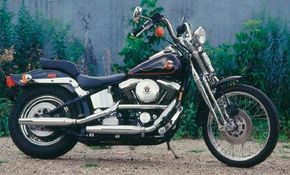
The 1988 Harley-Davidson FXSTS Softail Springer is more than just a model year update. It’s a deliberate collision of old-school aesthetics and 1980s technology. Harleys tend to look back to move forward, and this bike is a perfect example of that.
Frontend: Tribute to 1948
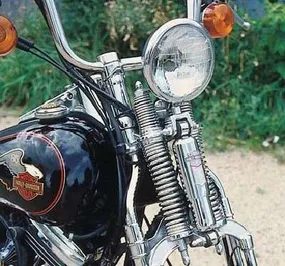
The biggest feature is the front suspension. This mimics the leading-link design used by Harley before switching to Hydra-Glide hydraulic forks in 1949. Don’t expect this to be a period piece, though. This is a modern interpretation.
Springs handle compression and rebound, but are assisted by hydraulic shock absorbers. It has a Retro look but doesn’t ride like a 1940s hardtail. It is very smooth. It is very beautiful. And looks expensive.
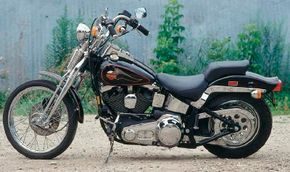
The Rear: Softail Illusion
后悬架讲述了一个不同的故事。 这是一个软尾车架。 对于不经意的观察者来说,它看起来就像一辆刚性框架摩托车。 没有可见的震动。 没有悬垂的手臂。 只是一个干净的硬尾轮廓。
底盘下方隐藏着一对螺旋式减震器。 他们在幕后像摇臂一样旋转。 这种设置为骑手提供了刚性框架外观和现代悬架合规性。 你可以努力骑行,而不会感觉到路上的每一个鹅卵石。
Belt Drive Revolution
In the early 1980s, Harley revived another historic concept: the belt drive. First appeared in the Sturgis model. By 1988, this had become a key selling point for FXSTS.
These are not early 20th century belts. Toothed rubber belt with reinforcing wire. Lighter than a chain. It’s quieter than a chain. No lubrication required.
Belts are cheaper to manufacture than shaft drives. They are not affected by “pogoing” effects during throttle transitions. Using the axle allows the rear end to pop up when you turn the throttle quickly. This is not the case with belts. They are very direct. immediately. This popularity would make the belt drive a Harley staple for decades.
Engine: Enter Evo
The power is provided by the 80-cubic-inch overhead valve “Evo” big twin engine. It replaced the similar Shovelhead a few years ago.
Shovelheads are known for oiling issues and high temperatures. Evo’s design is cleaner and more reliable. It is a V-twin after all. The sound is still loud. It still has torque. But this is progress. For springers, it provides enough power to move bulky frames.
85th Anniversary Commemoration
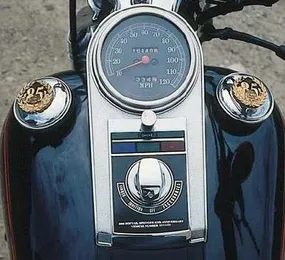
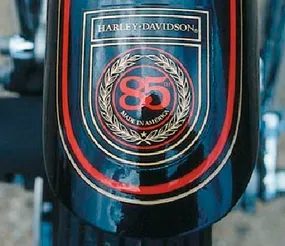
The 1988 model was special. In commemoration of Harley-Davidson’s 85th anniversary. Three models were chosen to wear commemorative paints and badges. The FXSTS Softail Springer is one of them.
This is not a limited edition that will end soon. It has become a staple of the product line. The anniversary packaging gives it a unique identity. To this day, collectors seek out these special paint systems.
Why is it important?
Springer combines three important elements: retro style, modern reliability and popular drive system. It appeals to riders who want a classic look without compromise.
Belt drive reduces maintenance. Evo engines are more reliable. The Softail rear is hidden in the rear of the Softail.
1988 Harley-Davidson FXSTS Softail Springer: Through the ages
The 1988 Harley-Davidson FXSTS Softail Springer is more than just a motorcycle. It’s a masterclass in contradictory design. A pre-war soul in a platform that knew how to handle the 1980s. It combines vintage style with modern design and it works.
Why Springer front end are important
The biggest feature is the front suspension. It looks like a beam fork from the 1930s, stiff and square. But what is behind the retro aesthetic? It is a modern shock absorption system hidden inside the frame. This is the Softail concept in action. Harley engineers wanted a hardtail look without the tiring ride.
FXSTS goes one step further. It retains the distinctive springer front end, giving the bike a unique upright stance. This is not just pretend. This design affects the steering geometry and makes the bike feel stable on the road while maintaining the classic chest-out riding position.
The Making of the Softail Myth
The term “Softail” refers to the rear suspension. Harley hides its modern swingarm and shock inside the frame rails. From the side, this bike looks sturdy, like a museum piece. In fact, it dampens the bumps in the road. This mix allows riders to enjoy the clean visuals of a vintage machine without compromising everyday drivability.
1988 was a significant year. This improves the ability to use different skins in the Sportster series. FXSTS proves that you can look back without staying in the past. It’s nimble, reliable and definitely cool.
1988 FXSTS Legacy
This bike does more than just sell bikes. We sell a lifestyle. This proves that heritage can be commercialized without losing its integrity. FXSTS remains the benchmark for how classic design can be interpreted with modern constraints.
For those who understand the nuances of motorcycle evolution, the 1988 FXSTS is a case study. It’s not all about chrome and leather. It’s about how form and function can negotiate a truce.
Find out more about motorcycle culture
If this combination of history and mechanics intrigues you, digging deeper into these areas will reveal even more.
- Classic Motorcycles : Learn about the evolution of design cues since the early 20th century.
- Motorcycle Mechanics : Technical breakdowns of suspension and drivetrain systems.
- Harley-Davidson Motorcycles : A comprehensive look at the brand’s most influential models.