


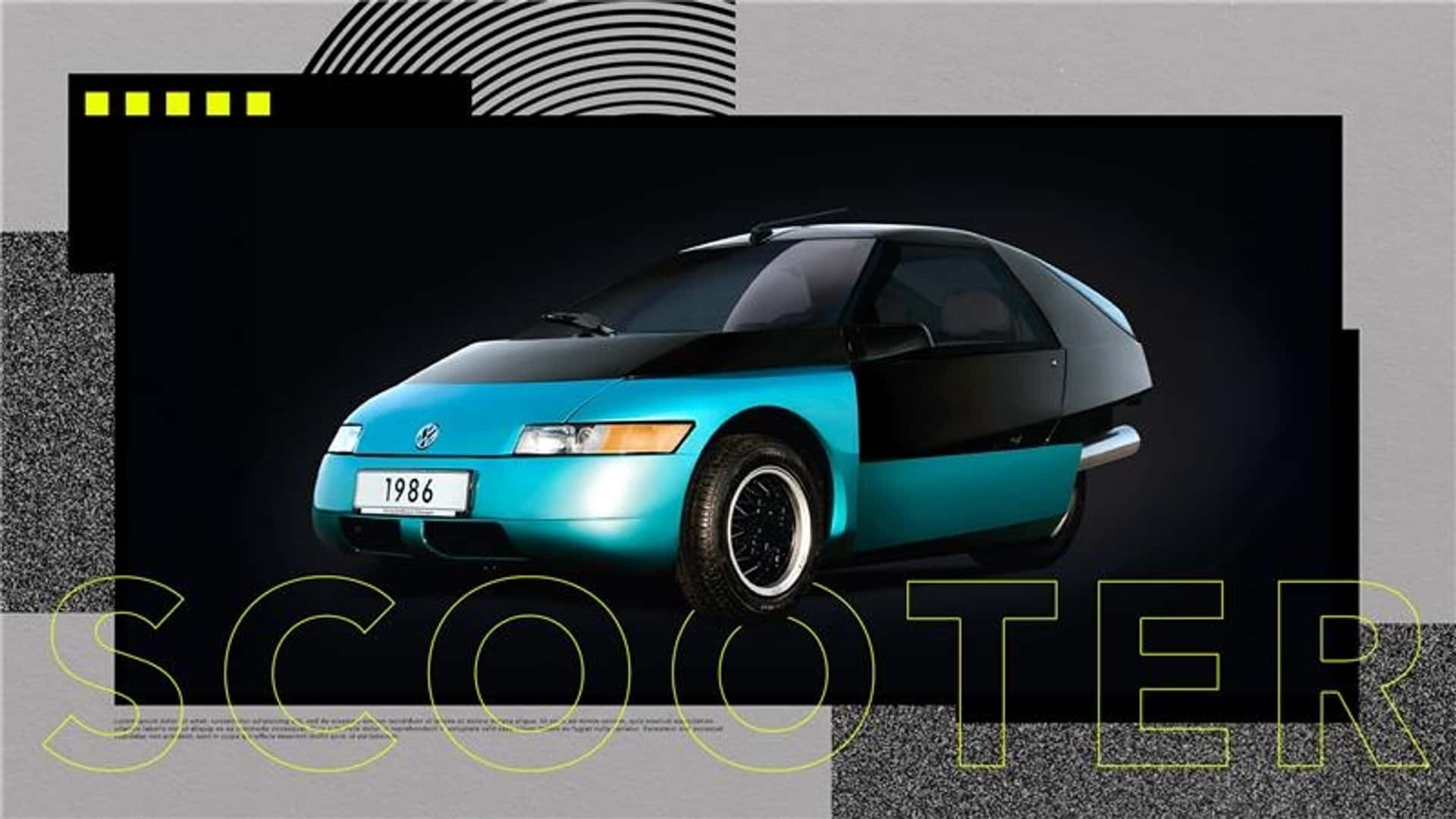
Before electric vehicles and hybrid technology became mainstream, automakers explored radical ways to maximize fuel efficiency. Volkswagen took this pursuit to an extreme in 1986 with the Scooter concept—a bizarre, yet functional, three-wheeled car with gullwing doors. This vehicle was not simply a design exercise; it was a fully tested prototype that blurred the line between car and motorcycle, offering an intriguing glimpse into an alternative automotive future.
The Radical Design
Unveiled at the Geneva Motor Show, the Scooter stood out even among concept cars. While Mazda’s Autozam AZ-1 later became known for its small size and gullwing doors, the Scooter was technically shorter. The vehicle combined the mechanicals of a Volkswagen Polo with an unconventional three-wheel layout, weighing as little as 1,212 pounds (550 kilograms) and measuring only 125 inches (3,175 millimeters) long.
This lightweight design was paired with a modest 1.1-liter engine producing 40 horsepower, which sent power to the front wheels via a four-speed manual gearbox. The Scooter’s aerodynamics were surprisingly effective, boasting a drag coefficient of just 0.25, helping it achieve an estimated 60.3 miles per gallon (3.9 liters/100 km) at 56 mph (90 km/h).
Performance and Safety
Despite its small engine, the Scooter could reach 62 mph (100 km/h) in 14.8 seconds, with a top speed of 100 mph (160 km/h). A more powerful version featured a 90-horsepower 1.4-liter engine, reducing the 0-62 mph time to 8.5 seconds and increasing the top speed to 135 mph (220 km/h).
Surprisingly, safety wasn’t an afterthought. Volkswagen engineered the Scooter to withstand a 31-mph (50 km/h) frontal impact, integrating a crumple zone to meet European and American regulatory standards. The company’s brochures at the time touted the vehicle as being “as safe as a car yet as fun as a motorcycle.”
Quirks and Missed Opportunities
The Scooter had several unique features: removable gullwing doors that had to be left at home, a detachable rear window for an open-air experience, and dual exhaust pipes flanking the single rear wheel. Its interior offered minimal space for two passengers, with a payload capacity of just 463 pounds (210 kilograms).
The project wasn’t just a showpiece; it underwent rigorous testing at Volkswagen’s Ehra-Lessien proving grounds. Lead engineer Ulrich Seiffert attempted to secure a partnership with a small-scale manufacturer to bring the Scooter into production, but the plan ultimately failed.
Legacy and Subsequent Concepts
Although the Scooter never made it into mass production, Volkswagen revisited the ultra-efficient vehicle concept with the 1-Liter Concept in 2002, the L1 in 2009, and finally the limited-run XL1 in 2013. The XL1, unlike the Scooter, utilized a plug-in hybrid powertrain with a 0.8-liter diesel engine and electric motor, producing only 200 units.
The story of the Scooter highlights a period of automotive experimentation where radical ideas were seriously considered, even if they never fully materialized. The concept’s legacy lives on in Volkswagen’s continued pursuit of fuel efficiency, proving that even the most outlandish ideas can influence future designs.


