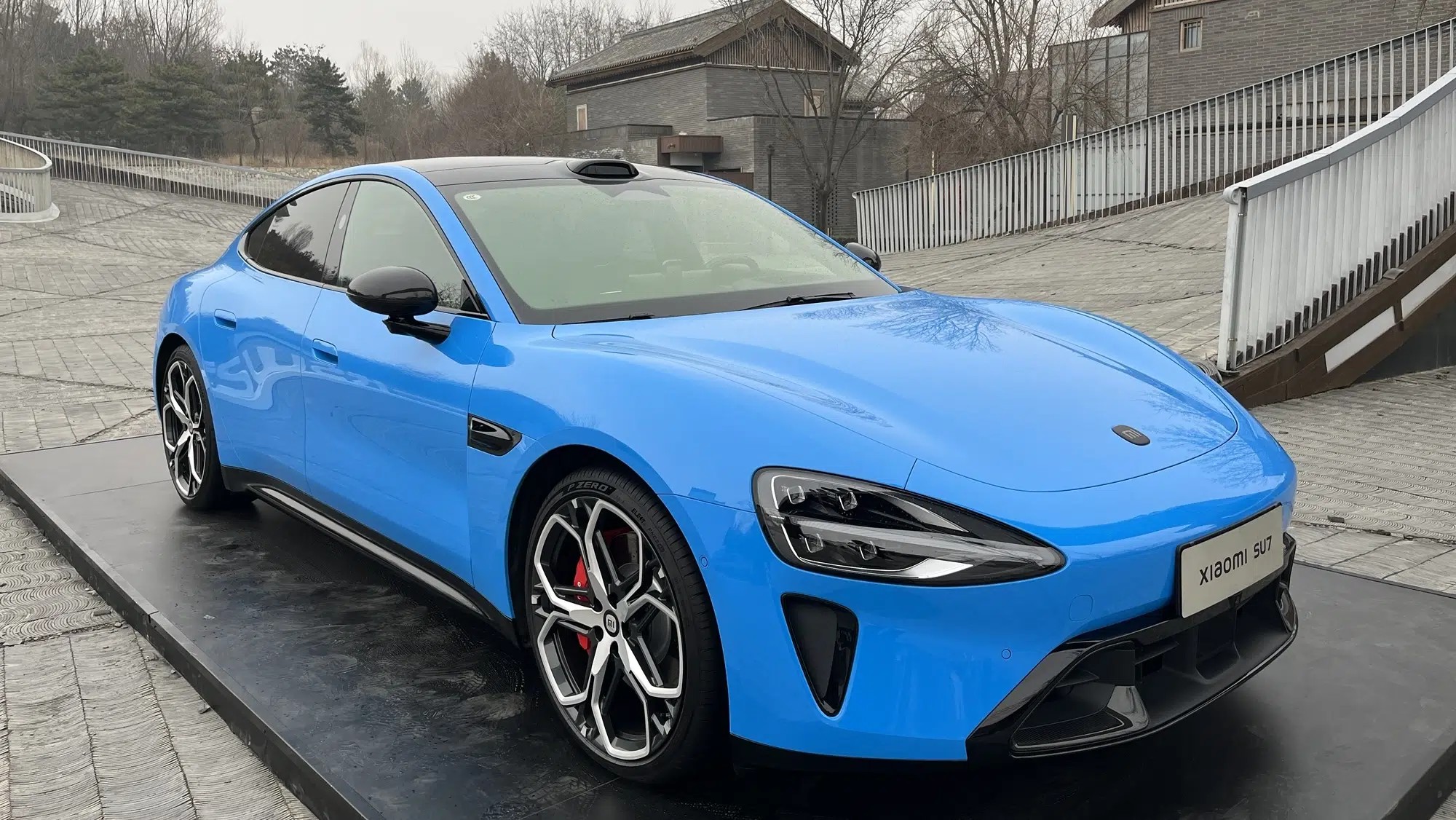
Xiaomi, once known for budget smartphones, has entered the electric vehicle market with a splash. The SU7 isn’t just another EV; it’s a vehicle designed with the quirks of Chinese driving culture in mind. Early demand is explosive – 15,000 pre-orders in under half an hour – and after a test drive, it’s clear why. This isn’t simply an electric car; it’s a statement, a challenge to established brands, and potentially, the “Apple Car” that Apple never delivered.
The Brutal Reality of Assisted Driving in China
The SU7’s Hyper Autonomous Driving (HAD) system is impressive… until it encounters real-world Chinese traffic. While the car handles highway driving with ease, the city is a different story. The system’s insistence on using turn signals even when no one yields is a hilarious, yet frustrating, demonstration of how AI struggles with human irrationality.
China’s roads operate under a different set of unwritten rules. Signaling is often seen as a weakness, an invitation for other drivers to cut you off. The SU7’s HAD system, trained on video data of actual Chinese driving, seems to almost understand this. It holds the turn signal on indefinitely, waiting for a lane change that will never come.
As one Beijing resident put it, the trick is to signal mid-lane change – a move that would infuriate drivers elsewhere, but works perfectly in the cutthroat reality of Chinese highways. The car’s intelligence is impressive, yet naive. It’s still learning that sometimes, the best strategy is deception.
LiDAR and Snowflakes: The Limits of Tech
The SU7 boasts advanced LiDAR technology, but even this has its weaknesses. During a light snowfall, the system promptly disabled assisted driving due to “LiDAR blockage.” This highlights a fundamental flaw in current autonomous systems: they prioritize perfect conditions over practical usability.
While LiDAR is essential for accurate mapping, a little snow shouldn’t disable basic functions like lane keeping. The car should be able to “pretend” it doesn’t have LiDAR when the sensor is compromised, reverting to simpler (but still functional) assisted driving modes. The upgrade to LiDAR shouldn’t come at the cost of reliability in common conditions.
This is a software issue, not a hardware limitation. Xiaomi’s system needs to learn to adapt, to offer a fallback when conditions aren’t ideal. After all, highways are designed to be driven in all weather, and drivers expect their vehicles to perform accordingly.
The Complete Package: Flawless Execution
Beyond the quirks of the assisted driving system, the SU7 is a remarkable car. Handling is precise, the chassis is solid, and the interior is well-designed. It’s a polished product that rivals and surpasses competitors like Tesla’s Model 3 in value and overall execution.
One American journalist recently drove the SU7 and declared she no longer wanted to buy American cars. That sentiment is becoming increasingly common. The SU7 offers a level of refinement and features that many Western EVs simply can’t match at its price point.
Xiaomi has also smartly included Apple CarPlay, recognizing that its ecosystem isn’t as dominant overseas. This is a pragmatic move, acknowledging the preferences of international buyers.
A New Standard in Customization
The SU7 also introduces a unique “IFTTT” (If This, Then That) feature, allowing drivers to create custom automation rules. Want the air conditioning to turn on, the fragrance diffuser to activate, and your favorite song to play as soon as you buckle up? No problem. You can even share these custom settings with others using share codes.
This level of personalization is rare in the automotive world. It’s a testament to Xiaomi’s software expertise and its willingness to embrace user customization.
In conclusion, the Xiaomi SU7 isn’t just an electric car; it’s a product of its environment. It understands the chaos of Chinese roads, the quirks of its drivers, and the need for both advanced technology and practical reliability. It’s a compelling alternative to established brands and a sign that Xiaomi is serious about disrupting the automotive industry. The question isn’t whether the SU7 is a good car; it’s whether other automakers will adapt to the same level of ruthless efficiency.