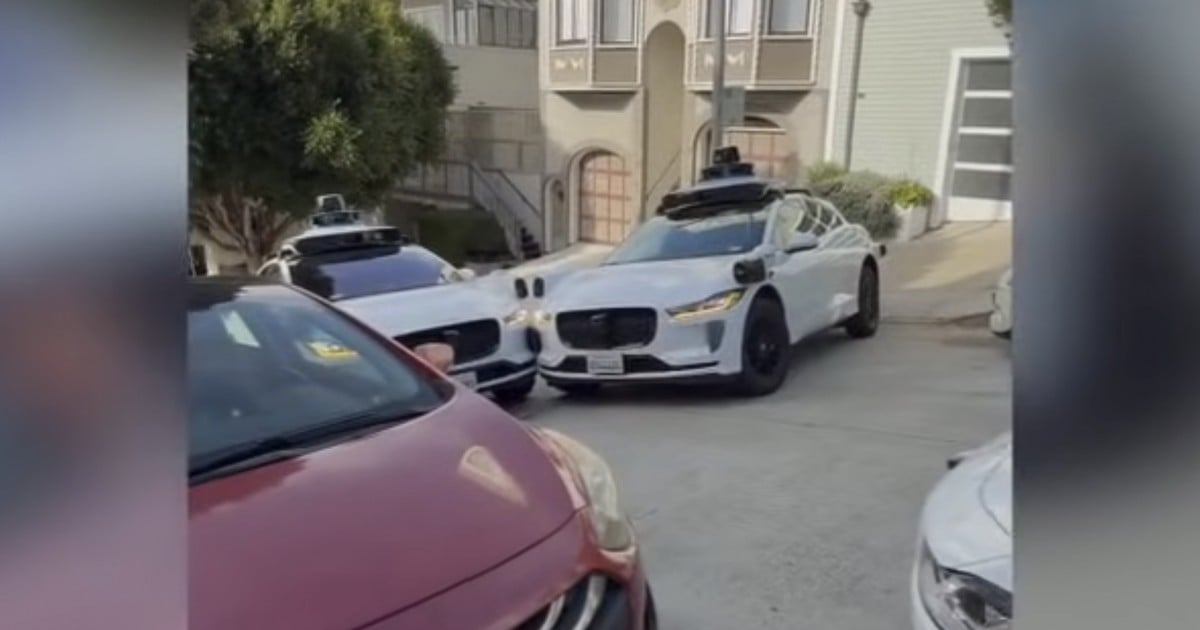
Autonomous robotaxis operated by Waymo encountered a notable failure in San Francisco on December 6, when three vehicles became blocked in a narrow residential street, unable to navigate a simple standoff with an oncoming car. The incident highlights the limitations of current self-driving technology in handling common urban traffic scenarios.
Robotaxi Gridlock
Footage captured by a local resident shows the Waymo Jaguar I-Paces immobilized, obstructing traffic for an unknown duration. Waymo acknowledged the event, stating two vehicles made “minor contact at low speed.” A company spokesperson confirmed an investigation and promised to learn from the incident. The situation required human intervention; video shows an employee manually clearing the blockage.
Recurring Issues
This incident follows another recent mishap where a Waymo robotaxi drove into an active police standoff in Los Angeles, stopping near officers with weapons drawn. The repeated failures raise questions about the readiness of fully autonomous vehicles for complex real-world environments.
Unexpected Successes
Despite these challenges, Waymo has demonstrated positive outcomes. On December 8, a robotaxi successfully transported a woman in labor to the hospital, where she delivered her baby mid-ride. The company’s remote support team detected the emergency, contacted the rider, and alerted emergency services. The vehicle was immediately taken out of service for cleaning.
The contrast between these failures and successes underscores the unpredictable nature of autonomous driving. While capable in certain scenarios, robotaxis still struggle with basic traffic interactions that human drivers handle without issue.
The incidents highlight the significant hurdles that remain before robotaxis can reliably replace human drivers, particularly in dense urban areas. The technology is improving, but current limitations are evident.