The automotive landscape is shifting. For decades, the “sporty coupé” was defined by high-revving engines, aggressive exhaust notes, and a certain mechanical drama. But as the industry pivots toward electrification, the very definition of what makes a driver’s car “fun” is being rewritten.
Honda is attempting to lead this transition with the revival of a cult classic: the Prelude. However, this isn’t the high-revving icon of the 1980s and 90s. It is a hybrid. This raises a fundamental question for the modern enthusiast: Can a frugal, electrified powertrain deliver the soul required to compete against established rivals like the Volkswagen Golf and the Toyota Prius?
A Legacy Reclaimed
The Prelude nameplate carries significant historical weight. Originally a mid-sized, front-wheel-drive coupé, the Prelude was a pioneer for Honda, introducing advanced technologies like mechanical four-wheel steering and front-axle torque vectoring to the mass market. It was a vehicle that balanced technical sophistication with accessibility.
The hiatus for the Prelude was so long that Honda had to re-register the trademark in North America as recently as 2023. Its return marks a bold strategic move. While most manufacturers have abandoned the coupé segment in favor of SUVs and crossovers, Honda is doubling down on a niche that many believed was dead.
The Hybrid Dilemma: Frugality vs. Feeling
The most striking change in the new Prelude is its powertrain. The legendary VTEC engines—famed for their ability to scream toward the redline—have been replaced by a hybrid system.
This shift reflects a broader trend in the automotive industry:
– The Death of the Internal Combustion Enthusiast Car: As emissions regulations tighten, manufacturers are finding it increasingly difficult to justify small, high-performance petrol engines.
– The Rise of Efficiency-First Performance: Modern “fun” is being redefined by instant electric torque and seamless power delivery rather than raw mechanical noise.
By choosing a hybrid setup, Honda is targeting a specific type of buyer—one who wants the aesthetic and driving dynamics of a coupé but requires the fuel economy and environmental credentials of a modern commuter.
The Competitive Landscape
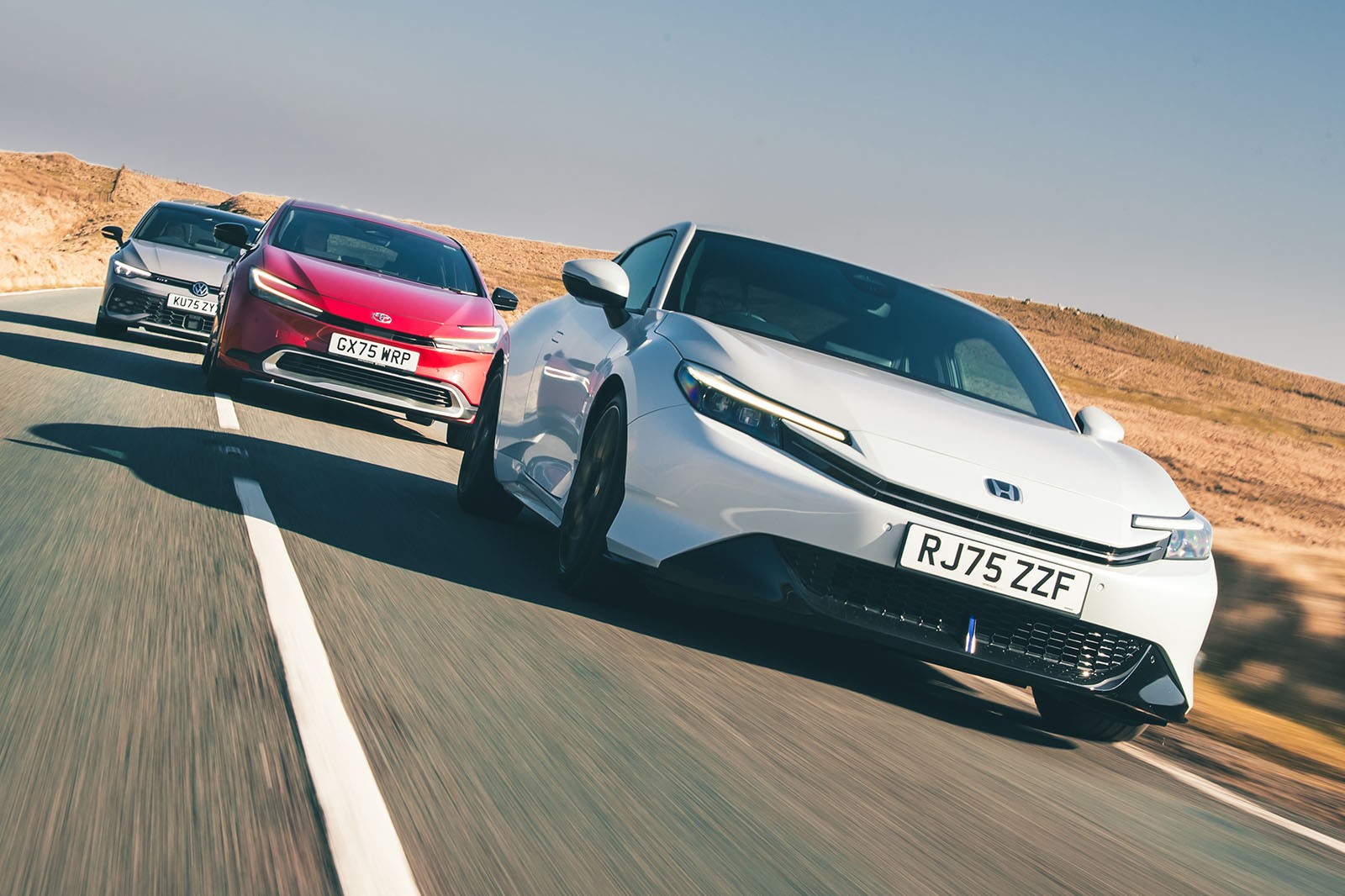
To succeed, the new Prelude must find its footing among three very different archetypes:
- The Volkswagen Golf: The benchmark for the “all-rounder.” It offers a sense of solidity and a vast array of engine options, though it lacks the distinct silhouette of a dedicated coupé.
- The Toyota Prius: The king of hybrid efficiency. While the Prius has recently moved toward a more aggressive, striking design, its primary mission remains ultra-frugality, not driving engagement.
- The New Prelude: Honda’s wildcard. It must prove that it can offer more character than a Prius while remaining more specialized and emotive than a Golf.
Why This Matters
The revival of the Prelude is more than just a nostalgia trip; it is a litmus test for the future of the enthusiast market. If Honda can successfully marry hybrid efficiency with engaging driving dynamics, it provides a blueprint for how “fun” cars can survive in a decarbonized world. If it fails, it may signal that the era of the affordable, stylish driver’s car is officially over, replaced entirely by the utility of the crossover.
The success of the new Prelude will depend on whether Honda can convince drivers that a hybrid powertrain can possess a “soul,” even if it lacks the roar of a traditional engine.
In short, the Prelude is attempting to bridge the gap between environmental responsibility and driving passion—a high-stakes gamble in an era of rapid technological change.