Most riders dream of finding a “forever bike”—a machine that stays in the garage for decades rather than being traded in after a few seasons. However, there is a significant gap between the excitement of a purchase and the reality of long-term ownership.
Many riders fall into the “underbuying trap”: they choose a motorcycle based on immediate style, impressive specs, or the thrill of a short test ride. But as the miles stack up, the true limitations emerge. Storage becomes insufficient, wind protection fails to prevent fatigue, and passenger comfort becomes a compromise. Eventually, the rider finds themselves adapting their trips to fit the bike, rather than the bike serving the rider. When a motorcycle becomes a source of work rather than a source of freedom, it loses its place in the garage.
The Criteria for Longevity: Beyond the Spec Sheet
To find a motorcycle that lasts a lifetime, you must stop shopping for “best-case” scenarios and start preparing for “worst-case” use. A true long-term tourer must be evaluated by how it handles:
* Full Loads: Carrying heavy luggage and a passenger simultaneously.
* Environmental Endurance: Maintaining comfort through varying weather and long highway stretches.
* Mechanical Reliability: Moving past “new” features to look at proven durability.
While high-performance models like the Harley-Davidson Road Glide Limited or the Indian Pursuit offer incredible capability, they often rely on newer engine platforms (such as the Milwaukee Eight VVT or PowerPlus 112). While impressive, these platforms lack the decades of longitudinal data available for older, established engines. For the rider seeking certainty, proven mileage is more valuable than theoretical power.
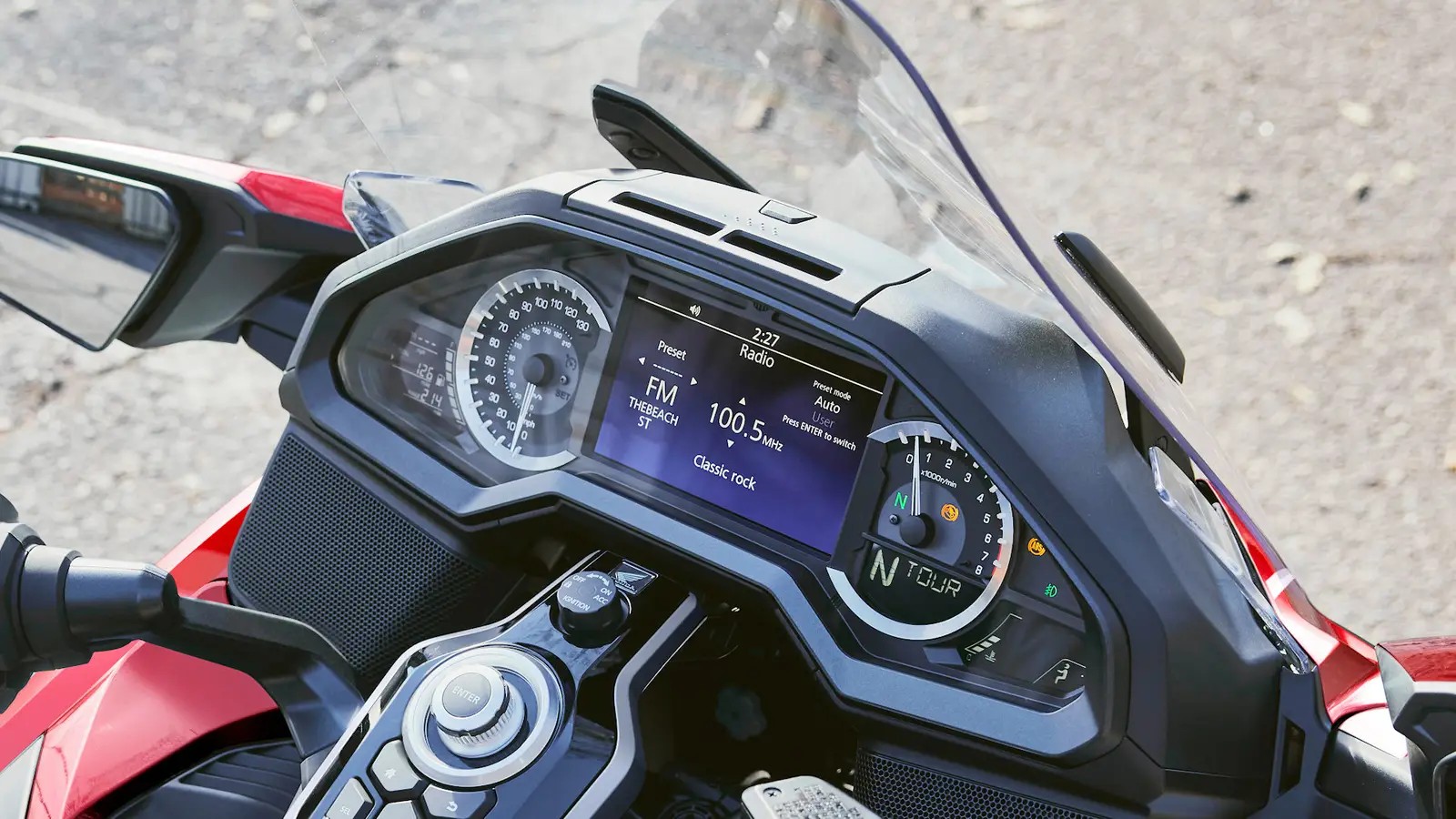
The Gold Standard: The Honda Gold Wing Tour
When filtering for machines that consistently surpass the 50,000 to 100,000-mile mark with minimal drama, the Honda Gold Wing Tour stands alone. It is not a machine trying to reinvent the wheel; it is a machine that has perfected it through decades of real-world stress testing.
Engineering for Reduced Fatigue
The Gold Wing’s design philosophy focuses on removing the physical “friction” of long-distance riding:
* Low Center of Gravity: The flat-six engine keeps mass low, making a massive machine feel remarkably manageable at low speeds.
* Advanced Suspension: The double-wishbone front suspension separates braking forces from steering, preventing the “nose-dive” that causes rider fatigue.
* The Shaft Drive Advantage: By using a sealed shaft drive instead of a chain or belt, Honda eliminates a major maintenance headache and a common point of mechanical vulnerability.
* DCT Technology: The Dual Clutch Transmission (DCT) option offers seamless shifting and a “walking mode,” reducing the physical effort required in heavy traffic or slow maneuvers.
Comprehensive Protection and Safety
A bike you keep forever must protect you from the elements that otherwise make riding a chore. The Gold Wing treats weather protection as a core component, not an accessory:
* Integrated Climate Control: Standard heated grips and seats ensure that cold mornings don’t end your journey prematurely.
* Total Airflow Management: From the adjustable windscreen to lower deflectors that shield the legs, the bike is designed to create a sanctuary rather than just deflecting wind.
* Advanced Safety Tech: Beyond standard ABS and traction control, Honda offers an optional airbag system—one of the few specifically designed for head-on impact scenarios—addressing real-world risk management.
Conclusion: Ownership vs. Possession
Most motorcycles are eventually replaced because they stop fitting the rider’s lifestyle, not because they break down. The Honda Gold Wing Tour avoids this cycle by addressing the practical realities of touring—storage, fatigue, and maintenance—before they become deal-breakers. It is a rare machine that justifies its existence not through novelty, but through consistent, reliable performance over the long haul.
The bottom line: A “forever bike” isn’t defined by how it feels in the first ten minutes; it is defined by how it feels after ten thousand miles.