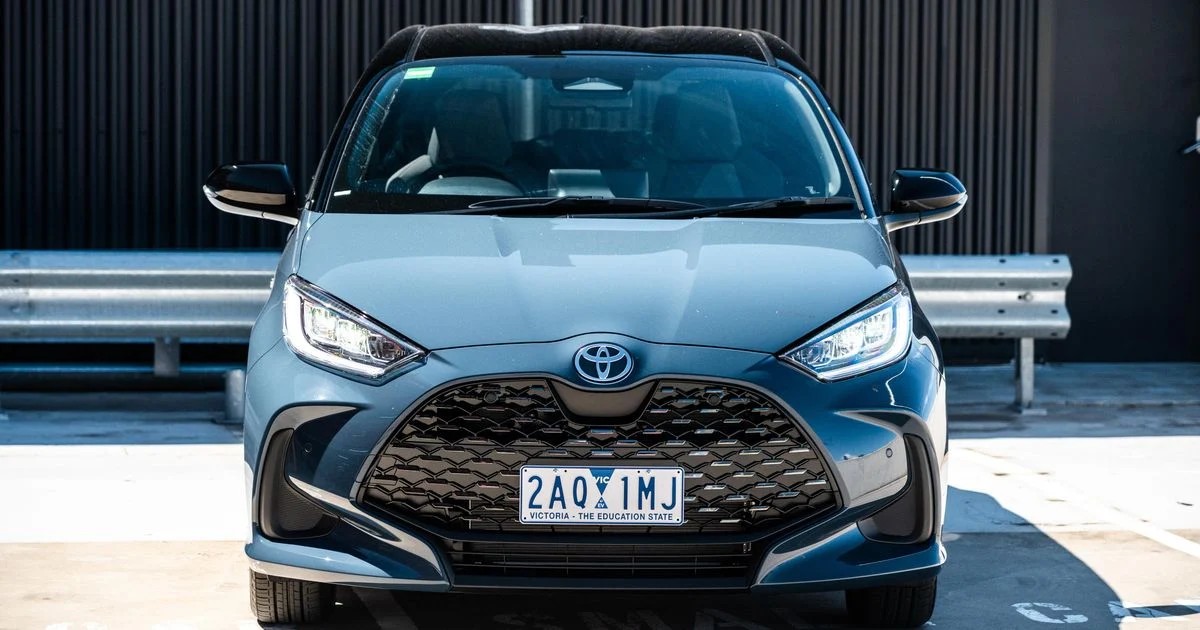
Toyota is preparing to offer a fully electric version of its next-generation Yaris, alongside existing hybrid options. This move aligns with the automaker’s broader strategy to consolidate its model lines and provide customers with multi-energy choices.
Toyota’s Multi-Energy Approach
Andrea Carlucci, Toyota Europe’s strategy and marketing chief, confirmed the electric Yaris is “quite obvious” given the industry’s shift toward electrification. The company aims to offer platforms supporting internal combustion engines, hybrids, and pure electric drivetrains. This approach simplifies production while catering to diverse consumer preferences.
Why this matters: Toyota’s decision reflects a growing trend among major automakers. Providing multiple powertrain options within the same model line minimizes complexity for manufacturers and reduces customer confusion – a challenge highlighted by Toyota’s previous separate EV and hybrid offerings, such as the bZ4X and RAV4.
Timeline and Market Focus
The next-generation Yaris, expected to launch in 2027 or 2028, will follow the example set by the larger Corolla, which is slated for release in late 2026. Both vehicles will offer petrol, hybrid, and electric versions. Carlucci’s comments specifically apply to developed markets like Europe, Japan, and Australia.
Toyota also produces a separate, value-engineered Yaris for emerging markets (Asia, Africa, Middle East, Latin America). This version, based on an older platform, currently lacks a hybrid option, with no clear timeline for its upgrade.
Industry Context
Toyota’s strategy is not unique. Stellantis also employs a “multi-energy” approach across its European models. Renault, however, continues to develop separate combustion and electric models, like the Clio and 5 E-Tech. The Yaris EV will compete directly with rivals like the Renault 5 E-Tech (410km WLTP range, 52kWh battery) and Peugeot e-208 (431km WLTP range, 51kWh battery).
“The ideal path is to offer a platform where we have multi-energy options… different powertrains that are the right solution for every customer.” – Andrea Carlucci, Toyota Europe
Toyota first implemented this unified model line strategy in May 2025 with the introduction of the eighth-generation Lexus ES, now available with hybrid petrol-electric and pure electric drivetrains in select markets.
The move streamlines production and reduces marketing fragmentation, but it also requires significant investment in adaptable platforms. Whether Toyota can execute this transition efficiently remains to be seen.