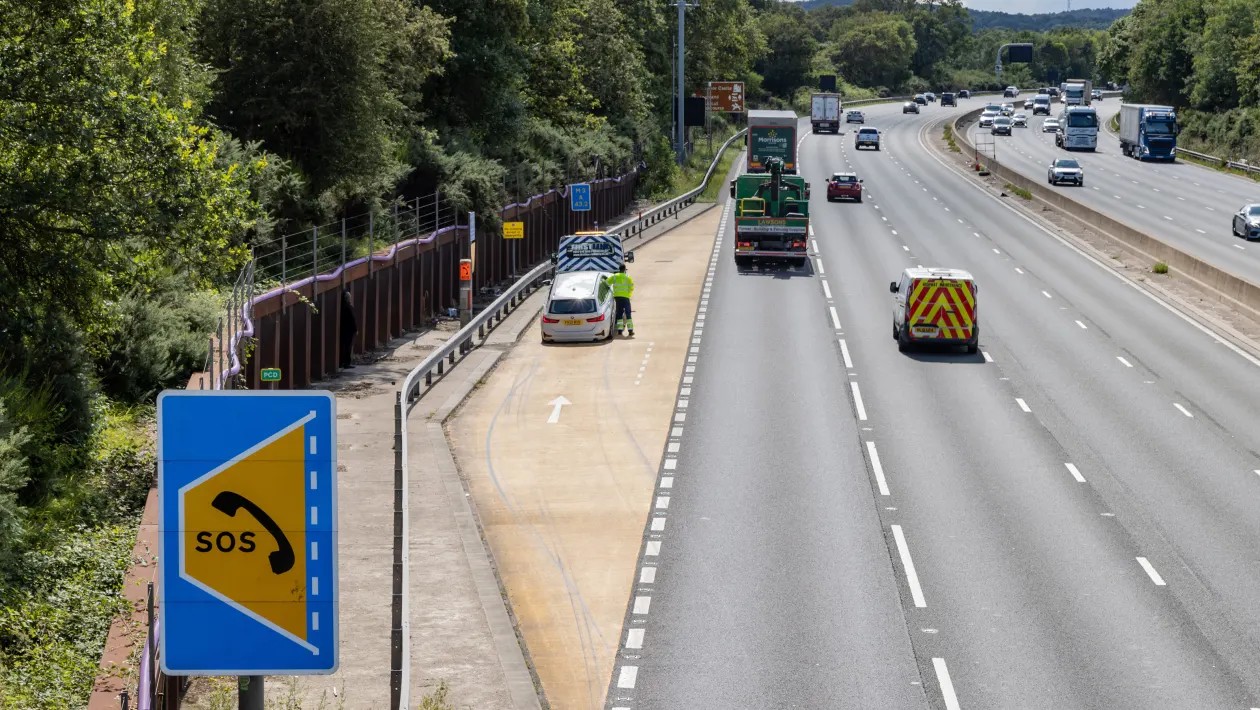
National Highways’ own data reveals that most “smart motorway” projects are failing to deliver promised benefits, raising serious questions about the effectiveness of these controversial schemes. A recent review shows that out of 16 projects assessed, only three are on track to meet initial value-for-money expectations. The rest either fall short or are projected to exceed their budgets, meaning taxpayers are footing the bill for roads that don’t perform as intended.
The Promise and the Reality
Smart motorways were introduced as a cheaper alternative to traditional widening projects. The idea was simple: turn the hard shoulder into an extra lane using overhead gantries to manage speed and closures. The goal was to ease congestion without the massive costs of concrete and land acquisition.
However, the reality has been far from ideal. While National Highways insists these roads are “overall…our safest roads,” data tells a different story. The AA points to the M3 between junctions 2 and 4a, where fatal and serious injuries increased by almost a third after the smart motorway conversion. Similar spikes in collisions were seen on other routes, despite claims of improved safety.
A Catastrophic Waste?
Edmund King, president of the AA, bluntly calls the smart motorway program a “catastrophic waste of time, money, and effort.” The schemes have not only failed to deliver congestion relief in many cases but have also arguably made roads less safe. This failure comes at a high cost: billions of pounds spent on a system that many now believe was fundamentally flawed.
What Happens Now?
The previous government under Rishi Sunak halted all new smart motorway projects in 2023, signaling a loss of confidence in the system. While some improvements have been made since then, the AA argues that the most effective solution remains traditional motorway widening. Keeping hard shoulders and adding safety technology has proven more reliable than the all-lane-running approach.
“Motorways which have been widened, the hard shoulder kept, and safety technology added have proved the most successful. We have been calling for this standard for so long and urge any government that looks to improve motorways to use this style as the blueprint.” — Edmund King, AA President
The data is clear: the smart motorway experiment has largely failed. The focus must shift toward proven methods of motorway improvement rather than continuing down a path that has delivered little value and, in some cases, increased danger.