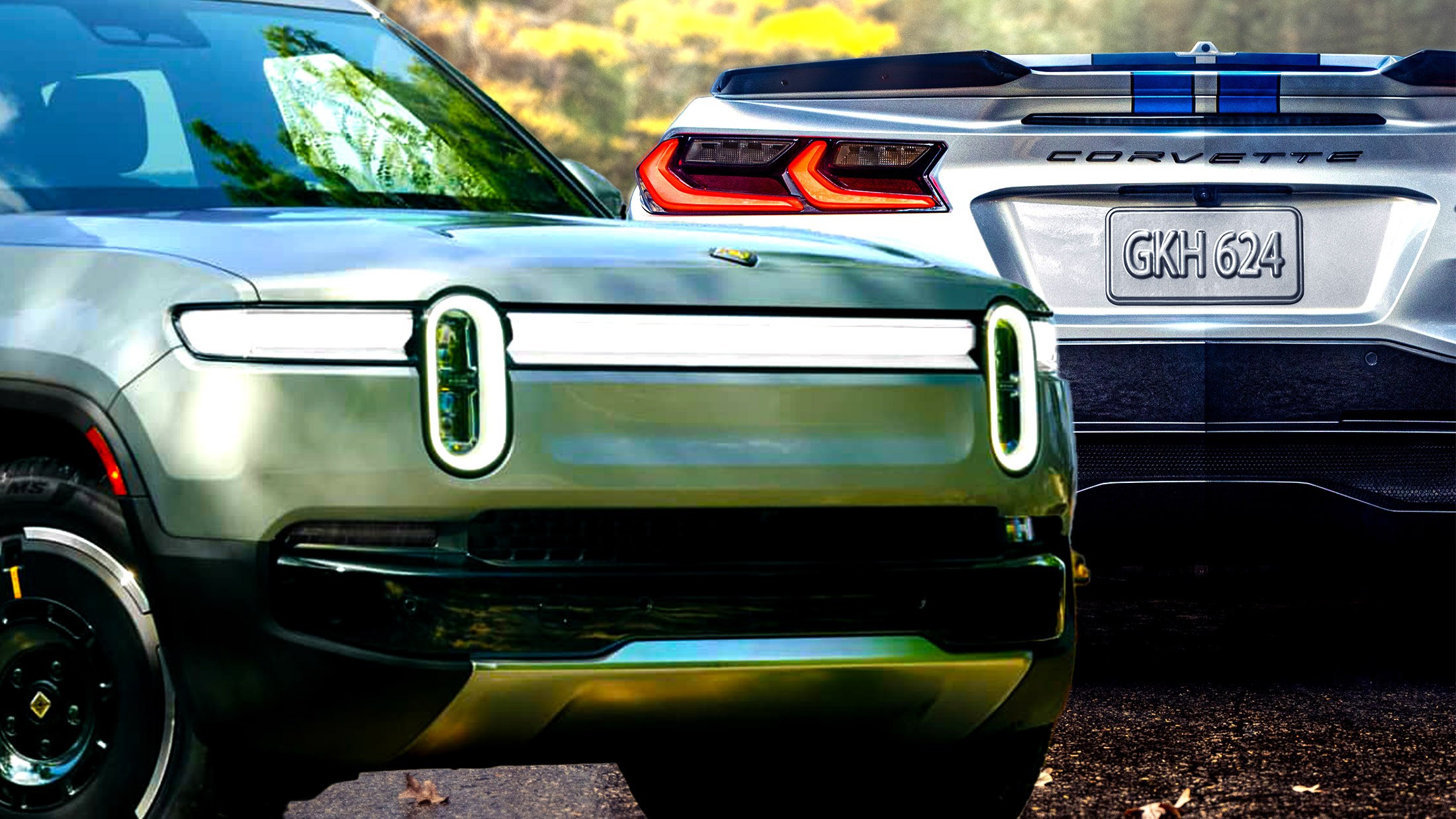
Rivian’s R1T electric pickup has proven its performance capabilities, achieving drag-race times comparable to some of the fastest gasoline-powered sports cars. Recent independent testing shows the 7,000+ pound R1T Quad Motor Max Pack matching the speed of the 655-horsepower Corvette E-Ray, challenging traditional notions of truck performance.
Electric Speed: A New Benchmark
Electric vehicles (EVs) are increasingly recognized for their acceleration potential. The R1T’s performance highlights this trend, with Car and Driver testing a 0-60 mph time of just 2.6 seconds – the same as the Tesla Cybertruck. However, unlike the Cybertruck, the Rivian maintains its advantage at higher speeds. By 70 mph, it leads, and at 100 mph, it’s nearly a full second ahead.
The truck completes the quarter mile in 10.6 seconds at 128 mph, making it a “ten-second truck”—a milestone previously reserved for dedicated performance vehicles. This represents a significant improvement over earlier Rivian models, with a 1.1-second and 17-mph gain over the previous quad-motor version.
Performance Specs: Power Under the Hood
The R1T’s speed comes from its immense power output: 1,025 horsepower and 1,198 lb-ft of torque. This dwarfs the Corvette E-Ray, which combines a 6.2-liter V8 with an electric motor for 655 hp and 594 lb-ft. In a head-to-head drag race, the two vehicles tie at the quarter-mile mark, despite the R1T’s substantial weight difference.
Implications for Automotive Standards
The R1T’s performance underscores a shift in automotive capabilities. Once considered the realm of high-end sports cars, this level of acceleration is now attainable in a full-size pickup truck. Traditional gas-powered vehicles struggle to compete: the Ford F-150 Raptor R takes 3.6 seconds to reach 60 mph, while the standard Corvette Stingray needs 2.8 seconds. Even a high-performance Porsche 911 GT3 RS requires 2.7 seconds.
The R1T’s success demonstrates that electric powertrains are not just about efficiency; they deliver raw, competitive performance that redefines what consumers expect from trucks and SUVs.
This rapid evolution in EV performance reflects broader trends in automotive engineering and consumer demand, suggesting that electric vehicles will continue to push the boundaries of speed and capability.