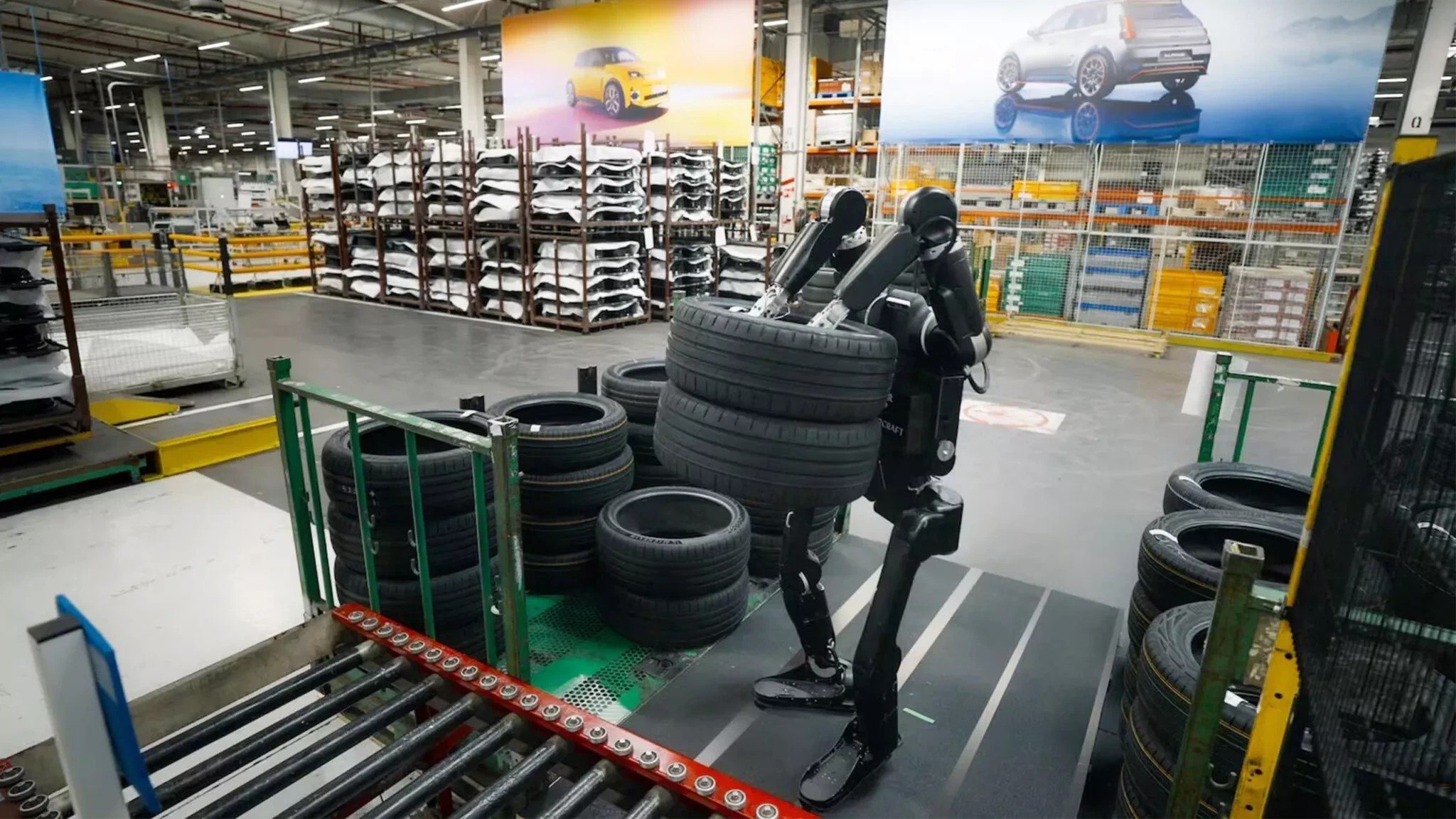
Renault is strategically deploying 350 humanoid robots in its factories by 2027, developed with French startup Wandercraft, to accelerate production and reduce costs. This move highlights a pragmatic approach to automation: focusing on immediate, practical benefits rather than mimicking human capabilities.
Why “Dumber” Robots Are Better for Renault
Unlike competitors like Tesla, Hyundai, Mercedes-Benz, and BMW—which are pursuing advanced, autonomous humanoid robots—Renault has opted for a simpler design. Their robot, Calvin-40, deliberately lacks a head and avoids realistic human features. This is not a setback; it’s intentional. As Renault’s head of production, Thierry Charvet, stated, “I am not interested in having humanoid robots. I’m interested in having efficient and low-cost automation devices, even if they look like humans.”
This approach has allowed for rapid development—Calvin-40 was built in just 40 days. The robot excels at tasks where human workers suffer: lifting heavy loads, moving materials in tight spaces, and performing physically demanding operations. By prioritizing function over form, Renault bypasses the complexities of AI-driven autonomy, reducing both development time and cost.
The Impact on Production and Workers
Calvin-40 is designed for repetitive, physically taxing jobs, such as handling tires and panels. While it doesn’t have the dexterity for complex assembly tasks, its strength lies in relieving workers from painful, repetitive strain. Renault aims to cut production hours per vehicle by 30 percent through this automation, including a reduction to 10 hours or less for models like the 5 and Twingo EVs.
The robot’s broad, circular hands and stable design allow it to operate in confined areas where wheeled automation would struggle. This means Renault can automate workstations previously considered inaccessible to robotics.
The Bigger Picture
Renault’s strategy reflects a broader trend: manufacturers are realizing that sophisticated AI isn’t always necessary for immediate ROI in automation. The focus is shifting from replicating human intelligence to solving concrete production problems with targeted, efficient solutions.
“If you imagine the same robot with wheels with 30 kg at the end of the arms, you need a very wide base… this kind of robots allow us to automate many workstations where it was not possible.”
This approach is proving effective: Renault is already seeing production improvements and cost savings. The company’s decision to prioritize utility over aesthetics underscores a simple but powerful truth: sometimes, the smartest move is to build a dumber robot.