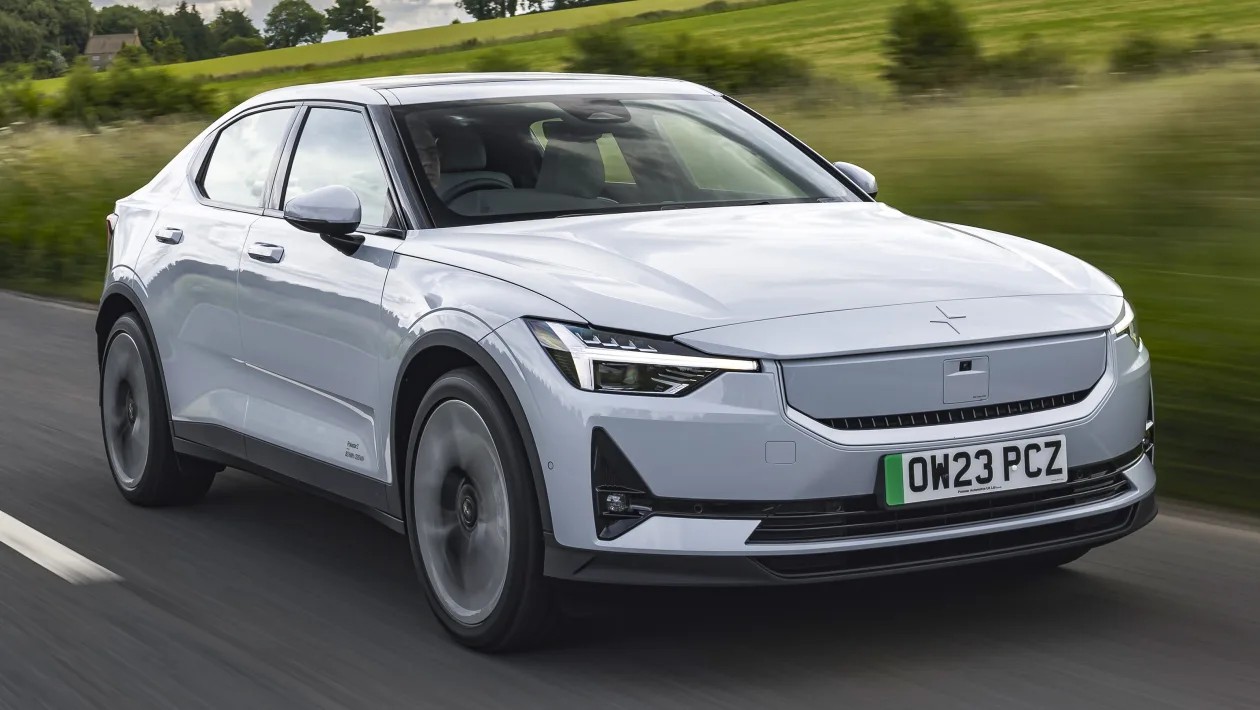
The Polestar 2 remains a compelling electric vehicle, blending Scandinavian design with solid technology and performance. Recent updates have boosted range – now exceeding 400 miles in some configurations – making it competitive even against pricier rivals. However, the car’s firm ride and less-refined driving experience hold it back from being a top pick in the crowded premium EV segment.
Polestar’s Evolution: From Racing to Road
Polestar began as Volvo’s performance division, honed on Swedish touring car circuits. Now, under joint ownership of Volvo and Geely, it focuses solely on electric vehicles. The Polestar 1, a limited-production hybrid, paved the way for the more accessible Polestar 2 launched in 2020. The EV market has since exploded with competitors like the BMW i4, Hyundai Ioniq 6, and Volkswagen ID.7, each vying for buyer attention. This rapid growth means Polestar must continually refine its offering to stay relevant.
Design and Practicality: A Unique Approach
The Polestar 2 rides on Volvo’s Compact Modular Architecture (CMA), shared with the XC40 and C40. Its fastback design creates a distinctive five-door hatchback shape, blending style with family-friendly practicality. The 2023 facelift introduced the “SmartZone” grille, housing advanced driver-assistance sensors.
The car doesn’t offer traditional trim levels; instead, it relies on optional packs to enhance standard equipment. This approach simplifies the buying process but may push some customers towards higher price points.
Performance and Handling: Quick but Unforgiving
The Polestar 2 delivers brisk acceleration, especially in the dual-motor configurations. The Long Range Dual Motor version reaches 62 mph in just 4.3 seconds, while the Performance Pack shaves that down to 4.0 seconds. However, the ride is notably stiff, making it uncomfortable on typical UK roads.
While updated models have improved efficiency, the Polestar 2 doesn’t match the agility of the BMW i4 or the refinement of Tesla’s Model 3. The steering feels less responsive, and the car exhibits more body roll during aggressive maneuvers.
Range, Charging, and Running Costs: Competitive but Not Leading
The revised Polestar 2 boasts impressive range figures, with the Long Range Single Motor model achieving up to 409 miles on the WLTP cycle. The Standard Range variant offers 344 miles, while the Dual Motor version delivers 370 miles (reduced to 352 miles with the Performance Pack). Real-world range may vary.
Charging times are reasonable, with ultra-rapid charging capable of adding a significant charge in under 30 minutes. However, depreciation is steep – retaining only 38-43% of its value after three years. Luxury car tax also applies from year two onwards, adding to ownership costs.
Interior and Tech: Minimalist Style with Caveats
The Polestar 2’s interior echoes Volvo’s design language, with a clean, minimalist aesthetic. High-quality materials and comfortable seats enhance the experience. However, the reliance on a central touchscreen for many functions can be distracting.
The car offers a vegan interior option as standard, appealing to eco-conscious buyers. But adding premium features quickly drives up the price.
The Verdict: A Strong Contender with Key Weaknesses
The Polestar 2 is a stylish and well-equipped EV that challenges Tesla’s dominance. Its long range and strong performance make it a viable alternative. However, the firm ride and less engaging driving experience prevent it from fully competing with rivals like the BMW i4. If comfort is a priority, other EVs offer a smoother ride.
The Polestar 2 remains a compelling option for those seeking a distinctive and technologically advanced electric car, but potential buyers should carefully weigh its strengths against its weaknesses.