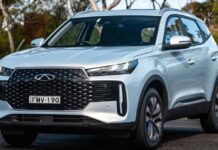
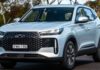
The automotive landscape is shifting, and Chinese brands like Omoda (a sub-brand of Chery) are making serious waves. The Omoda 7, a 4.66-meter family SUV, positions itself directly against established players like the Hyundai Tucson, Volkswagen Tiguan, and Renault Austral – but with a crucial advantage: price.
The Value Proposition: Performance and Range at a Lower Cost
The Omoda 7 stands out primarily because it delivers a plug-in hybrid (PHEV) experience without the premium price tag. The PHEV model boasts an impressive 56 miles of electric range, starting at £32,000. This undercuts competitors significantly: a comparable Hyundai Tucson PHEV costs £39,000 with less range, while the Volkswagen Tiguan eHybrid requires a £43,000 investment for a slightly longer 75-mile range.
This aggressive pricing isn’t a fluke. Omoda leverages a “Super Hybrid System” (SHS), similar to Honda’s e:HEV, which utilizes a 1.5-liter turbocharged engine primarily as a generator, seamlessly switching to direct drive at higher speeds. The result is an EV-like driving experience with minimal engine noise and instant power delivery. A £29,915 petrol version with a 1.6-liter engine is also available.
Performance and Driving Experience
The powertrain’s execution is particularly notable. The transition between electric and gasoline power is almost imperceptible, offering a smooth and responsive drive. Regenerative braking can be adjusted via the touchscreen, though the gentlest setting provides the most natural deceleration. However, the range readout in the driver’s display is unreliable, sometimes showing remaining range even when the engine has already engaged.
While the petrol version hasn’t been extensively tested, past Chery models exhibited a coarser engine feel. Whether this has been addressed in the Omoda 7 remains to be seen. The PHEV, however, feels refined and efficient. Real-world fuel economy appears to exceed 40mpg on a depleted battery.
Design and Competition
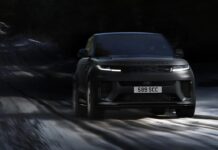
The Omoda 7’s design draws inspiration from established models, with elements reminiscent of the Lexus RX and Range Rover Velar. While not strikingly unique, it’s solid and functional. The vehicle’s true strength lies in its value: the PHEV version starts at £32,000 in Knight trim or £35,000 in Noble trim.
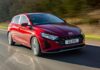
Compared to competitors, the Omoda 7 undercuts pricing while delivering competitive range and performance. The Tucson starts at £33,100, the Tiguan at £38,900, and the Renault Austral at £34,695. The Omoda 7 makes a compelling case for buyers seeking a well-equipped PHEV without overspending.
Conclusion
The Omoda 7 isn’t designed for driving enthusiasts, but it’s a strong contender in the family SUV segment. Its impressive PHEV system, combined with its aggressive pricing, makes it a worthy alternative to established European, Korean, and Japanese rivals. The Omoda 7 proves that Chinese automakers are not just entering the market—they are actively challenging the status quo.