Nissan has finally entered the plug-in hybrid crossover market with the 2026 Rogue Plug-In Hybrid, but this launch feels less like innovation and more like a temporary fix. The vehicle is essentially a rebadged Mitsubishi Outlander PHEV, a strategic move to fill a critical product gap while Nissan develops its next-generation hybrid system. This raises the question: how long will this model last?
Filling a Void in a Competitive Market
Nissan’s decision to offer a plug-in hybrid now is driven by market pressure. In 2024, Rogue sales declined by 10%, while competitors like Toyota (RAV4) and Honda (CR-V) saw hybrid sales increase by 9% and 11%, respectively. Over half of CR-V sales are now hybrid models, demonstrating consumer demand for fuel-efficient options. Nissan was notably behind, lacking a hybrid offering until now.
The Rogue Plug-In Hybrid shares the same powertrain as the Outlander PHEV: a 2.4-liter four-cylinder engine paired with dual electric motors, delivering 248 horsepower and 332 lb-ft of torque. The 20.0 kWh battery provides a 38-mile electric range and a combined range of 420 miles. Performance is solid, with a punchy driving experience that rivals pure EVs in certain situations.
The Hybrid Landscape: Why This Matters
The broader automotive trend is clear: consumers are shifting towards hybrids and EVs. Automakers that fail to adapt risk losing market share. Nissan’s move is reactive rather than proactive, admitting that many potential customers simply avoid their showrooms because of the lack of a hybrid option.
The company’s own executives acknowledge the situation: “At least we can claim we have a hybrid in our lineup,” said Panoz Pandikuthira, Nissan Americas senior vice president and chief product officer. The long-term viability of the Rogue PHEV depends entirely on market response. Nissan will decide next year whether to continue production alongside the upcoming next-generation Rogue Hybrid.
Shared DNA: The Outlander Connection
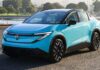
The Rogue Plug-In Hybrid is visually similar to the Outlander PHEV, differing only in the front grille and badging. The interior, including the 9.0-inch infotainment and 12.3-inch digital instrument cluster, is also identical.
The similarities raise questions about pricing. Nissan has not yet disclosed the price, but it is expected to be competitive with other plug-in hybrids, likely starting just over $40,000. The Mitsubishi Outlander PHEV begins at $45,325, so a similar price point for the Rogue is probable.
A Temporary Solution?
The Nissan Rogue Plug-In Hybrid is a necessary but uninspired step for the automaker. It addresses an immediate market need, but its future is uncertain. With a likely lifespan of just one model year, the Rogue PHEV appears to be a stopgap measure until Nissan’s next-generation hybrid arrives.
This model highlights the importance of proactive product development in a rapidly evolving automotive market. Automakers must anticipate consumer demand rather than react to it, or risk being left behind.