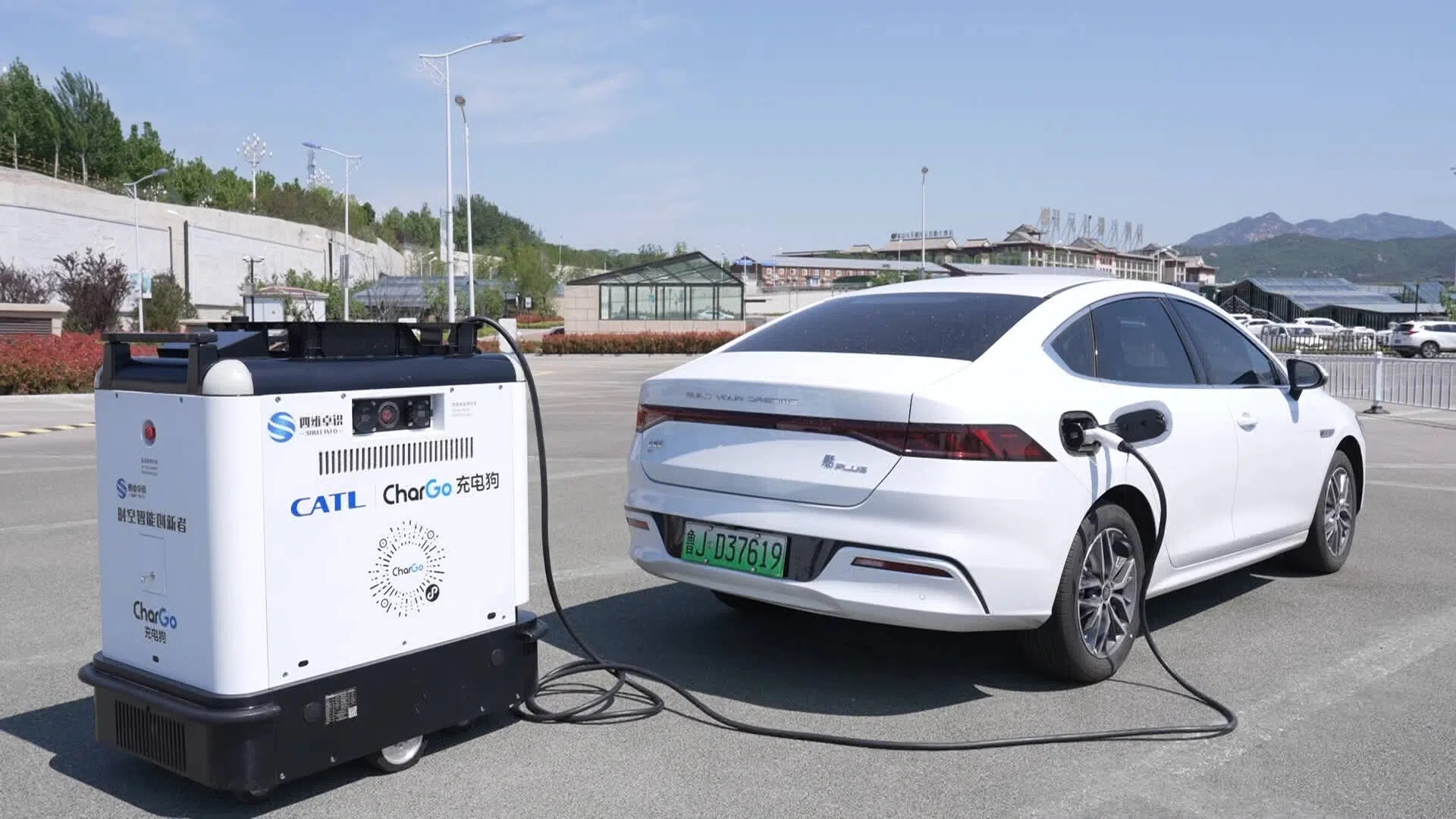
A new solution to electric vehicle (EV) charging is emerging in China: mobile robots that deliver power directly to parked cars. These compact, self-guided units are being deployed in older residential areas where traditional charging infrastructure is impractical or impossible to install. The innovation addresses a critical pain point for EV owners in densely populated cities and could reshape how charging is approached globally.
Solving the “Car Finds a Pile” Problem
The core issue these robots tackle is the lack of dedicated charging spots in older neighborhoods. Many Chinese cities have aging housing complexes built before the EV boom, where parking is already scarce, and electrical grids aren’t equipped for widespread charger installations. Eraergy’s “Energy Tank” —the leading product in this space—changes the game by bringing the charger to the car instead of forcing drivers to seek out fixed stations.
The device, roughly 1.5 meters tall and equipped with batteries ranging from 30 to 200 kWh, is summoned via a smartphone app. It navigates autonomously (currently with some teleoperation oversight) to the vehicle and provides fast charging within 40–60 minutes. Residents like Ms. Liu report significant time and cost savings. This is especially valuable in China, where many EV owners don’t have guaranteed parking spots at home and face bureaucratic hurdles when trying to install chargers.
Beyond Residential Areas: Hotels, Logistics, and Highways
The applications extend far beyond residential use. Companies like SF Express are already using mobile chargers in logistics yards to top up vehicles during loading times, reducing downtime. Eraergy has even launched a “hotel worry-free room” pilot, allowing guests to check mobile charging availability when booking. This eliminates the need for hotels to make expensive electrical upgrades.
The rise of mobile EV charging isn’t limited to Eraergy; CATL, a major battery manufacturer, has also entered the market with its “CharGo” product, deployed at highway service areas during peak travel periods like the Spring Festival. The trend suggests a broader shift toward decentralized, on-demand charging solutions.
What This Means for Global Infrastructure
The success of mobile EV charging in China highlights the flexibility needed to accommodate EV adoption in diverse environments. While many countries struggle with infrastructure bottlenecks, these robots offer a low-cost, scalable alternative. The current systems rely on partial autonomy, but companies are aiming for full L4-level operation in controlled environments.
The proliferation of mobile EV chargers could reshape the charging landscape, making it more accessible and convenient for drivers while reducing the burden on existing grid infrastructure.
The core takeaway is simple: the future of EV charging isn’t just about building more stations—it’s about bringing the power to where the cars are.