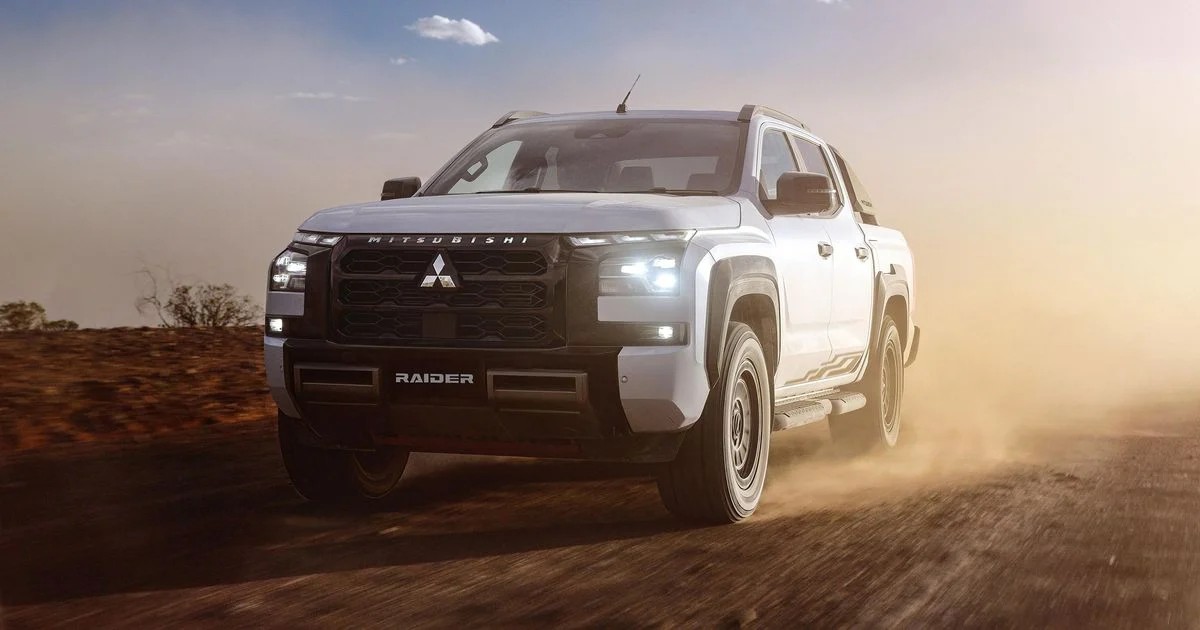
Mitsubishi Australia has officially entered the high-performance off-road segment with the unveiling of the 2026 Mitsubishi Triton Raider. While currently positioned as a mid-tier specialist, the launch serves as a strategic “test” to gauge whether there is sufficient market appetite for a dedicated rival to the dominant Ford Ranger Raptor.
A Strategic “Toe in the Water”
The Triton Raider represents a shift in Mitsubishi’s product strategy. Traditionally, the brand has focused on reliable, mainstream utility, but the Raider moves the Triton into a more premium, capability-driven bracket.
Bruce Hampel, Mitsubishi Australia’s General Manager of Product Strategy, described the release as a way to “test the waters.” The goal is to determine if customers are willing to pay a premium for enhanced off-road performance. If the Raider succeeds, Mitsubishi has indicated it may push the Triton even further, potentially creating a vehicle that directly competes with the top-tier performance utes.
The Triton Raider: Specs and Positioning
Developed in collaboration with Melbourne-based specialist Premcar, the Triton Raider features several localized upgrades designed to enhance its ruggedness:
- Enhanced Off-Road Hardware: Upgraded suspension and steering systems.
- Wheel and Tire Package: Wider 18 x 9.0-inch ROH alloy wheels wrapped in all-terrain tires.
- Aesthetic Upgrades: Specific visual tweaks to both the exterior and the cabin.
In terms of market placement, the Raider is currently aimed at the $75,000 price bracket (before on-road costs), placing it in direct competition with the Ford Ranger Tremor and the Nissan Navara Pro-4X Warrior.
The Gap Between “Specialist” and “Extreme”
While the Triton Raider is a significant step up for Mitsubishi, it is not yet a direct competitor to the Ford Ranger Raptor. The Raptor occupies a much higher performance and price tier, retailing at approximately $90,690.
The Ranger Raptor has long set the benchmark in the Australian market through two key factors:
1. Advanced Suspension: The use of specialized dampers (such as Fox shocks) that allow for high-speed off-road driving.
2. High-Output Powertrains: The transition from a diesel engine to a 3.0-litre twin-turbo V6 petrol engine, providing performance comparable to a performance hatchback.
Currently, the dual-cab ute market is seeing a trend toward “specialist” variants—such as the Toyota HiLux GR Sport—but a true, high-performance benchmark rival to the Raptor remains elusive.
Looking Toward the “Ceiling”
The partnership with Premcar suggests that Mitsubishi is prepared to scale its ambitions. Bernie Quinn, head of Premcar, noted that the industry’s “ceiling” for what a dual-cab ute can achieve is constantly rising. He views the Triton Raider as “step one” in a potential progression toward even more extreme, high-performance models.
“No one knows what the ceiling is yet… I envisage this [Triton Raider] is step one and then we’re going to keep pushing out from the ceiling.” — Bernie Quinn, Premcar
Conclusion
The Triton Raider is Mitsubishi’s strategic attempt to capture the growing demand for specialized off-road vehicles. Whether this “test” succeeds will determine if Mitsubishi moves from competing with mid-range variants to taking a direct shot at the high-performance dominance of the Ford Ranger Raptor.