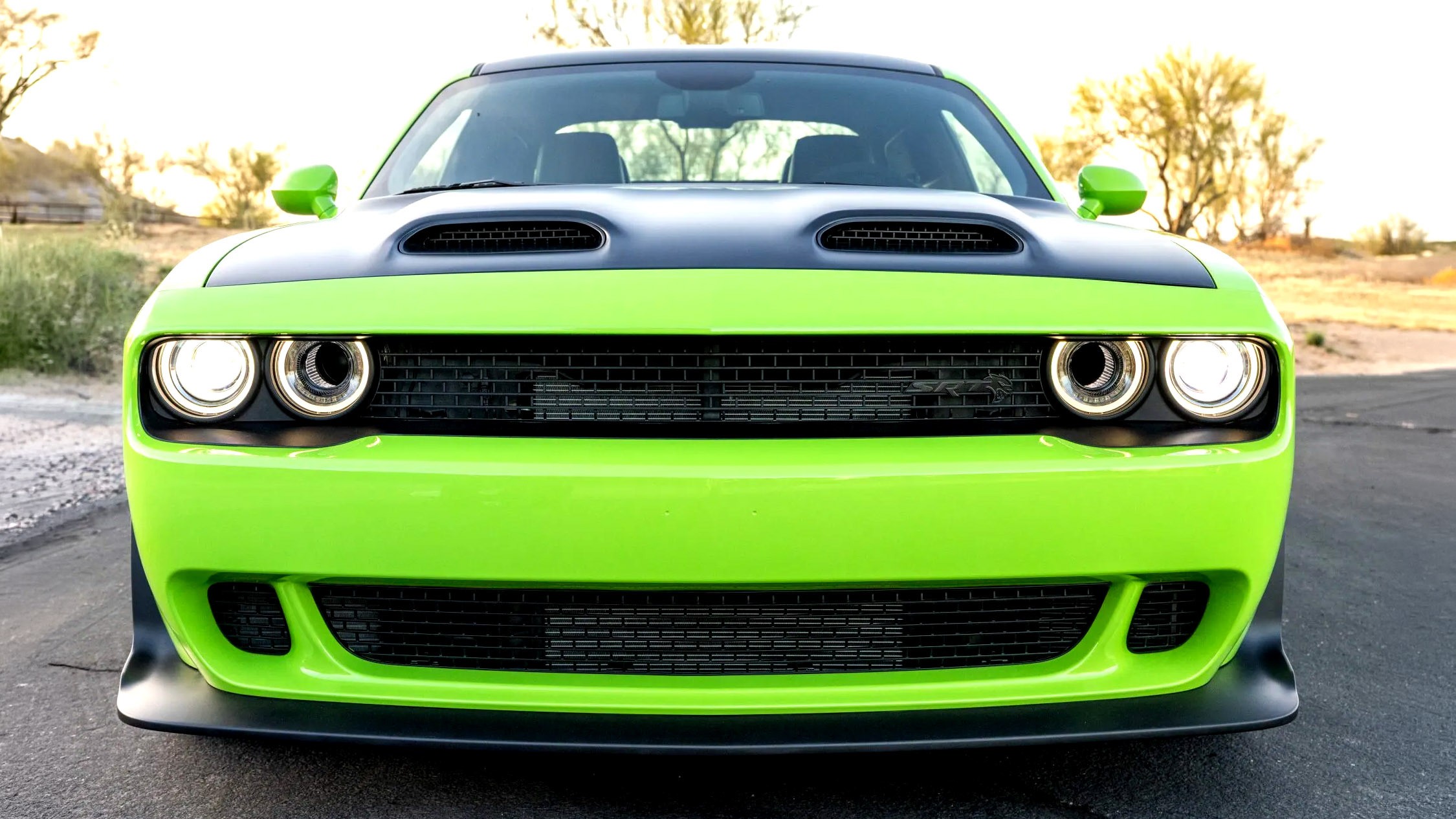
The automotive world often operates on a high-stakes gamble: the belief that a rare, high-performance vehicle will appreciate in value as a “modern classic.” However, a recent auction result has served as a stark reality check for enthusiasts of the outgoing Dodge Challenger.
Despite being a rare, highly specified model with only 20 miles on the odometer, a 2023 Dodge Challenger SRT Hellcat Widebody recently sold for significantly less than its original purchase price.
A Rare Spec Meets a Harsh Market
On paper, this vehicle possessed all the hallmarks of a future collector’s item. It was finished in Sublime Green, a rare paint option applied to only 212 Challengers in the 2023 model year. The configuration was further elevated by several premium features:
– Yellow brake calipers (a rare aesthetic choice)
– Alcantara steering wheel
– 20-inch black wheels
– Black exterior badging
– Driver convenience group
Despite this “one-of-one” feel, the financial outcome told a different story. Originally purchased with a sticker price of $91,472 (plus a $1,945 dealer premium), the car sold at auction for just $79,500. This represents a loss of nearly $14,000 for the original owner, even though the car was essentially in “delivery mileage” condition.
Why High-Spec Cars Aren’t Always Investments
This sale highlights a growing tension in the collector car market. While certain limited-run models do appreciate, many high-performance vehicles are still subject to the standard laws of depreciation.
Several factors contribute to this trend:
1. The “New Car” Reality: Even rare models are still technically “new” products. Until a vehicle enters a period of scarcity—usually after the manufacturer has ceased production for several years—it remains a depreciating asset.
2. Market Saturation vs. Rarity: While the Sublime Green paint is rare, the underlying platform is still a mass-produced vehicle. True “investment grade” cars usually require even tighter production limits or historical significance.
3. The Shift to Electric and New Platforms: As Dodge transitions to the new Charger platform, the “old guard” of V8 Hellcats faces a period of volatility. While enthusiasts crave the character of the combustion engine, the market is still adjusting to the value of these outgoing models.
The Bottom Line for Enthusiasts
The auction results suggest that while the Challenger’s era is ending, its status as a financial windfall is not guaranteed. For many, the value of these cars lies in their performance and “character”—traits that newer, more efficient models often struggle to replicate—rather than their resale potential.
The takeaway for buyers is clear: unless you are prepared to hold a vehicle for decades, high-performance cars should be viewed as a passion, not a portfolio.
In short, the rapid depreciation of this rare Challenger proves that even the most unique specifications cannot always outrun the standard economic decline of a new vehicle.