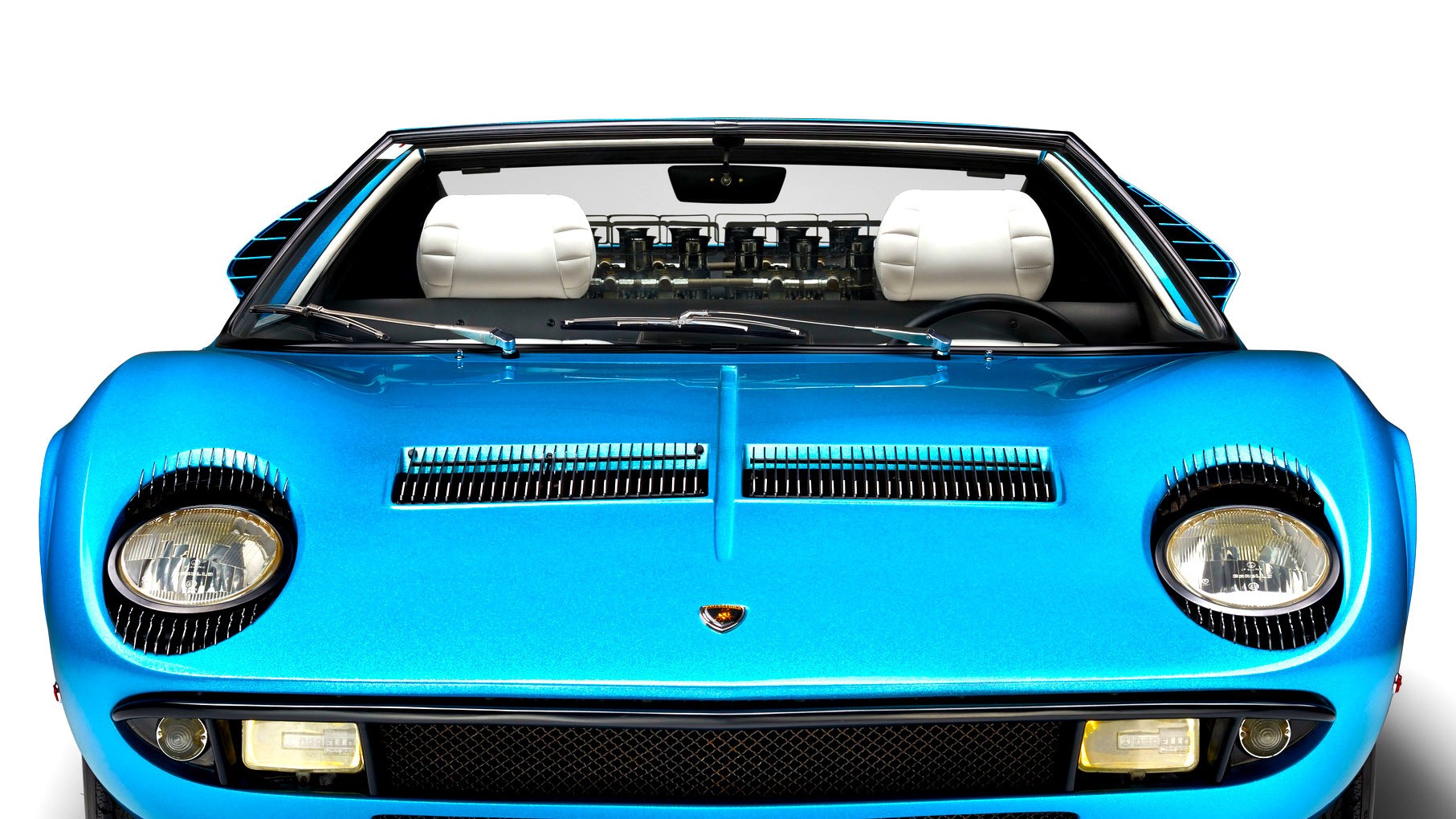
The modern supercar category officially turned 60 this week, marking the anniversary of Lamborghini’s Miura unveiling at the 1966 Geneva Motor Show. While high-performance vehicles existed before, the Miura wasn’t merely fast —it fundamentally reshaped what a performance car could be.
The Pre-Miura Landscape: A World of Fast GTs
Before 1966, speed was already a priority. Ferrari’s 275 GTB hit 155 mph, and Lamborghini itself produced rapid V12 GTs. Even mid-engine designs existed, like the Porsche 550 and 718, and the ATS 2500 GT. However, these were often derived from racing models. The Miura distinguished itself by being conceived as a road car first, a distinction crucial to its impact.
The Miura’s Breakthrough: Packaging Performance and Luxury
The Miura wasn’t just faster; it combined extreme performance with an outrageous design and full luxury appointments. Marcello Gandini’s body was a radical departure, prioritizing racecar proportions while offering a fully trimmed interior. It boasted a quad-cam V12 producing 345 hp—significantly more than competitors like the Ferrari 275 (297 hp)—and reached a then-unmatched 170 mph top speed.
The Miura wasn’t just a fast car; it was the first to deliver uncompromising performance with luxury, setting a new standard for supercars.
Some credit British Car Magazine critic Leonard Setright with coining the term “supercar” after his first drive, though it took time to become mainstream. The Miura represented a leap forward so dramatic that it deserved its own category.
The Miura’s Successors: Countach and Beyond
The Miura’s impact is debated. Some argue that the follow-up, the Countach, cemented the supercar image with its aggressive design and scissor doors. Others point to the McLaren F1 as the true game-changer, with its unparalleled performance and materials science. The F1 blurred the line, eventually leading to the “hypercar” designation—essentially a “super-supercar”—but its influence is undeniable.
Honda NSX: Democratizing the Supercar
The Honda/Acura NSX also deserves recognition for making supercars more accessible and reliable, inspiring even industry giants like Gordon Murray in the development of the F1. It proved high performance didn’t necessitate sacrificing usability.
The Greatest Supercar: An Open Question
The question remains: Which supercar stands tallest after 60 years? Was it the Miura, for its original impact? The Countach, for its iconic style? The McLaren F1, for its technological dominance? Or the NSX, for its usability? The answer is subjective, but the Miura’s role as the foundational model is unquestionable.
The supercar’s legacy continues to evolve, but it all began with a bold Italian V12 that redefined what a performance car could be.