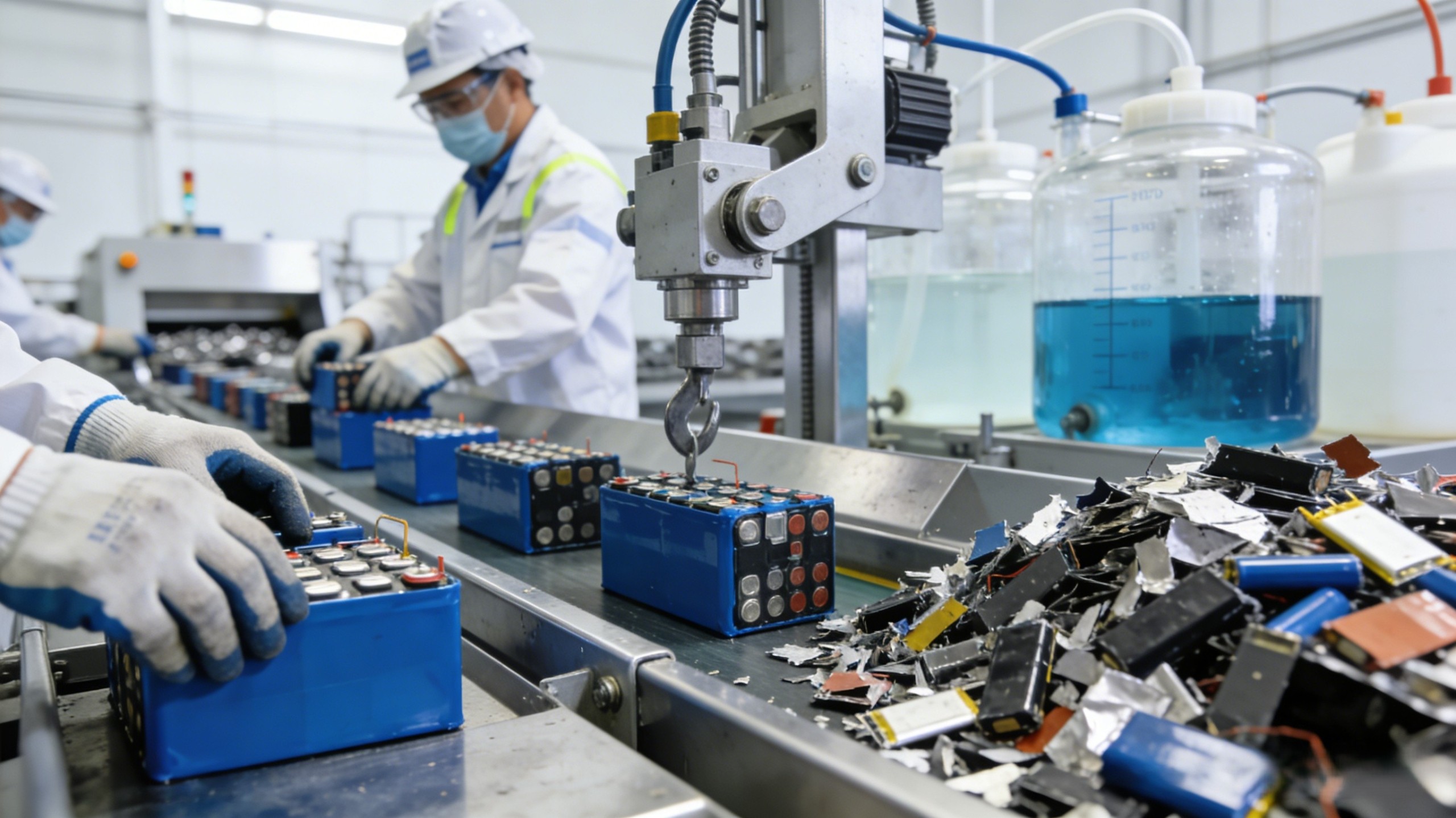
China is moving to formalize the “end-of-life” stage of its electric vehicle (EV) revolution. Through a new policy issued by the Ministry of Industry and Information Technology and the All-China Federation of Supply and Marketing Cooperatives,, the nation is establishing a standardized framework to manage, lithium-ion battery recycling.
This move is designed to transform battery disposal from a fragmented process into a highly regulated, digitalized, and circular industrial ecosystem.
Building a Coordinated Collection Network
A central pillar of the new policy is the creation of a robust physical infrastructure for battery collection. Rather than leaving recycling to chance,, the government is mandating a collaborative approach:
- Manufacturer Responsibility: Electric bicycle producers and lithium battery manufacturers are being urged to partner directly with recycling firms.
- Infrastructure Expansion: The goal is to build a nationwide network of collection points and temporary storage facilities to ensure batteries are handled safely and efficiently.
- Producer-Led Models: This aligns with China’s broader regulatory trend, where the responsibility for a product’s lifecycle increasingly rests on the shoulders of the original manufacturer.
Scaling Up Through Industry Leaders
The policy specifically targets the expansion of major recycling players, such as the China Recycling Group. By encouraging these large-scale firms to increase their capacity and deploy flexible, region-specific recycling models, China aims to avoid the inefficiencies of small-scale, unregulated “backyard” recycling.
This shift toward centralized processing is a strategic move. By concentrating material recovery within a few large, highly capable companies, the industry can achieve better economies of scale and more consistent environmental standards.
The Digital Backbone: Full Lifecycle Traceability
Perhaps the most significant development is the integration of digital oversight. On April 1, China launched a national power battery traceability platform, which works in tandem with this new recycling policy.
The system creates a “digital identity” for every battery, allowing regulators to track its entire journey:
1. Production: Where and how it was made.
2. Usage: How it performed in the vehicle.
3. Recycling: Where it went once it reached the end of its life.
By requiring manufacturers, vehicle producers, maintenance companies, and recyclers to upload data to this centralized system, China is creating a closed-loop management framework. This digital trail makes it significantly harder for hazardous battery waste to enter illegal disposal channels.
Why This Matters: The Looming “Battery Wave”
This regulatory push is not merely administrative; it is a proactive response to a looming industrial challenge. As the first massive wave of EVs produced in China begins to age, the volume of retired lithium batteries will surge.
Without a standardized system, this could lead to two major risks:
– Environmental Hazards: Improperly handled lithium batteries can cause fires and soil contamination.
– Resource Scarcity: Lithium, cobalt, and nickel are critical minerals. Failing to recycle them efficiently creates a dependency on raw material imports.
By implementing stricter rules—including those set for 2026 that mandate automaker responsibility—China is attempting to secure its supply chain by treating old batteries as “urban mines” rather than waste.
Conclusion
China is transitioning from a focus on EV adoption to a focus on EV sustainability. By combining physical collection networks with a rigorous digital tracking system, the government aims to turn battery recycling into a standardized, high-tech industry that secures critical mineral supplies and minimizes environmental impact.