


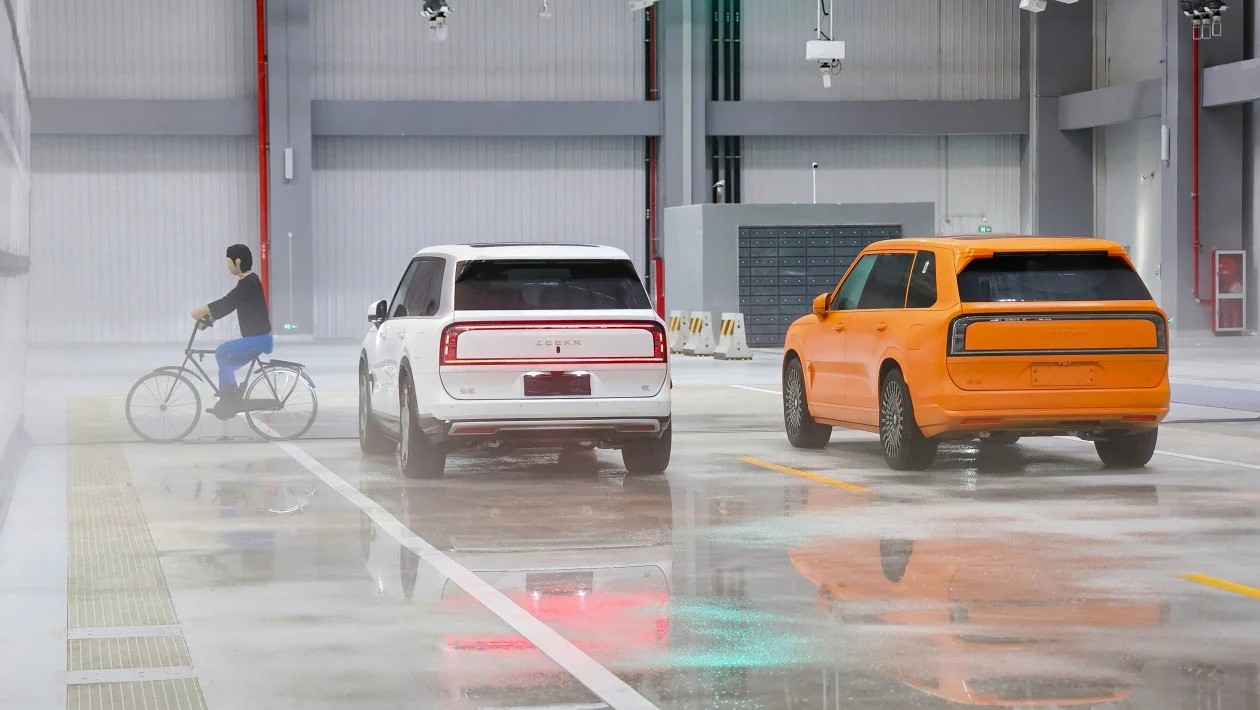
Chinese automaker Geely has unveiled a cutting-edge, £215 million ($270 million USD) vehicle safety and testing center in Hangzhou Bay, China. The facility is open to all car manufacturers, providing access to advanced testing capabilities that could significantly improve vehicle safety standards worldwide. This investment marks a shift in the industry, as Geely moves from relying on third-party testing to controlling the entire process internally.
Industry-First Capabilities
The center boasts several firsts, including the world’s longest indoor vehicle crash test track, spanning 293 meters. The facility supports 27 distinct testing capabilities, meeting safety regulations for major markets including China, Europe, and the U.S. Geely’s move to open the center to competitors is unusual; historically, such high-tech facilities are kept proprietary for competitive advantage.
Beyond Crash Tests: Cybersecurity and Extreme Conditions
The center isn’t limited to physical crash testing. It also includes labs for cybersecurity assessments and simulations of extreme weather conditions. With vehicles becoming increasingly connected, protecting against cyberattacks is now critical. The facility can replicate temperatures from -40°C to 60°C, simulate heavy rain or snow, and even test performance at altitudes up to 5,200 meters (17,060 feet).
Advanced Dummy Technology
To collect accurate crash data, Geely has invested in a fleet of over 60 crash test dummies, some costing up to £1.3 million each. Recognizing the limitations of existing dummy designs (primarily based on European body types), the company collaborated with Hunan University to create the first crash dummy modeled after Asian bodies, ensuring more comprehensive safety data for its vehicles.
Geely’s Strategic Play
Geely’s investment is a strategic move to establish industry standards rather than just technological dominance. By sharing access to advanced testing, the company aims to elevate overall safety levels across the automotive sector. This approach could reshape how vehicle safety is approached globally, shifting from isolated proprietary advancements to collective industry progress.
The opening of this facility signals a major step towards more comprehensive and accessible vehicle safety testing, benefiting both manufacturers and consumers alike.


