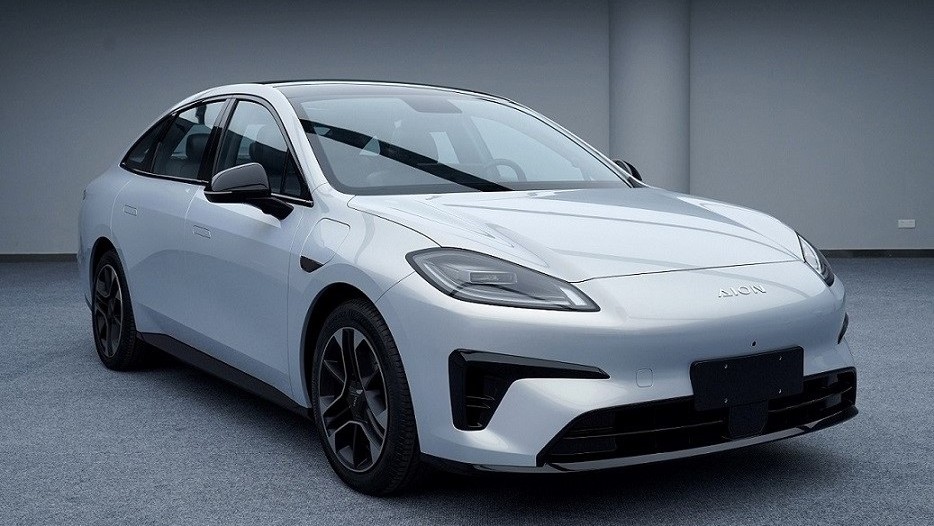
GAC Aion has filed regulatory approval for a battery-swappable version of its Aion RT electric sedan, aligning with a growing trend in China to accelerate EV adoption through flexible charging solutions. The new model maintains the same performance specs as the standard Aion RT, including a 201 hp electric motor, but introduces the option for quick battery replacement instead of traditional charging.
CATL’s Standardization Initiative
This move is part of CATL’s “Chocolate” battery-swapping platform launched earlier this year. The platform is designed to standardize battery designs and swapping infrastructure across multiple automakers, including Chery (with its iCar V23 also filing for battery-swap variants). The goal is to remove a key barrier to EV ownership: charging time and availability.
Why this matters: China is aggressively pushing EVs, and battery swapping offers a way to bypass the limitations of current charging infrastructure. Drivers can exchange depleted batteries for fully charged ones in minutes, similar to refueling a gasoline car, rather than waiting for hours at a charging station.
Key Specs of the Aion RT
The Aion RT, whether swappable or not, boasts impressive specifications:
- Aerodynamics: A drag coefficient of 0.208Cd for efficient energy use.
- Dimensions: 4,865mm long, 1,875mm wide, 1,520mm high, with a 2,775mm wheelbase.
- Batteries: Options for either 55.1kWh or 68.1kWh CATL lithium iron phosphate batteries.
- Range: 520km or 650km depending on the battery pack.
- Charging: Advanced 400V silicon carbide fast-charging technology.
- Autonomy: Sophisticated driver-assistance features with 126-line LiDAR and an Nvidia Orin-X chip.
The standard Aion RT is priced between $14,000 and $17,400 USD, with the battery-swap version potentially offering a $7,000 discount through a battery subscription model.
CATL’s Rapid Infrastructure Rollout
CATL aimed to deploy 1,000 battery-swap stations across China this year and nearly hit that target by October. As of December 2nd, all 1,000 stations are now operational, covering approximately two-thirds of Chinese cities. Users can currently locate a station within roughly 10 kilometers in these areas.
Looking ahead: CATL plans to expand this network aggressively. By 2030, they envision between 10,000 and 20,000 stations, eventually scaling to 30,000 to make battery swapping as ubiquitous as gas stations.
The expansion of battery-swapping infrastructure in China is a significant step towards wider EV adoption, providing a practical solution for both urban and long-distance drivers. The convenience of quick battery swaps could address range anxiety and reduce reliance on traditional charging networks.