Vehicle prices have surged in recent years, making affordable new cars a rarity. By 2026, finding a new vehicle under $20,000 is increasingly difficult, yet demand for pickups and SUVs remains high. This has created an opening for accessible, compact trucks that offer value without sacrificing perceived quality. The Hyundai Santa Cruz and Ford Maverick have emerged as the leading contenders, providing buyers with options beyond overpriced, fully-loaded models.
The Santa Cruz: A Premium Feel in a Budget Segment
The Hyundai Santa Cruz differentiates itself by offering a more upscale experience in its base trim compared to the Ford Maverick. While both trucks target affordability, the Santa Cruz leans towards a more modern, almost car-like interior design. It’s essentially a Tucson SUV with a chopped rear, but this approach delivers soft-touch materials and dense leatherette surfaces even in the base SE model—a stark contrast to the hard plastics found in the Maverick’s interior.
The Santa Cruz also features a simpler, more intuitive infotainment system with a 12.3-inch screen that integrates well with its digital gauges. Higher trims add further refinement, including cooled front seats, a Bose sound system, and a retractable bed cover. The Ford, however, compensates with more functional storage and its innovative Ford Integrated Tether System (FITS), allowing for custom accessories.
Design and Powertrains: Where They Stand Apart
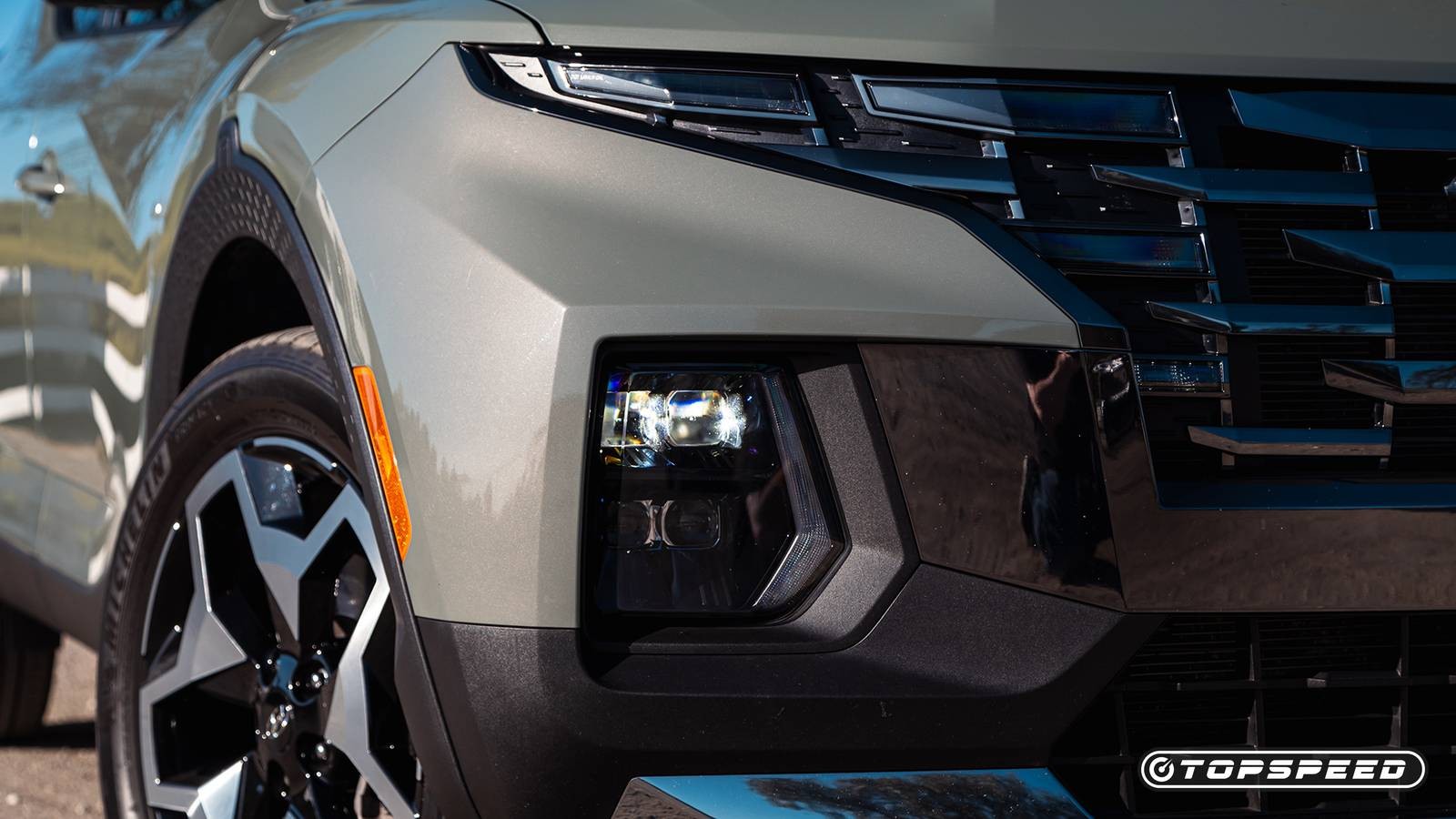
The Santa Cruz’s exterior design is divisive yet distinct, featuring a curvaceous silhouette and hidden LED daytime running lights. The XRT model adds rugged styling with all-terrain tires. The Maverick, on the other hand, has a more straightforward appearance that appeals to a wider audience, though the sporty Lobo variant offers a stylish alternative.
Powertrain updates for 2026 have shifted the Santa Cruz to an eight-speed automatic across the board, replacing the clunky dual-clutch transmission previously offered in the turbo engine. The base 2.5-liter four-cylinder produces 191 horsepower and feels adequate, offering a 3,500-pound towing capacity with combined MPG of 25 (FWD) or 24 (AWD). The Maverick’s hybrid powertrain, rated at 38 MPG combined, offers superior fuel efficiency.
The optional 2.5-liter turbo engine in the Santa Cruz delivers 281 horsepower and 311 pound-feet of torque, exceeding the Ford Maverick’s 2.0-liter EcoBoost in towing capacity (5,000 pounds vs. 4,000 pounds). This comes at the expense of fuel economy, dropping to 20 MPG combined, but many drivers will find the trade-off worthwhile.
Driving Dynamics: Refinement Versus Sportiness
The Santa Cruz’s Tucson-derived platform delivers a refined driving experience. Its acoustic windshield and sound insulation create a car-like cabin, while the independent rear axle provides a comfortable ride. The Santa Cruz prioritizes on-road comfort over off-road capability, lacking the electronic locking differentials found in the Maverick Tremor trim.
Handling is taut and composed, with the 2.5-liter turbo model offering sports-car-quick shifts. The Maverick Lobo, however, offers a more aggressive driving experience with its sport-tuned suspension and “Lobo Mode,” which enhances torque vectoring for improved cornering. For buyers prioritizing on-road performance, the Santa Cruz delivers a balanced and refined driving experience.
Conclusion: The Hyundai Santa Cruz stands out as an affordable pickup that doesn’t compromise on perceived quality. Its refined interior, modern design, and capable powertrain make it a compelling choice for buyers who want a truck that feels more like a car. While the Ford Maverick offers greater functionality and fuel efficiency, the Santa Cruz delivers a more premium experience in the budget segment.