Two prominent vehicles from Chinese manufacturers, the BYD Seal 6 DM-i and the Tesla Model Y L, have achieved the maximum five-star safety rating from the Australasian New Car Assessment Programme (ANCAP). While both cars demonstrate high levels of occupant protection, their performance highlights distinct strengths and specific areas for improvement in modern vehicle safety engineering.
BYD Seal 6 DM-i: Strong Structural Integrity with Assist System Nuances
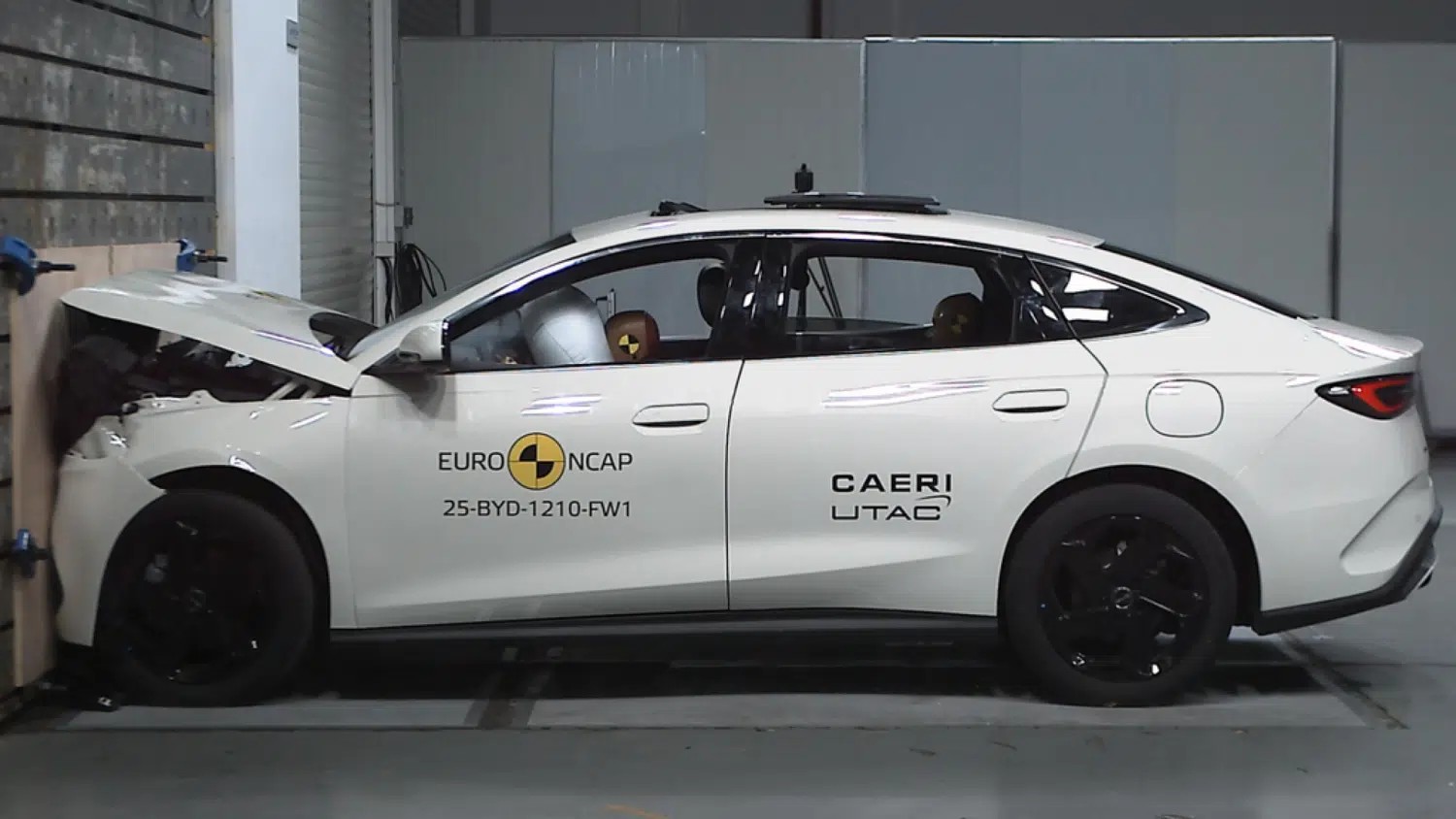
The BYD Seal 6 DM-i, marketed as the Seal 06 in China, emerged as the standout performer in the latest batch of tested vehicles. This plug-in hybrid sedan secured a comprehensive five-star rating, showcasing robust protection across most crash scenarios.
Adult and Child Occupant Protection
The Seal 6 DM-i achieved an impressive 92% score for Adult Occupant Protection. It performed flawlessly in full-width frontal collisions, oblique pole impacts, and side impacts. In frontal offset tests, while the driver’s dummy recorded impact loads, the vehicle provided adequate protection for the lower legs and chest, and the passenger compartment remained stable throughout the crash.
Child safety was also prioritized, with a 90% score for Child Occupant Protection. Critical body areas for 6- and 10-year-old dummies were well-protected. However, ANCAP noted a specific usability issue: one selected booster seat could not be correctly installed in the center rear position, a common challenge in many mid-size sedans.
Vulnerable Road Users and Safety Assist
In the Vulnerable Road User Protection category, the car scored 84%. While generally safe, experts noted that certain areas around the pillars and windshield could potentially cause injury to pedestrians during a collision.
The Safety Assist suite also received an 84%. The vehicle performed well in most Autonomous Emergency Braking (AEB) tests. However, it struggled to activate AEB effectively in complex scenarios, specifically when crossing the path of another vehicle at a T-junction. This highlights a continuing challenge for sensor systems in predicting cross-traffic collisions.
Tesla Model Y L: Proven Safety with Seating Constraints
The Tesla Model Y L, a three-row SUV assembled in Shanghai, also earned a five-star rating. Its safety profile is largely based on the related five-seat Model Y, though ANCAP conducted additional assessments to account for its extended length and third row.
Adult Protection and Safety Tech
The Model Y L excelled in structural safety, scoring 91% for Adult Occupant Protection. It also topped the charts in active safety features, achieving a 92% score in Safety Assist. The Vulnerable Road User Protection score was 86%, indicating good design considerations for pedestrian safety.
Challenges with Child Restraints
The vehicle’s main drawback lies in its flexibility for family use. The Model Y L scored 84% for Child Occupant Protection due to significant difficulties in installing child restraints:
* Second Row: Many restraints could not be correctly installed due to limitations in top tether routing.
* Third Row: Installing rearward-facing and forward-facing convertible child restraints using ISOFix anchorages was deemed difficult.
These findings raise important questions for families considering larger EVs: as vehicles expand to accommodate more passengers, does the complexity of seat installation compromise ease of use and safety compliance?
Market Context and Specifications
BYD Seal 6 DM-i
* Dimensions: 4,840 mm (L) x 1,875 mm (W) x 1,495 mm (H); 2,790 mm wheelbase.
* Powertrain: 1.5-liter naturally aspirated engine (94 hp) combined with a 130 kW electric motor (174 hp).
* Range: Up to 55 km on electric power (WLTP).
* Price: Starting at AUD 34,990 (approx. USD 25,370).
* Market Trend: Despite its strong safety credentials, the Seal 6 DM-i saw a 39.7% year-over-year sales decline in Q1 2026 in China, dropping to 26,650 units. This downturn is attributed to the gradual removal of government subsidies, illustrating how policy shifts can impact even successful mass-market models.
Tesla Model Y L
* Dimensions: 4,976 mm (L) x 1,920 mm (W) x 1,668 mm (H); 3,040 mm wheelbase.
* Powertrain: Dual-motor AWD system producing 340 kW (456 hp).
* Range: Up to 751 km on a single charge (CLTC) with an 82 kWh battery.
* Price: Ranging from AUD 74,900 to AUD 89,400 (approx. USD 54,275 – 69,145).
Conclusion
Both the BYD Seal 6 DM-i and the Tesla Model Y L demonstrate that Chinese-manufactured vehicles meet rigorous international safety standards. The BYD offers exceptional value and structural integrity for a mass-market sedan, while the Tesla provides advanced active safety features for a larger family SUV. However, buyers should note specific limitations: the BYD’s AEB struggles with cross-traffic scenarios, and the Tesla’s third-row seating presents challenges for child restraint installation. These nuances remind consumers that a five-star rating is a baseline of safety, not a guarantee of universal usability.