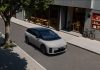
BYD has entered the Japanese plug-in hybrid (PHEV) market with the Sealion 6, aggressively priced at ¥3,982,000 (approximately $26,700). This makes it the cheapest PHEV SUV currently available in Japan, a strategic move by the Chinese automaker to gain traction in a hybrid-dominant country. The launch, which took place December 1, marks BYD Japan’s first PHEV offering after initially entering the market earlier this year with fully electric vehicles.
Global Sales Success Drives Expansion
The Sealion 6 isn’t new to success. Globally, it is already the best-selling plug-in hybrid SUV, with BYD controlling roughly 30% of worldwide PHEV sales from January to October. Under the name “Seal U,” it was Europe’s top-selling plug-in hybrid in June, and BYD is actively expanding PHEV sales into Southeast Asia. This strong international performance underscores the model’s appeal and BYD’s growing influence in the segment.
Competitive Pricing in a Hybrid-Focused Market
The Sealion 6 is positioned to challenge established Japanese automakers. While slightly pricier than the Toyota Prius PHEV (¥3,847,300 / $25,800), it significantly undercuts competitors like the Toyota Harrier (¥5,047,300 / $33,900) and Mitsubishi Outlander PHEV (¥5,294,300 / $35,500).
This pricing strategy is deliberate. Japan still favors hybrid vehicles over full EVs due to limited charging infrastructure, making PHEVs an attractive compromise. The Sealion 6 offers approximately 100 km of electric-only range for daily commutes, with a petrol engine for longer journeys. Fuel efficiency is rated at 22.4 km/L, exceeding many hybrid SUVs.
Local Adjustments for Japanese Consumers
BYD has refined the Sealion 6 specifically for the Japanese market based on user feedback. Improvements include enhanced rear-seat comfort and reduced cabin vibration. A black-wheel specification was added to address concerns about wheel dirt—a small detail that highlights the company’s attention to local preferences.
BYD’s Growth in Japan: A Measured Pace
BYD’s sales in Japan have risen 64% year-on-year, reaching 3,298 vehicles from January to October. However, it lags behind established import brands such as Mercedes-Benz (41,684 units) and Tesla (approximately 9,100 units). The Sealion 6’s performance will be a key indicator of BYD’s ability to scale in the Japanese market and capture a larger share of the growing plug-in hybrid segment.
BYD’s aggressive pricing and focus on local preferences signal a serious long-term commitment to competing with Japanese automotive giants in a market historically resistant to foreign brands. The success of the Sealion 6 will be watched closely by competitors and analysts alike.