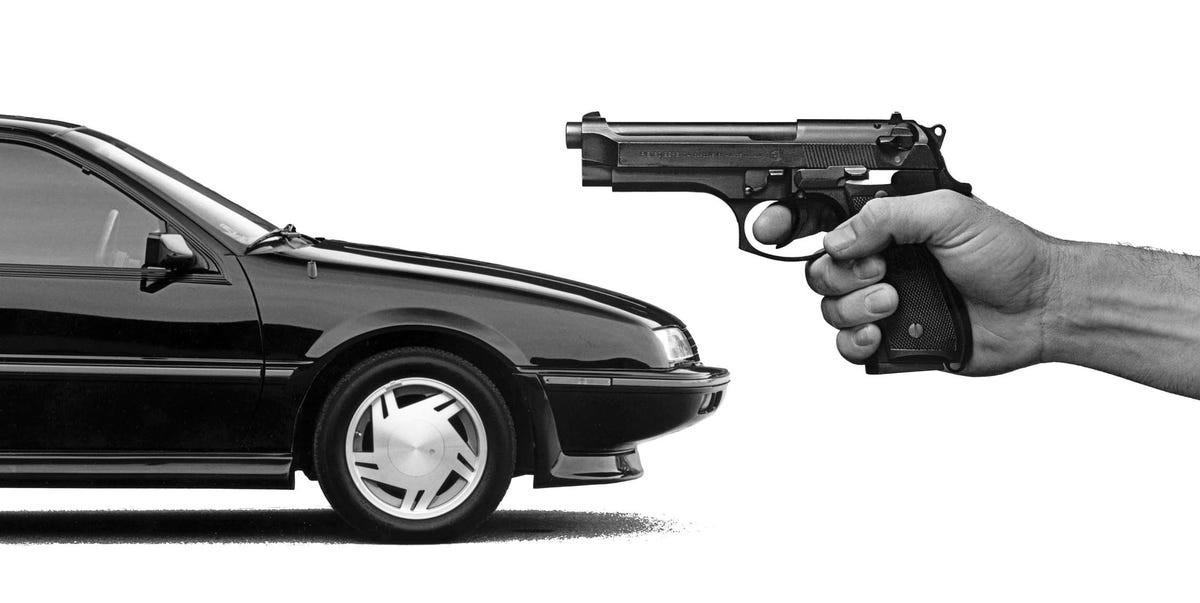
In February 1989, Car and Driver undertook a peculiar comparison test: pitting the Beretta automobile against the Beretta firearm. The conflict arose from a 1988 lawsuit filed by Beretta U.S.A. Corporation against General Motors for using the same name for its new coupe model, sparking a $250 million legal battle. This raises a straightforward question: can consumers distinguish between a car and a gun bearing the same name?
To resolve this, the magazine tested a 1989 Beretta V-6 GTU coupe and a 1989 Beretta 92F 9-mm Parabellum pistol, representing the flagship models of each product line. The test aimed to determine which “Beretta” performed better – a scientific approach to settle a seemingly absurd dispute.
Performance Comparison: Guns Outperform Cars
The results were stark. The firearm demonstrated superior speed, reaching Mach 1.2 (878 mph) compared to the car’s 114-mph peak. While the car offered features like a sunroof and electric trunk release, the gun boasted a reversible magazine catch and adjustable sights – innovations absent from the automotive version.
In cornering, the car excelled with a 0.84-g lateral acceleration, while the gun’s handling was described as erratic, causing it to skid and decelerate mid-turn. The gun also demonstrated superior accuracy, hitting targets precisely, unlike the car’s vague steering.
Practicality and Design
The gun was designed for rugged use, functioning in extreme conditions like seawater immersion and resisting corrosion. The car, on the other hand, prioritized aesthetics with optional lace-look aluminum wheels and glossy moldings. The gun could be field-stripped without tools, while disassembling the car would take hours.
The Verdict: An Inconclusive Tie
The comparison concluded in a tie. The car offered passenger capacity, while the gun provided firepower. One could fit the gun inside the car’s glovebox, and while the car avoids arrest when pointed at gas-station attendants, the gun could eliminate sixteen enemies.
Ultimately, the test highlighted the absurdity of the legal dispute. Both products serve distinct purposes, and the comparison revealed their inherent differences rather than any real competition. The magazine ended by teasing a future test: Lincoln Logs versus Lincoln Continental, promising more unconventional analysis.