


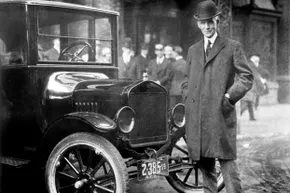
Henry Ford lived from 1863 to 1947. He didn’t just watch US history unfold. He pushed it forward. His company and his methods built the economic framework we still use today. He changed how cars are made. He invented systems that factories still rely on. He was also a complicated man. Deeply antisemitic. Prejudiced. His business practices looked progressive on the surface but had darker roots. Americans still fight about him. Some want to ignore the bad stuff. They say his economic wins outweigh his personality. Others say you can’t excuse his cruelty. It doesn’t matter what side you pick. You need to look at the facts. Let’s strip away the myths.
The “Went to See a Man About a Horse” Myth
Ford wasn’t a natural-born mechanic. He didn’t start with grease under his fingernails. He started with a dream of speed and efficiency. The story goes that he left his job to build a horseless carriage. He claimed he left to “see a man about a horse.” It sounds like a quirky anecdote. It’s not. It’s a misunderstanding of his early career.
Ford worked as an engineer for the Edison Illuminating Company. He was rising in the ranks. He had a stable job. He had a family. He decided to quit to pursue automotive engineering full-time. His boss didn’t fire him. He promoted him. Ford’s vice presidency gave him the freedom to work on his projects at night. This detail matters. It shows he wasn’t some reckless dropout. He was a strategic player. He played the long game.
Most people think Ford started from scratch. They think he built his first car in a shed. He did. But the infrastructure was already there. The funding came from investors who trusted his Edison connections. The knowledge came from years of electrical work. The myth of the sudden leap ignores the steady climb. Ford didn’t just “see a man about a horse.” He negotiated his own exit. He leveraged his existing role. He built a foundation. Then he poured concrete.
This isn’t just trivia. It changes how you view his later decisions. He didn’t stumble into success. He engineered it. Every choice was calculated. Including the ones that hurt people. You can’t separate the method from the man.
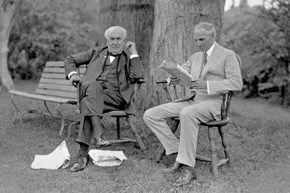

The story goes that Henry Ford told us we’d want faster horses if we asked for it. It’s a tidy narrative. It explains the Model T. It explains why he ignored the status quo. But did he actually say it? Probably not. The historical record is thin on proof. It doesn’t really matter. The quote is self-righteous but harmless. It’s just a tool to explain why he built the car the way he did. He used unheard-of methods. He changed history regardless of whether he uttered those words.
So why are we still talking about it? Because Ford Motor Company is a case study for every innovator out there. That quote marks a line in the sand. On one side, you have the believers in market research. They think you build what consumers tell you they need. On the other side, you have the visionaries. They think inspiration shouldn’t be stifled by trivial feedback. It’s a debate that defines product development.
Ford started on one path. Then he got lost down the other. The reality is messier than the myth.
4: Kingpin
The Model T wasn’t just a car. It was a revolution in manufacturing. Before the assembly line, cars were hand-built by skilled craftsmen. It was slow. It was expensive. You bought a car only if you had money. Ford wanted something different. He wanted a car for the masses.
To do that, he had to change how things were made. He didn’t ask people what they wanted in terms of features. He asked what they could afford. The answer was simple. They couldn’t afford much. So he stripped the car down. He kept it simple. He made it durable.
“Any customer can have a car painted any colour that he wants so long as it is black.”
This isn’t a quote about customer service. It’s a statement about efficiency. Black paint dried faster. It allowed for continuous production. It wasn’t about giving the customer variety. It was about moving metal off the line.
The Model T succeeded because it was reliable. It was easy to repair. It could handle rough roads. It wasn’t fast. It wasn’t luxurious. It was practical. And that practicality sold millions of units.
The Shift in Strategy
Ford’s early success wasn’t just about the car. It was about the business model. He paid his workers enough to buy the cars they built. That was radical at the time. It created a cycle of production and consumption that defined the 20th-century economy.
But as competitors caught up, Ford stuck to his guns. He refused to update the Model T significantly. He thought his market was secure. He was wrong. Consumers started wanting more than just transportation. They wanted style. They wanted comfort. They wanted variety.
General Motors saw this. They introduced annual model changes. They offered different colors. They gave buyers choices. Ford ignored them. He thought the quote about faster horses applied here too. He thought people would always want a cheap, reliable car.
They didn’t. The market shifted. Ford’s market share dropped. He had to respond. He finally introduced the Model A. It was a successor. It was different. It was necessary.
Why It Matters Now
We still use Ford’s methods. We still debate his philosophy
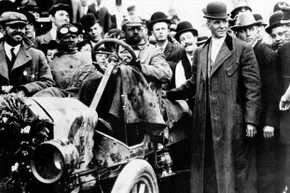
The junkyard legend is the most persistent stain on the Model T’s legacy. You’ve probably heard it. Henry Ford allegedly sent engineers to graveyards of cars to find out why everything died except the kingpins. The result? Those steering pivots were indestructible. The rest of the chassis was shredded. So, the story goes, Ford ordered them to deliberately weaken the kingpins. He wanted the whole car to wear out at the same time. A planned obsolescence play before the term even existed.
It’s a juicy narrative. It paints Ford as a miserly cheater. But historians generally agree the anecdote has roots in truth. The engineers did go to the yards. The kingpins were over-engineered for the era’s standards. The mistake isn’t in the observation. It’s in the interpretation.
Ford wasn’t trying to cheat his customers. He was trying to stop wasting money on durability that provided zero value to the user.
Think about it. If a car is designed to run for 10,000 miles and costs $350, making a part that lasts 50,000 miles doesn’t help the buyer. It doesn’t increase the car’s value. It just inflates the price. Ford’s philosophy was strict. You pay for what you use. You don’t pay for redundancy.
This mindset clashes with the idea of him sacrificing quality. It never happened. The Model T was built to last. It outlasted almost every competitor on the road. Its reputation for reliability was a massive source of pride for the man. The “cheapening” of the kingpin was a technical adjustment. Not a moral failing.
He was practicing what we might call efficient durability. He refused to spend real money on components that offered no marginal benefit to the driving experience. That’s not corruption. That’s just cold, hard arithmetic. The myth frames it as greed. The reality was just ruthless optimization.
The Power of the Ford News
He Didn’t Read His Own Newspaper
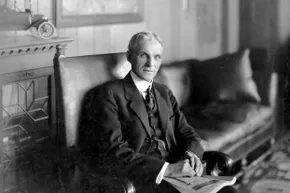
Henry Ford kept his hands dirty in ways most people ignore. He stayed in touch with Adolf Hitler. He spewed hate speech. His newspaper, the Dearborn Independent, ran anti-Jewish propaganda for years. Supporters tried to spin it. They said Henry didn’t run the paper. They claimed he barely read it. Therefore, he couldn’t be blamed for the toxicity inside its pages. That was a lie.
Researchers dug up lawyer records from his libel case. The documents prove Henry ordered the paper to shut up in 1922. Then he told them to start publishing inflammatory trash again in 1924. He didn’t just ignore it. He directed it.
He got sued. Instead of facing a judge, he staged a car accident. It worked. He avoided the courtroom entirely. But you can’t manipulate your way out of history. The anti-Semitic content in the Dearborn Independent is on his conscience. There is no escaping that guilt.
The Myth of the Benevolent Boss
The image of Henry Ford as a savior of the working class is largely a marketing fiction. It’s easier to sell a Model T when you paint the founder as a saint. But look at the Dearborn Independent archives. Look at the legal filings. The man who claimed to help the common man was actively funding hate speech against them.
This wasn’t an oversight. It was a strategy.
Why This Matters for Car History
We often separate the machine from the maker. It’s convenient. But the Dearborn Independent story changes how we view the early 20th-century auto boom. It wasn’t just about steel and rubber. It was about ideology. Ford used his platform to spread views that would later fuel global conflict.
Think about the Dearborn Independent legacy. It wasn’t just a newspaper. It was a weapon. And Henry Ford held the handle.
The Libel Case Details
The lawsuit wasn’t a minor squabble. It was a major legal battle. The plaintiff, Sylvester Fox, sued for libel. Ford’s legal team used the staged accident to dismiss the case. No trial. No public admission. Just silence and spin.
But the records remain. They show clear instructions. Stop publishing hate. Start again. It’s a timeline of malice.
Comparing Ford to His Peers
Did other automakers do this? Some did. But Ford’s scale was different. His reach was global. His influence was immense. When he chose to publish hate, it mattered. It wasn’t niche. It was mainstream.
The Dearborn Independent reached millions. That’s power. And it was abused.
What We Know Now
Historians used to accept the “he didn’t know” excuse. They didn’t. We know better now. The lawyer records are public. The timeline is clear. Ford knew. He directed. He avoided justice.
This isn’t just about old news. It’s about how we remember industrial giants. We can’t just love the cars and ignore the man. The Dearborn Independent is part of the story. It’s a dark part. But it’s real.
The myth of Ford as a progressive manager crumbles under this weight. He was a businessman. A clever one. But not a good
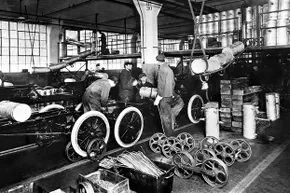
On the surface, Henry Ford rolled out policies that looked like they came straight from a modern HR playbook. Supporters call them “progressive.” Others call them “liberal.” Without context, it’s easy to buy the narrative.
It’s not.
Ford was no liberal. His goal wasn’t social justice. It was efficiency. He wanted to streamline his operation. But there was a darker undercurrent. He didn’t just want to hire workers. He wanted to own their time outside the factory gates.
As the world’s largest auto manufacturer, his reach was immense. He didn’t just set shop floor rules. He dictated lifestyle standards. He hated the idea of unions. He fought them with every ounce of power he had.
The National Labor Relations Board eventually had to intervene. In the late 1930s, Detroit was buzzing with union activity. Ford’s reaction? He considered shutting down his own company to stop them. He didn’t do it. He folded. In 1941, he signed with the United Auto Workers.
But before we get to the concessions, we have to look at the bait. The five-dollar day.
The Five-Dollar Day: Efficiency, Not Generosity
You’ve heard the story. In 1914, Ford doubled the minimum wage. Workers went from $2.34 a day to $5.00. It was headline news. It made Ford look like a saint.
It wasn’t.
The raise came with strings. The Industrial Department. They sent inspectors into workers’ homes. They checked for cleanliness. They checked for sobriety. They checked for bank accounts.
If you spent your wages on alcohol or gambling? No raise. If you didn’t save your money? No raise. The goal was simple. Create a stable, sober, disciplined workforce that didn’t need to look for other work.
This wasn’t charity. It was quality control. Workers who were financially stable were less likely to quit. Less likely to be late. Less likely to be distracted. The turnover rate dropped. Production went up.
Ford proved that paying people more could be cheaper than paying them less and training new hires every week. The five-dollar day wasn’t a gift. It was a business model.
The Sociological Department’s Reach
The control didn’t end at the plant door. The Sociological Department (as the inspectors were called) monitored personal lives. They judged morality. They enforced propriety.
Did you have a wife who didn’t save money? The department might question your character. Did you rent instead of own? They preferred homeowners. They believed homeowners were more stable. More committed.
This was paternalism at its most invasive. Ford didn’t trust workers to manage their own lives. He believed he knew better. The result was a culture of compliance. Workers lived in fear of the inspector’s knock.
The effects rippled out. Other companies copied the wage hike. But they didn’t copy the surveillance. Ford was unique. He tied compensation directly to behavior.
It created a paradox. Workers were better off financially. But they were also more controlled than ever. The five-dollar day bought their loyalty. But it also bought their silence.
The Union Nightmare
Ford’s love for control clashed with the rising tide of organized labor. He
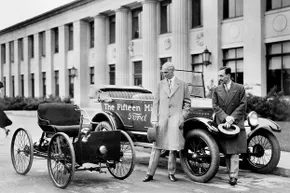
The five-dollar day was a lie, or at least a convenient fiction. We keep telling ourselves Henry Ford was a benevolent capitalist who wanted his laborers to afford the machines they built. It’s a nice story. It’s wrong.
Ford didn’t raise wages to promote economic mobility. He raised them to stop the bleeding.
By 1914, turnover at Highland Park was astronomical. Workers were treating the assembly line like a treadmill they could jump off whenever the monotony became unbearable. Quitting wasn’t just an inconvenience; it was a financial hemorrhage. Hiring, onboarding, and training new hands wasted time and diluted quality. Ford was tired of the churn.
His solution wasn’t charity. It was leverage.
The $5 wage wasn’t a gift. It was a retention strategy.
The money came with strings. Thick, suffocating strings. Workers had to sign on to a strict code of conduct. No drinking. No gambling. And perhaps the most intrusive rule: their wives couldn’t work outside the home. Ford didn’t trust the household economics if a woman had her own income. He wanted workers financially dependent enough to stay, but not so independent that they could afford to quit.
Immigrants had to learn English. The company sent inspectors into workers’ homes to verify standards were met. It was surveillance disguised as welfare. A committee made house calls to ensure the “sociological department” guidelines were followed.
Did it work? Yes. Productivity spiked. Quality improved. Turnover plummeted. Ford got his ROI. He didn’t care about his workers’ dignity or their ability to buy a Model T. He cared about the bottom line and the steady hum of the assembly line.
His “big brother” management style wasn’t celebrated. It wasn’t copied either. Most CEOs in the 20th century figured out how to squeeze productivity without monitoring bedroom activities. Ford’s experiment was too aggressive, too personal, and ultimately, too rigid for widespread adoption.
Henry Ford Myths FAQ
What is Henry Ford famous for?
Henry Ford is primarily credited with perfecting the moving assembly line and mass-producing the Model T. He didn’t invent the car, but he invented the method of building them at scale.
What were Henry Ford’s key innovations?
Beyond the assembly line, Ford’s major innovation was vertical integration. He owned the rubber plantations, the steel mills, and the railroads. This control allowed him to drive down costs and stabilize supply chains in ways competitors couldn’t match.
How did Henry Ford make workers more efficient?
He stripped the skill out of the process. By breaking assembly into tiny, repetitive tasks, he eliminated the need for highly trained craftsmen. The moving assembly line meant the worker stayed still, and the car moved to him. This reduced fatigue-related errors and sped up production drastically.
What did Henry Ford invent in 1913?
On December 1, 1913, at the Highland Park Plant, Ford introduced the first moving assembly line for automobiles. It cut the time to build a Model T chassis from over 12 hours to just 93 minutes.
Was Henry Ford a president?
No, he was never a U.S. President. However, he became the president of Ford Motor Company in 1


